[:en]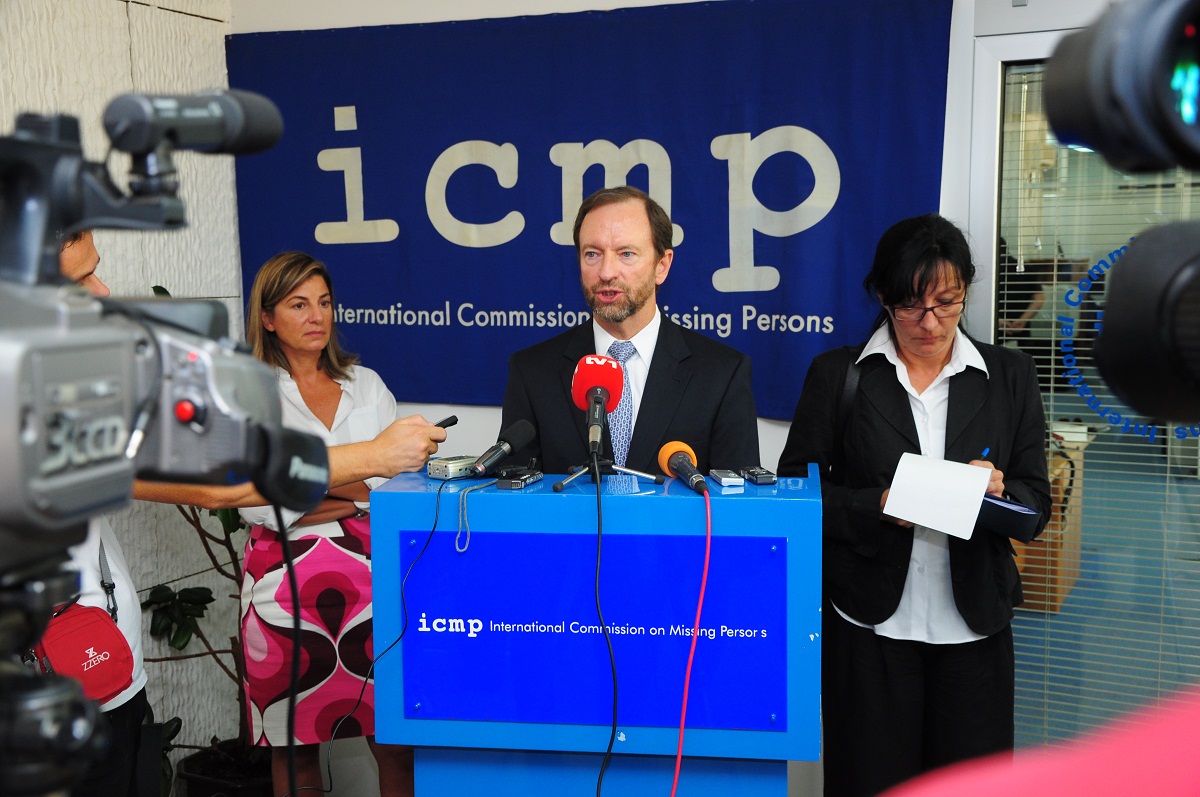
31 August 2011: A day after the International Day of the Disappeared was marked by families of missing persons across the world, the US Ambassador to Bosnia and Herzegovina H.E. Mr. Patrick Moon toured the facilities of the International Commission on Missing Persons (ICMP) in Tuzla. In these facilities ICMP works to identify missing persons from the armed conflict in BiH and the rest of the world where it has its operations. This was Ambassador Moon’s second visit to ICMP, following his tour of ICMP HQ and DNA laboratory at ICMP’s Headquarters in Sarajevo in November 2010.
Accompanied by ICMP Director-General, Kathryne Bomberger, Ambassador Moon visited ICMP’s Identification Coordination Division (ICD) where all blood reference samples are collected by ICMP from relatives of the missing and all bone samples received from government authorities are processed. After being bar coded they are sent to ICMP laboratories in Sarajevo and Banja Luka for DNA analysis. Once extracted, the DNA profiles are entered into ICMP’s database and matched. The Ambassador also visited the Podrinje Identification Project (PIP), which was specifically created to assist in the identification of persons missing from the 1995 fall of Srebrenica.
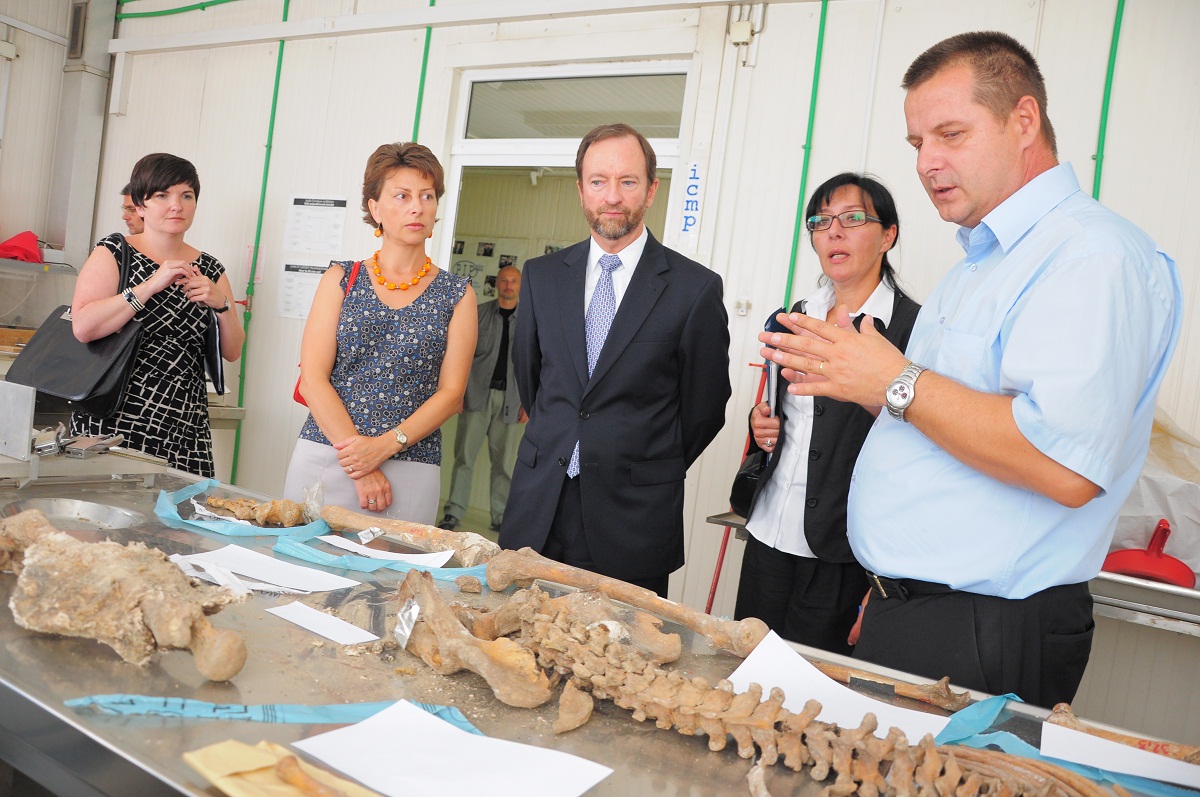
“I am impressed by the work of ICMP and in particular its assistance to Bosnia and Herzegovina in accounting for the missing from the conflicts of the 1990’s. ICMP has helped Bosnia create the Missing Persons Institute, which searches for persons missing regardless of their ethnic, religious or national origin. In addition, ICMP supports the work of numerous family associations of the missing. Through the combined efforts of the ICMP, local institutions and the families of the missing and with the support of the international community, today two-thirds of those missing have now been accounted for, which is an unprecedented achievement. I am particularly proud of the role the US government had in initiating the creation of this organization, which has surpassed expectations in terms of accounting for the missing through DNA technology, thus making it possible to identify persons who would never have been identified through any other means. My government will continue to support ICMP and its work in Bosnia since we believe it is important to the families of the missing, to reconciliation efforts and to the full implementation of the rule of law,” U.S. Ambassador Patrick Moon said following the visit.
“The support of the US Government has been instrumental to the work of ICMP, particularly in Bosnia and Herzegovina where we are headquartered and where we have been most heavily engaged. I would like to use this opportunity to ask the government of Bosnia and Herzegovina to remain vigilant in supporting the work the Missing Persons Institute and the State Prosecutors Office to locate, recover and identify the remaining 10,000 missing persons. I would also like to remind BiH authorities that the Law on Missing Persons and the Fund for Families of the Missing has yet to be fully implemented, which creates difficult legal challenges for surviving family members. I would like to thank Ambassador Moon for US Government support to ICMP and for understanding that resolving the missing persons issue is an investment in Bosnia’s future peace and stability,” said ICMP Director-General, Kathryne Bomberger.
The US Government has supported ICMP since year 1996 with grants of over 40 million USD for its activities in the Western Balkans. These grants have enabled ICMP to maintain the world’s most advanced high throughput DNA laboratory system dedicated to identifying persons missing from armed conflict, violations of human rights and natural disasters.
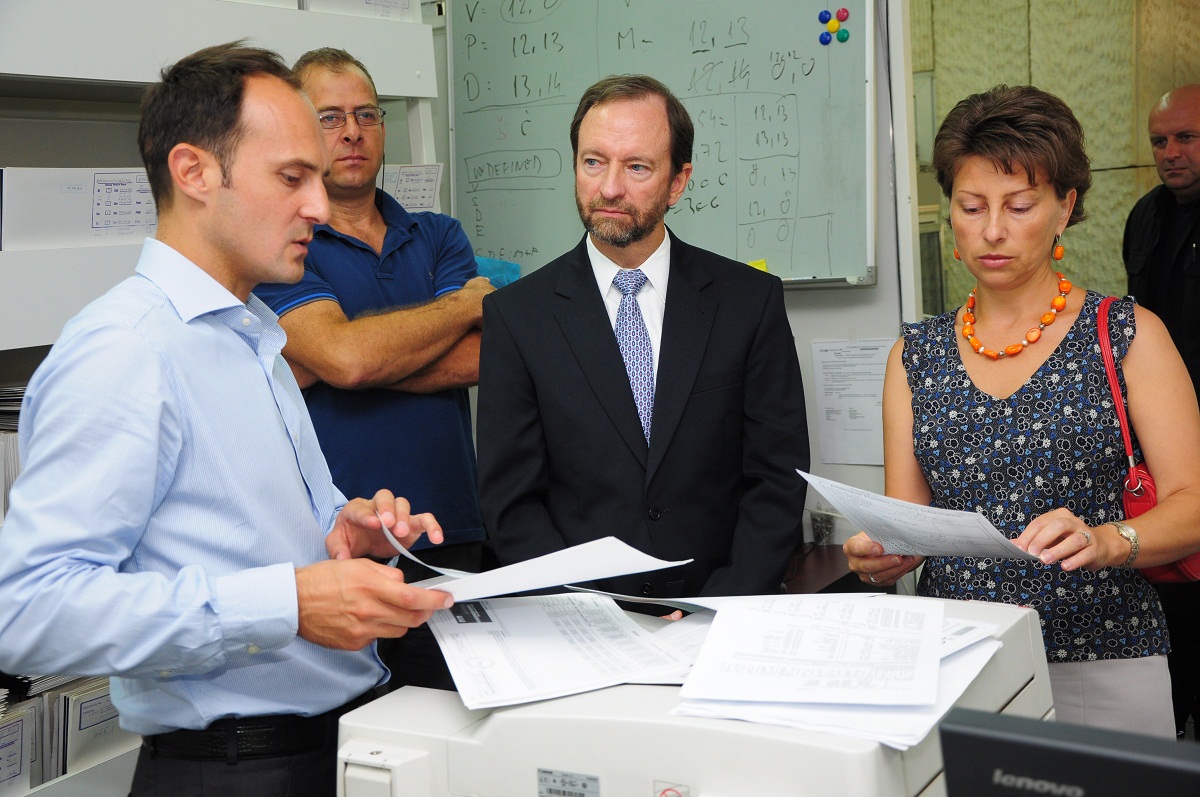
ICMP’s worldwide operations include the provision of assistance to the governments of the Western Balkans, Iraq, the Philippines, Chile and Colombia, as well as assistance to Kuwait, Norway, Thailand and South Africa. Of the 40,000 people estimated missing from the conflicts in the former Yugoslavia, ICMP has identified 16,294 since 2001 using DNA-assisted techniques, in Bosnia alone 13,626. Of this number of identifications 6,616 are victims of the 1995 fall of Srebrenica.[:bs]
Dan nakon što su porodice nestalih širom svijeta obilježile Međunarodn idan nestalih, ambasador Sjedinjenih Američkih Država, Patrick Moon, obišao je objekte Međunarodne komisije za nestale osobe (ICMP) u Tuzli. U tim objektima ICMP radi na identifikaciji osoba nestalih u oružanom sukobu u BiH i ostatku svijeta, gdje je ICMP aktivno prisutan. Ovo je druga posjeta ambasadora Moona ICMP-u, nakon obilaska sjedišta ICMP-a i DNK laboratorije u Sarajevu u novembru 2010. godine.
U pratnji Kathryne Bomberger, generalne direktorice ICMP-a, ambasador Moon je posjetio Odsjek za koordinaciju identifikacija (ICD) gdje se nalaze i obrađuju svi uzorci krvi koje je ICMP prikupio od članova porodica nestalih i svi uzorci kostiju zaprimljenih od državnih tijela. Nakon što ih se označi bar kodom, šalju se u laboratorije za analizu DNK u Sarajevu i Banja Luci na dalju obradu. Slijedi ekstrakcija, a potom se profili DNK unose u ICMP-ovu bazu podataka i prolaze proces poređenja. Ambasador je posjetio i Projekt identifikacije Podrinje (PIP), koji je pokrenut sa posebnom namjenom – pomoći u identifikaciji osoba nestalih padom Srebrenice 1995. godine.
„Podrška američke vlade je bila važna za rad ICMP-a, osobito u Bosni i Hercegovini gdje je naše sjedište i gdje smo najviše uključeni u proces traženja i identifikacije nestalih. Želim iskoristiti ovu priliku i pozvati vlasti Bosne i Hercegovine da nastave aktivno podržavati rad Instituta za nestale osobe i Tužilaštvo BiH u procesu pronalaženja, ekshumacije i identifikacije preostalih 10.000 nestalih osoba. Također želim podsjetiti vlasti BiH da Zakon o nestalim osobama i Fond za pomoć porodicama nestalih još uvijek nisu u potpunosti provedeni, što stvara složenu pravnu situaciju za preživjele članove porodica nestalih. Želim zahvaliti ambasadoru Moonu za podršku američke vlade ICMP-u i prepoznavanje da rješavanje problema nestalih osoba predstavlja ulaganje u budućnost i stabilnost Bosne i Hercegovine“, kazala je Kathryne Bomberger, generalna direktorica ICMP-a.
Američka vlada od 1996. godine podržava ICMP kroz grantove čiji iznos prelazi 40 miliona američkih dolara za aktivnosti na području Zapadnog Balkana. Zahvaljujući ovim grantovima, ICMP uspješno vodi najnapredniji sistem laboratorija za istovremenu analizu velikog broja uzoraka DNK, posvećen identifikaciji osoba nestalih u oružanim sukobima, usljed kršenja ljudskih prava i prirodnih katastrofa.
ICMP-ove aktivnosti u svijetu uključuju pružanje pomoći vladama Zapadnog Balkana, Iraka, Filipina, Čilea i Kolumbije, kao i pomoći Kuvajtu, Norveškoj, Tajlandu i Južnoj Africi. Od 40.000 osoba, koliko se procjenjuje da je nestalo tokom sukoba na području bivše Jugoslavije, ICMP je uz pomoć tehnika zasnovanih na analizi DNK od 2001. godine do danas identificirao 16.294 osoba, od čega se 13.626 odnosi na BiH. Od tog broja, 6.616 identifikovanih odnosi se na žrtve pada Srebrenice 1995. godine.
[:ar][:es][:]