[:en]
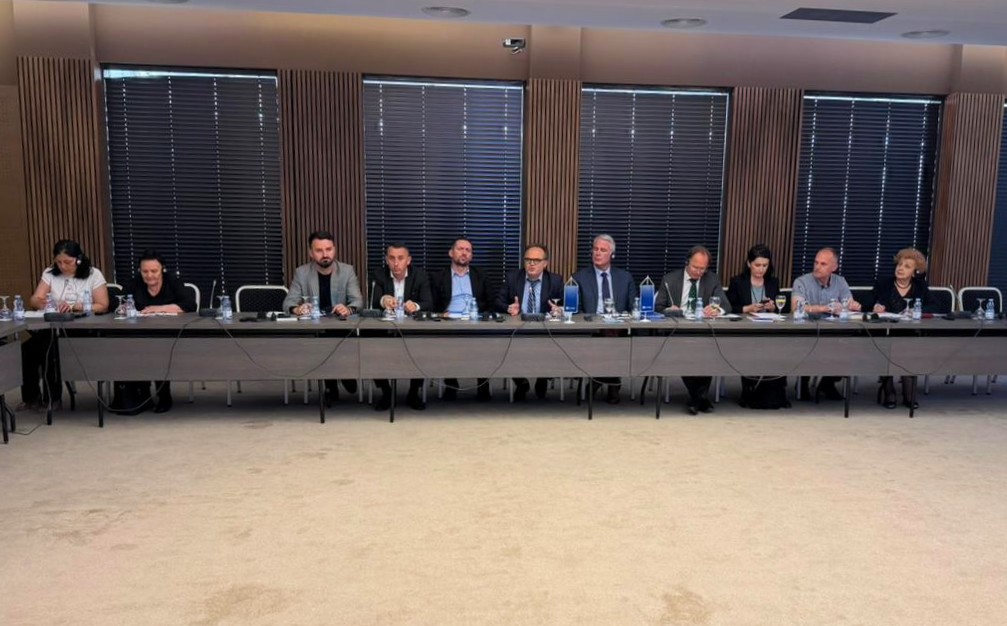
30 September 2009: The International Commission on Missing Persons (ICMP) hosted a visit to its facilities in Tuzla by a high-level delegation of EU Ambassadors, diplomatic staff, military and police officers led by H.E Bosse Hedberg, Sweden’s Ambassador to Bosnia-Herzegovina. Sweden currently holds the presidency of the European Union and is also a major donor to ICMP.
The delegation included Ambassadors, other senior diplomats, military and police officers from EU countries, the European Commission, EUFOR and the European Union Police Mission. The delegation visited ICMP’s three forensic facilities in Tuzla, the Podrinje Identification Project, the Lukavac Reassociation Centre and the Identification Coordination Division (ICD). ICMP constructed the first two projects specifically to assist in the identification of victims of the 1995 fall of Srebrenica, while ICD exists as ICMP’s worldwide information nexus.
The DNA laboratory system of the International Commission on Missing Persons (ICMP) has made a total of more than 16,400 DNA matches during its work assisting governments worldwide in dealing with the issue of persons missing from armed conflicts, human rights violations and natural disasters. This is the largest number of DNA-assisted identifications ever made, and since ICMP’s DNA identification system went online in November 2001, 15,060 identifications have been made of persons missing from armed conflicts in the Western Balkans including 12,652 who were missing from Bosnia-Herzegovina.
“ICMP has created something unique and revolutionary. So far in this region over 15,000 people have been accurately identified using DNA technology. The techniques have been developed in this country using, in large part, the skills of people from this region. In fact 90% of ICMP’s staff is Bosnian and this country should be proud of what they have achieved”, Ambassador Hedberg said following the visit.
“Without the very important support of Sweden and other EU donor countries represented here, ICMP would simply not be able to carry out its most vital operations in Bosnia-Herzegovina. This visit also emphasizes to the families of missing persons in this country that the International Community remains determined to assist them in their search for answers,” said Adam Boys, ICMP’s Chief Operating Officer.
The introduction of DNA by the ICMP as the basis for identifying large numbers of missing persons from the 1990’s conflicts in the Western Balkans enabled accurate identifications of persons that would never otherwise have been identified. The first DNA match, for a 15 year-old boy from Srebrenica, was made on November 16, 2001.
ICMP is also the co-founder of the Missing Persons Institute of Bosnia-Herzegovina (MPI) which was inaugurated as a state-level institution in 2005, taking over the responsibilities, staff and budgets of the entity bodies formerly charged with these responsibilities. The work of MPI also brings closer the implementation of the Law on Missing Persons, which helps safeguard the rights of families of the missing.[:bs]
Međunarodna komisija za nestale osobe (ICMP) ugostila je u Tuzli delegaciju ambasadora zemalja Evropske unije, diplomatskog osoblja, kao i vojnih i policijskih službenika, koje je predvodio ambasador Švedske u Bosni i Hercegovini, Nj. E. Bosse Hedberg. Švedska trenutno vodi rotirajuće predsjedništvo EU i jedan je od većih donatora ICMP-a.Delegaciju čine ambasadori, diplomatsko osoblje, vojni i policijski službenici iz zemalja Evropske unije te predstavnici Evropske komisije, EUFOR-a i EUPM-a. Delegacija je posjetila tri ICMP-eva objekta u Tuzli: Identifikacijski projekat Podrinje (PIP), Centar za reasocijaciju u Lukavcu (LKRC) i Odjel za koordinaciju identifikacija (ICD). Prva dva objekta ICMP je uspostavio za pomoć u identifikaciji žrtava pada Srebrenice 1995. godine, dok ICD predstavlja centar za koordinaciju slučajeva iz cijelog svijeta.
Sistem DNK laboratorija Međunarodne komisije za nestale osobe (ICMP) ostvario je više od 16.400 DNK podudaranja pomažući vladama širom svijeta da riješe problem osoba nestalih u oružanim sukobima, kršenju ljudskih prava i prirodnim nepogodama. Ovo je najveći broj identifikacija ikad ostvarenih putem DNK. Od uspostave ICMP-evog sistema DNK laboratorija u novembru 2001. godine, urađeno je 15.060 identifikacija osoba nestalih tokom oružanih sukoba na Zapadnom Balkanu, a od toga 12.652 u Bosni i Hercegovini.
„ICMP je stvorio nešto jedinstveno i revolucionarno. Do danas je u ovoj regiji uz pomoć DNK tehnologije tačno identifikovano preko 15.000 osoba. Metode rada su razvijene u ovoj zemlji, velikim dijelom, zahvaljujući stručnim sposobnostima ljudi iz regije. Ustvari, 90% ICMP-ovih zaposlenika su Bosanci i ova zemlja treba da se ponosi njihovim dostignućima”, izjavio je ambasador Hedberg nakon posjete.
„Bez značajne podrške od strane Švedske i drugih EU zemalja-donatora čiji su predstavnici ovdje, ICMP jednostavno ne bi mogao da obavlja vitalne aktivnosti u Bosni i Hercegovini. Ova posjeta takođe poručuje porodicama nestalih osoba u ovoj zemlji da međunarodna zajednica ostaje odlučna u namjeri da im pomogne u traženju odgovora”, izjavio je glavni operativni direktor ICMP-a Adam Boys.
Uvođenje analize DNK kao početnog koraka u identifikaciji velikog broja nestalih osoba u sukobima na Zapadnom Balkanu u 1990-tim godinama omogućilo je precizne identifikacije kakve drugačije ne bi bilo moguće ostvariti. Prvo poklapanje DNK profila, a bio je to 15-godišnji dječak iz Srebrenice, ICMP je napravio je 16. novembra 2001. godine.
ICMP je također jedan od suosnivača Instituta za nestale osobe (INO) Bosne i Hercegovine koji je 2005. godine inaugurisan kao tijelo na državnom nivou i preuzeo je odgovornosti, uposlenike i budžete od entiteskih tijela prethodno zaduženih za traženje nestalih osoba. Rad INO-a također pomaže implementaciju Zakona o nestalim osobama Bosne i Hercegovine, koji štiti prava porodica nestalih osoba.[:ar][:es][:]