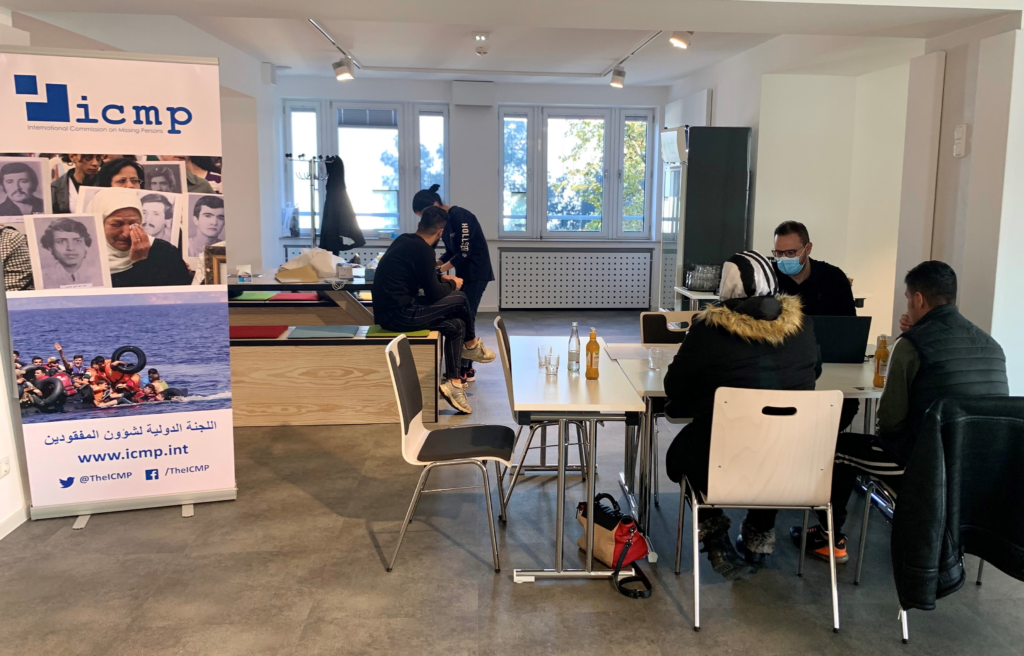
[:en]The Hague, 2 December 2022 – The International Commission on Missing Persons (ICMP) has completed the second phase of a campaign to collect DNA reference samples from Syrian families living in Europe. The most recent campaign took place in Germany and the Netherlands between October and November 2022.
ICMP has collected data and received reports from more than 68,000 families representing more than 25,000 missing persons. This data has been obtained voluntarily through reports to ICMP’s Online Inquiry Center (OIC) or through efforts to collect data directly from families of the missing with support from Syrian civil society organizations that work with ICMP.
The data collected includes information on where and when missing persons were last seen, and information about the circumstances of disappearance, including possible perpetrators. ICMP also collects genetic reference samples from families of the missing. To date, ICMP has collected samples from 506 families of the missing living in Europe and in Iraq, who have reported 345 missing persons.
Since the beginning of the Syrian conflict, more than 130,000 persons have gone missing, according to Syrian organizations and international institutions. Syrians and others have gone missing in the fighting and as victims of atrocities, human rights violations, enforced disappearances, arbitrary detention and other crimes. Many have also disappeared along migratory routes to Europe. While most Syrian refugees have sought protection in neighboring countries such as Turkey, Jordan, Lebanon, and Egypt, around one million Syrian asylum seekers and refugees live in Europe.
“The direct engagement of families of the missing in providing data to find their missing loved ones and investigate their disappearance is critical in laying the foundations for finding missing persons from the Syrian war and securing basic human rights,” said ICMP Director-General Kathryne Bomberger.
“This data can be used to reunite families who have been separated, to confirm the identity of persons in detention, and to identify persons who are missing and presumed dead. We hope this data will be used along with data collected inside Syria to locate and identify missing persons. States are responsible for finding missing persons and finding such a high number of missing persons is not possible without the cooperation of the current regime.
Ms Bomberger said the data provided to ICMP by families of the missing “should form part of a shared data system that includes data collected by many other organizations, encompassing all missing persons cases related to Syria.” She added that this shared data system “should include data related to all missing and disappeared persons regardless of their sectarian, national, ethnic or religious background, their gender, their role in the conflict, their political affiliation, or the circumstances of their disappearance, and it should apply to people who are alive, including people believed to be in detention, as well as those who are feared dead.”
“Using secure database technology, it is possible to maintain a system that accounts for the missing from Syria over the long term,” she said.
ICMP’s broader efforts to address the issue of missing persons in the context of the Syrian conflict include facilitating dialogue among stakeholders, including a comprehensive policy process discussion, summarized in an October 2020 ICMP report. ICMP also facilitates the work of the Syrian Policy Coordination Group, which is working to develop recommendations and a general policy framework on missing persons in Syria.
The campaign, supported by the German Federal Foreign Office, is one element in a long-term missing person process that ICMP is helping to establish. The process will endeavor to account for missing persons from the Syria conflict who are still alive as well as those who are deceased.
About ICMP
ICMP is a treaty-based intergovernmental organization with Headquarters in The Hague, the Netherlands. Its mandate is to secure the cooperation of governments and others in locating missing persons from conflict, human rights abuses, disasters, organized crime, irregular migration and other causes and to assist them in doing so. ICMP also supports the work of other organizations in their efforts, encourages public involvement in its activities and contributes to the development of appropriate expressions of commemoration and tribute to the missing. ICMP is the only international organization tasked exclusively to work on the issue of missing persons.
[:ar]
لاهاي ، 2 ديسمبر/كانون الأول 2022 – أكملت اللجنة الدولية لشؤون المفقودين المرحلة الثانية من حملة جمع العينات المرجعية للحمض النووي من العائلات السورية التي تعيش في أوروبا. جرت الحملة في ألمانيا وهولندا بين أكتوبر ونوفمبر 2022.
قامت اللجنة الدولية لشؤون المفقودين بجمع بيانات وتلقت تقارير من أكثر من 68000 عائلة تمثل أكثر من 25000 شخص مفقود. تم الحصول على هذه البيانات طواعية من خلال التقارير المقدمة مركز الاستفسار عبر الإنترنت التابع للجنة الدولية لشؤون المفقودين أو من خلال الجهود المبذولة لجمع البيانات مباشرة من عائلات المفقودين بدعم من منظمات المجتمع المدني السورية التي تعمل مع اللجنة الدولية لشؤون المفقودين.
تتضمن البيانات التي تم جمعها معلومات عن مكان وزمان مشاهدة الأشخاص المفقودين لآخر مرة، ومعلومات حول ظروف الاختفاء، بما في ذلك الجناة المحتملون. كما تقوم اللجنة الدولية لشؤون المفقودين بجمع عينات مرجعية وراثية من عائلات المفقودين. حتى الآن ، جمعت اللجنة الدولية لشؤون المفقودين عينات من 506 عائلات للمفقودين المتواجدة في أوروبا والعراق، والذين أبلغوا عن 345 شخصًا مفقودًا.
منذ بداية الصراع السوري، فُقد أكثر من 130 ألف شخص، بحسب منظمات سورية ومؤسسات دولية. حيث فقد سوريون وآخرون في القتال وكضحايا لفظائع وانتهاكات لحقوق الإنسان وحالات اختفاء قسري واحتجاز تعسفي وجرائم أخرى. كما اختفى اثر الكثير على طول طرق الهجرة إلى أوروبا. بينما سعى معظم اللاجئين السوريين إلى طلب الحماية في دول مجاورة مثل تركيا والأردن ولبنان ومصر، يعيش حوالي مليون طالب لجوء ولاجئ سوري في أوروبا.
قالت المديرة العامة للجنة الدولية لشؤون المفقودين كاثرين بومبرغر: “إن المشاركة المباشرة لعائلات المفقودين في توفير البيانات للعثور على أحبائهم المفقودين والتحقيق في اختفائهم أمر بالغ الأهمية في وضع الأسس للعثور على الأشخاص المفقودين من الحرب السورية وتأمين حقوقهم الإنسانية الأساسية”.
“يمكن استخدام هذه البيانات لجمع شمل العائلات التي انفصلت، وللتأكد من هوية الأشخاص المحتجزين، ولتحديد الأشخاص المفقودين والمفترض أنهم ماتوا. نأمل أن يتم استخدام هذه البيانات جنبًا إلى جنب مع البيانات التي تم جمعها داخل سوريا لتحديد مصير الأشخاص المفقودين. الدول مسؤولة عن العثور على الأشخاص المفقودين والعثور على هذا العدد الكبير من الأشخاص المفقودين غير ممكن بدون تعاون النظام الحالي.
قالت السيدة بومبرغر إن البيانات المقدمة إلى اللجنة الدولية لشؤون المفقودين من قبل عائلات المفقودين “يجب أن تشكل جزءًا من نظام البيانات المشترك الذي يتضمن البيانات التي تم جمعها من قبل العديد من المنظمات الأخرى ، بما في ذلك جميع حالات الأشخاص المفقودين المتعلقة بسوريا”. وأضافت أن نظام البيانات المشترك هذا “يجب أن يتضمن بيانات تتعلق بجميع المفقودين والمختفين بغض النظر عن خلفيتهم الطائفية أو القومية أو العرقية أو الدينية أو جنسهم أو دورهم في الصراع أو انتمائهم السياسي أو ظروف اختفائهم. ويجب أن ينطبق على الأشخاص الأحياء، بما في ذلك الأشخاص الذين يُعتقد أنهم رهن الاحتجاز، وكذلك أولئك الذين يُخشى انهم قد توفوا “.
وقالت: “باستخدام تقنية قواعد البيانات الآمنة، من الممكن الحفاظ على نظام يسجل المفقودين من سوريا على المدى الطويل”.
تشمل جهود اللجنة الدولية لشؤون المفقودين الأوسع نطاقًا لمعالجة قضية الأشخاص المفقودين في سياق النزاع السوري تسهيل الحوار بين أصحاب الشان، بما في ذلك مناقشة العملية السياسة الشاملة، والتي تم تلخيصها في تقرير اللجنة الدولية لشؤون المفقودين في أكتوبر 2020. كما تسهل اللجنة الدولية لشؤون المفقودين عمل فريق تنسيق السياسات السوري، الذي يعمل على تطوير التوصيات والاطر السياسية العامة بشأن الأشخاص المفقودين في سوريا.
الحملة، التي تدعمها وزارة الخارجية الألمانية، هي أحد عناصرعملية تحديد مصير الأشخاص المفقودين على المدى الطويل التي تساعد اللجنة الدولية لشؤون المفقودين في تأسيسها. تسعى العملية إلى تحديد مصير الأشخاص المفقودين من الصراع السوري الذين ما زالوا على قيد الحياة وكذلك أولئك الذين لقوا حتفهم.
حول اللجنة الدولية لشؤون المفقودين
اللجنة الدولية لشؤون المفقودين هي منظمة حكومية دولية قائمة على المعاهدات ومقرها لاهاي بهولندا وتتمثل مهمتها في تأمين تعاون الحكومات وغيرها في تحديد اماكن الأشخاص المفقودين بسبب لنزاعات وانتهاكات حقوق الإنسان والكوارث والجريمة المنظمة والهجرة غير النظامية وغيرها من الأسباب ومساعدتهم في القيام بذلك وهي مكلفة حصراً بالعمل على قضية الأشخاص المفقودين.
[:]