

Libya
In 2012, according to Government of Libya estimates, up to 10,000 persons were unaccounted for in the country.
This included persons missing as a result of the 2011 conflict, as well as those who went missing during Muammar Gaddafi’s 42-year rule, including in the 1977 war with Egypt, the 1979 war with Uganda, wars with Chad in the 1980s, and in the Abu Salim prison massacre in Tripoli in 1996. In addition, persons are missing from more recent events – these include victims found in 2020 in mass and clandestine graves in Tarhuna and other areas, as well as migrants traveling through Libya. The September 2023 Darna flood disaster in the eastern region of Libya may have resulted in as many as 10,000 dead or missing.
Libya’s first Commission dealing with the missing persons issue was established following the 2011 conflict. At the end of that year, the Libyan National Transitional Council (NTC) created the Ministry for the Affairs of the Families of Martyrs and the Missing (MAFMM) to handle the missing persons issue and dissolved the Commission. In 2012, Libya invited ICMP to assist in its efforts to build a sustainable process to find all missing persons, including those missing from the 2011 conflict. ICMP established a program in late 2012 and supported the country in line with an agreement with the Government of Libya until 2014, when the deteriorating security situation forced an end to the program’s work.
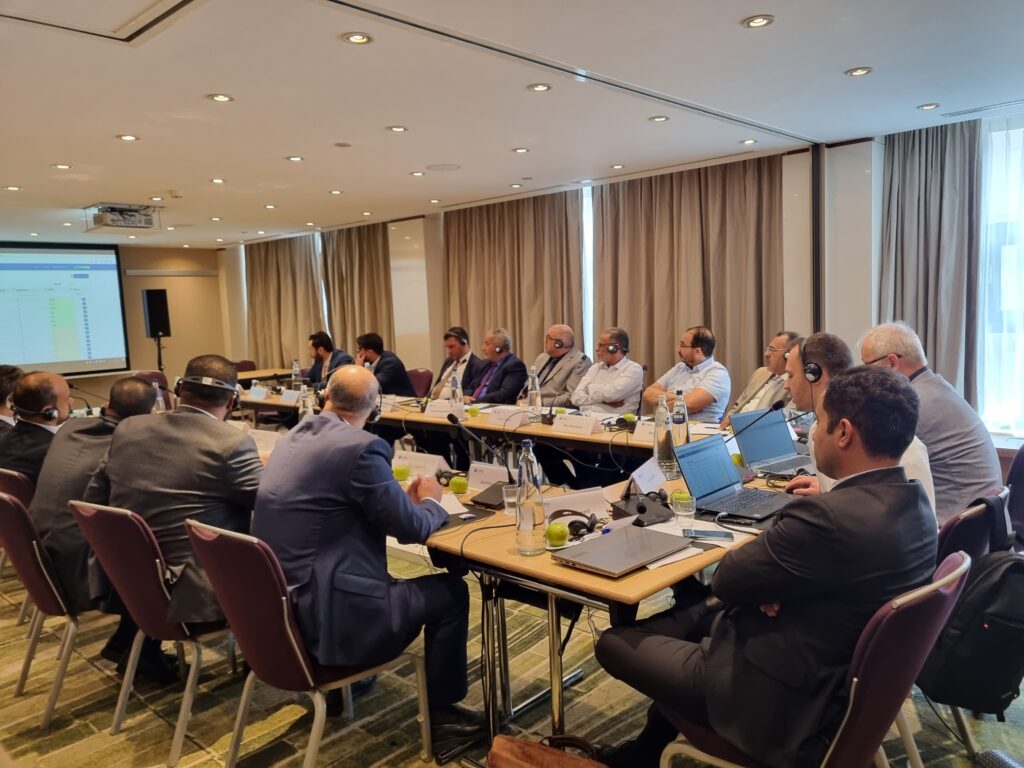
The program focused on helping Libya develop institutional, legislative and technical capacity to account for missing persons impartially, in line with the rule of law, including by developing the capacities of the MAFMM and other state institutions engaged in the issue of the missing.
With the assistance of ICMP, the MAFMM collected more than 11,000 genetic reference samples from families of the missing, representing more than 3,000 missing persons in Tripoli, Benghazi, Sabha, Ben Walid, Sirte, and other places. Over its two-year program, ICMP was entrusted with 249 PM samples and 1,325 family reference samples. ICMP supported a DNA-led identification process that made it possible to submit more than 100 DNA match reports to the authorities concerning missing persons cases, including the case of the former Minister of Foreign Affairs and then human rights activist and critic of the Qadhafi regime, Dr. Mansour Rashid Khikia. ICMP also trained Libyan experts, including more than 50 MAFMM staff, in forensic archaeology, anthropology, pathology, DNA reference sample collection and PM sampling procedures. Training in personal data processing, including DNA profiling, matching, and reporting, was also delivered, with a focus on data protection standards.
Despite ending its in-country presence in 2014 due to the security situation, ICMP continued to provide support. In 2015 and 2016, ICMP trained Libyan legal experts, civil society activists and government representatives to enable them to improve court-led processes on mass graves and missing persons. The training aimed to expand the use of forensic evidence in missing persons investigations and to clarify inter-institutional responsibilities and legal obligations to family members of the missing.
In late 2020, ICMP was asked to assess Libya’s missing persons process, including its institutional, legal and technical capacities to address the issue of disappeared and other missing persons, as part of a project that aims to lay the foundations for a sustainable process to account for missing persons. Completed in January 2021, the assessment showed that, despite commendable efforts undertaken by various institutions, current legal, institutional, and technical provisions to account for missing persons are inadequate.
In June 2023, ICMP signed a Technical Cooperation Agreement with the Libyan authorities, facilitating the roll-out of ICMP operations to support the development of an effective missing persons process in the country.
The collapse of the dams near Derna in September 2023 created thousands of new missing persons cases and broadened the objectives of the Libya Program. The Program has organized training and consultation and prepared for long-term operations that can address missing persons cases from conflict and political instability over a period of decades, and which has affected large number of migrants as well as Libyans.
Training programs have been designed to increase institutional capacity to manage crime scenes and pave the way for the launch of the iDMS. Preparations are also underway to assess DNA lab facilities in Tripoli, and expand the mapping of family associations.


