Vietnam
The Government of Vietnam (GVN) estimates that millions of Vietnamese were killed or went missing in the 30 years of the Vietnam-American war. Vietnam has devoted considerable attention to locating and identifying human remains, but progress has been limited.
In July 2020, the United States Agency for International Development (USAID) and ICMP began a project to help advance DNA identification methods in Vietnam, working principally with the Vietnam Academy of Science and Technology (VAST) and the Center for DNA Identification (CDI). The project mainly aims to adopt modern-day DNA-led identification methods to the context of Vietnam, including Next Generation Sequencing (NGS).
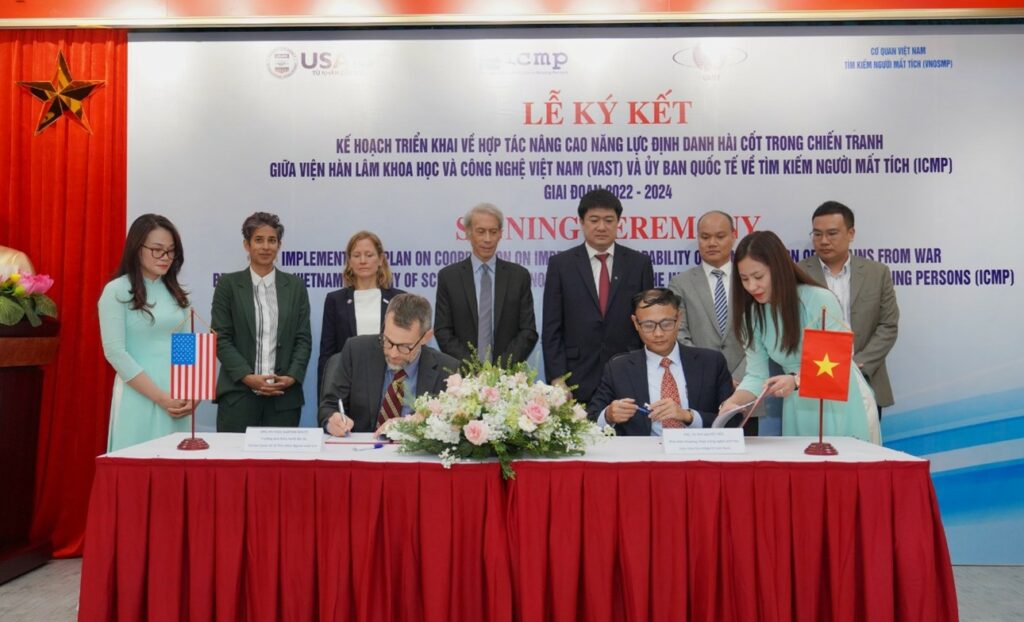
In October 2022, with the support of the Vietnam Ministry of Foreign Affairs Office of Seeking Missing Persons (VNSOMP), an Implementation Plan was signed between ICMP and VAST, which established a framework for the transfer of heavily degraded Vietnamese PM samples to ICMP’s laboratory in The Hague for DNA testing and exchange of technical knowledge and skills.
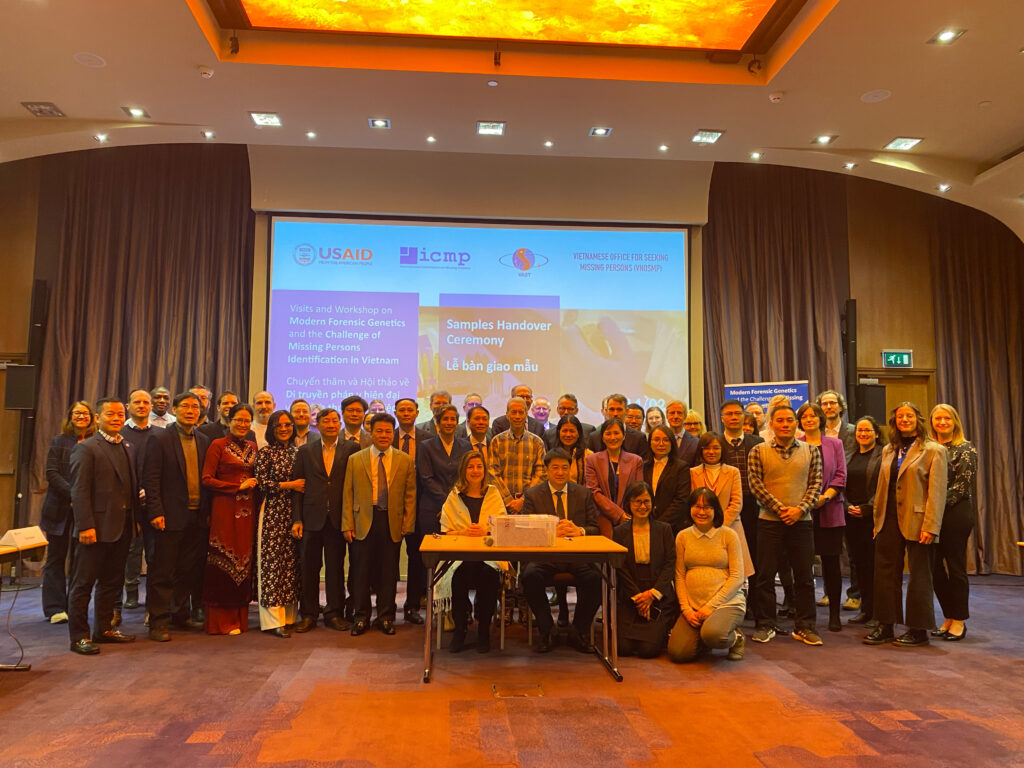
In February 2023, a delegation of Vietnamese scientists and government officials brought samples of unidentified human remains to the ICMP laboratory, where DNA was extracted from a number of highly degraded samples, resulting in a series of recommended modifications to protocols currently being used in Vietnam.
The first report on results under the Implementation Plan was delivered in July 2023 during a workshop organized by VAST, together with representatives from the CDI, the Institute for Biotechnology, the Department of National Devotees of the Ministry of Labor, War Invalids and Social Affairs, and the VNSOMP.
In addition to DNA profiling and sequencing techniques that reflect the latest developments in forensic genetics, the program addresses the need for efficient data management, including the creation of a single, centralized database. This will require effective coordination of participating DNA laboratories and entities involved in registering missing persons and collecting reference samples. These activities need to be coordinated and undertaken in an efficient and controlled way. ICMP will offer database solutions for laboratory workflows, including access to the iDMS.
Government engagement with civil society and families is required in order to ensure trust, understanding and cooperation in a rule-of-law based missing persons process. Recovery and examination of human remains, sampling for DNA testing, missing persons registration and collection of reference samples, data protection and data privacy, DNA matching and reporting, and mechanisms for official identifications are all areas where ICMP can cooperate with Vietnamese authorities.
VAST will be ICMP’s primary institution for scientific exchange, while program coordination will also intersect with other institutions such as the Ministry of Labor, War Invalids and Social Affairs (MOLISA) and the VNOSMP, to define inter-institutional processes and identify gaps.