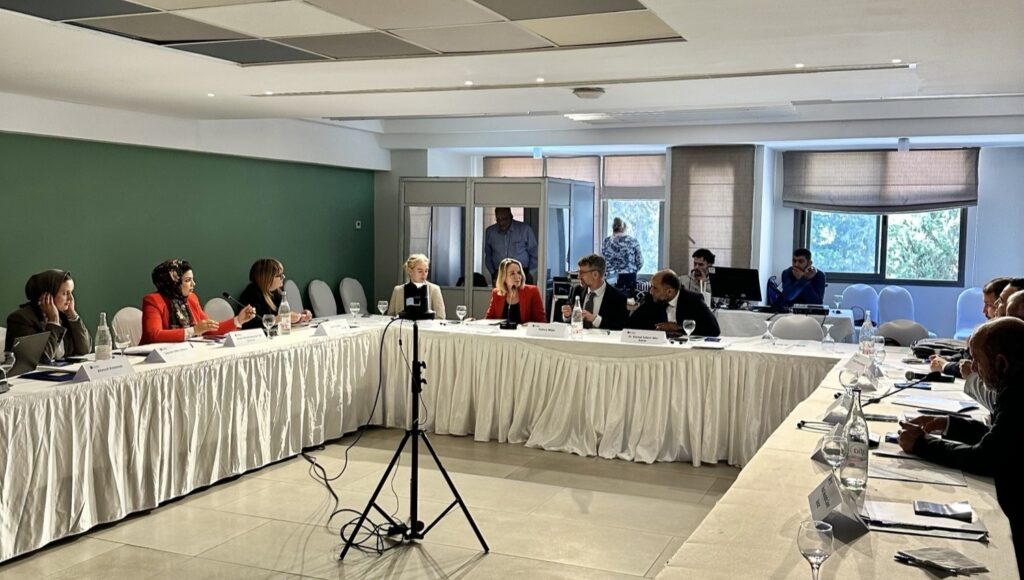
[:en] 25 March 2009: Kosovo’s authorities and The International Commission on Missing Persons (ICMP) deepened their cooperation and furthered their determination to resolve the issue of missing persons in Kosovo as Kosovo’s Deputy Prime Minister Rame Manaj visited ICMP’s facilities in Bosnia-Herzegovina. The delegation also included Mr. Prenk Gjetaj, Head of Government Commission on Missing Persons and Dr. Arsim Gerxhaliu, Head of the Office on Missing Persons and Forensics.
The purpose of the visit was to review the technical assistance provided by ICMP, to discuss the current problems in the process of locating, recovering and identifying persons missing from the armed conflict and to seek solutions on a way forward. ICMP and the delegation also discussed the Law on Missing Persons, strengthening the Kosovo Commission on Missing Persons and ensuring that the families of the missing are fully informed regarding the process. During their visit, the delegation toured ICMP’s DNA laboratory system and met with the Board of Directors of the Missing Persons Institute for Bosnia and Herzegovina.
It is estimated that approximately 4,400 persons went missing during the armed conflict. Through the use of DNA identity testing, ICMP has assisted in identifying 2,167 mortal remains since 2002, based on bone samples received from the Government of Serbia and from UNMIK (now EULEX). According to OMPF, many missing persons cases were closed in Kosovo prior to the use of DNA testing.
“DNA provides irrefutable evidence of identity, which is important for families, the criminal judicial process and for an accurate accounting of what happened  during the conflicts,” said Adi Rizvic, Deputy Director of ICMP’s Forensic Sciences Department. “In the case of Kosovo, the process of recovering the mortal remains of persons missing has declined drastically in the last few years, which has decreased the numbers of identifications. Furthermore, and this is difficult to explain to the families of the missing, ICMP has sufficient blood reference samples to close over 1,600 cases, but these DNA profiles do not match any of the DNA profiles taken from bone samples, including the samples we received from OMPF taken from the Pristina morgue,” he added.
“I am impressed with ICMP’s work. I understand the process much better now and I am thankful to ICMP for all its efforts and assistance. I strongly support the initiative that a thorough review of the recovery process, starting with 1999, should be undertaken as soon as possible. As a first step, it is important to understand how many missing persons cases were closed prior to the use of DNA. The Kosovo Government is looking forward to the intensification of cooperation with ICMP,” said Deputy Prime Minister Manaj, after visiting ICMP’s forensic facilities in Tuzla.
Since 1999, the ICMP has provided assistance to relevant authorities to determine the fate and whereabouts of the missing from the Kosovo Conflict. DNA-assisted technology is an internationally recognised scientific method of human identification, and the ICMP DNA laboratory system has a world-wide reputation.
ICMP has the world’s highest throughput capacity for DNA identity testing. Due to ICMP’s success in using DNA to identify large numbers of missing, in combination with high standards of forensic archaeology and anthropology, ICMP has been invited to provide assistance to: the Philippines (Typhoon Frank), Thailand (the 2004 SE Asian Tsunami), the United States (Hurricane Katrina), Chile, Colombia, Iraq, Kuwait, Cyprus and Norway (WWII), in addition to the work within the Western Balkans.[:bs]Vlasti Kosova i Međunarodna komisija za nestale osobe (ICMP) dodatno su poboljšali svoju saradnju i odlučnost da riješe problem nestalih osoba na Kosovu tokom posjete zamjenika premijera Kosova, Rame Manaj objektima ICMP-a u Bosni i Hercegovini. U delegaciji su i gospodin Prenk Gjetaj, šef Vladine komisije za nestale osobe i dr. Arsim Gerxhaliu, šef Kancelarija za nestala lica i sudsku medicine (KNLSM).
Svrha ove posjete je uvid u tehničku pomoć ICMP-a, razgovor o trenutnim problemima u procesu lociranja, ekshumiranja i identificiranja osoba nestalih tokom oružanog sukoba. ICMP i delegacija također su raspravljali o Zakonu o nestalim osobama, jačanju Komisije za nestale osobe Kosova, te da porodice nestalih budu u potpunosti informisani o toku ovog procesa. Tokom posjete, delegacija je posjetila ICMP-ev sistem DNK laboratorija, te se sastala s Kolegijem direktora Instituta za nestale osobe Bosne i Hercegovine.
Procjenjuje se da je oko 4.400 osoba nestalo tokom oružanog sukoba. Korištenjem DNK analize, ICMP je pomagao u identificiranju 2.167 posmrtnih ostataka od 2002. godine, a sve na temelju uzoraka kostiju primljenih od Vlade Srbije i UNMIK-a (sada EULEX). Prema KNLSM-u, mnogi slučajevi nestalih osoba na Kosovu zaključeni su prije upotrebe DNK analize.
“DNK pruža nepobitan dokaz o identitetu, što je važno za porodicu, kazneni sudski postupak, ali i za tačne informacije šta se dogodilo tokom sukoba”, kazao je Adi Rizvić, zamjenik direktora ICMP-evog odjela za forenzičke nauke. “U slučaju Kosova, proces ekshumiranja posmrtnih ostataka nestalih osoba drastično je opao u posljednjih nekoliko godina, što je smanjilo I broj identifikacija. Nadalje, a to je teško objasniti porodicama nestalih, ICMP ima dovoljno referentnih uzoraka krvi da zaključi preko 1600 slučajeva, ali ti DNK profili koje smo dobili iz uzoraka krvi ne odgovaraju nijednom DNK profiliu koje smo dobili iz uzoraka kostiju, uključujući i uzorke iz mrtvačnice u Prištini koje smo primili od KNLSM-a.
Impresioniran sam radom ICMP-a. Sada razumijem bolje ovaj proces i zahvalan sam ICMP-u na pomoći i naporu. Snažno podržavam inicijativu da se detaljna revizija procesa ekshumacija, počevši od 1999. godine, poduzme što prije. Kao prvi korak u ovom pravcu, važno je da utvrdimo koliko slučajeva nestalih osoba je zaključeno prije početka korištenja DNK analize. Vlada Kosova se raduje intenziviranju saradnje sa ICMP-em u narednom periodu”, izjavio je zamjenik premijera Kosova, Rame Manaj.
Od 1999. godine ICMP pomaže nadležnim vlasima da utvrde sudbinu i pronađu nestale u kosovskom sukobu. DNK tehnologija je međunarodno priznata znanstvena metoda identifikacije osoba, a ICMP-ev sistem DNK laboratorija uživa svjetski ugled.
ICMP ima najveći kapacitet za obavljanje DNK analize u svijetu. Uslijed ICMP-evog uspjeha da pomoću DNK identificira veliki broj nestalih osoba, u kombinaciji s visokim standardima forenzičke arheologije i antropologije, osim rada unutar Zapadnog Balkana, ICMP je pozvan da pruži pomoć i slijedećim mjestima: Filipini (tajfun Frank), Tajland (2004, cunami), SAD (uragan Katrina), Čile, Kolumbija, Irak, Kuvajt, Kipar i Norveška (drugi svjetski rat).[:ar][:es]
[:]