

Mexico
According to the National Registry of Missing Persons, as of 21 September 2023, 111,521 persons were reported as disappeared in Mexico as a result of crime.
In light of widespread under-reporting and the lack of comprehensive nationwide statistics, these numbers likely offer only a partial view of the situation: day-to-day disappearances are a fact of life in Mexico.
Disappearances reflect rising levels of violence by organized crime in response to the government’s strategy of militarized security, as well as violent repression by state or private groups competing for control of illegal markets, natural resources, and land. More than 150,000 people are estimated to have been killed in Mexico between 2006 and 2018 and, according to the Internal Displacement Monitoring Center, more than 357,000 had been internally displaced by violence as of December 2020. Migration from Central America has also fueled a spike in violent disappearances among migrants.
Data on missing persons in Nuevo León collected by ICMP’s NGO partner, Citizens in Support of Human Rights (CADHAC) and analyzed by the University of Oxford, the University of Minnesota, and the Latin American Faculty of Social Sciences (FLACSO-Mexico) in 2017, found that at least 47 percent of disappearances in Nuevo León were committed by state authorities and 91 percent of victims had no relationship to organized crime. Across the country, 75 percent of those reported missing are men, and 25 percent are women. The states of Jalisco, Tamaulipas, and Estado de Mexico have the largest number of missing persons, while Nuevo León has one of the highest numbers of municipalities with the highest per capita rate of missing persons.
The forced disappearance of 43 students from the Teacher Training School in Ayotzinapa, Guerrero, in 2014 raised the visibility of the issue of missing persons. In 2017 the National Movement for the Disappeared (MovNDmex), reuniting collectives of families of the missing, along with many CSOs secured the adoption and entry into force of the General Law on Enforced Disappearances and Disappearances by Private Persons.

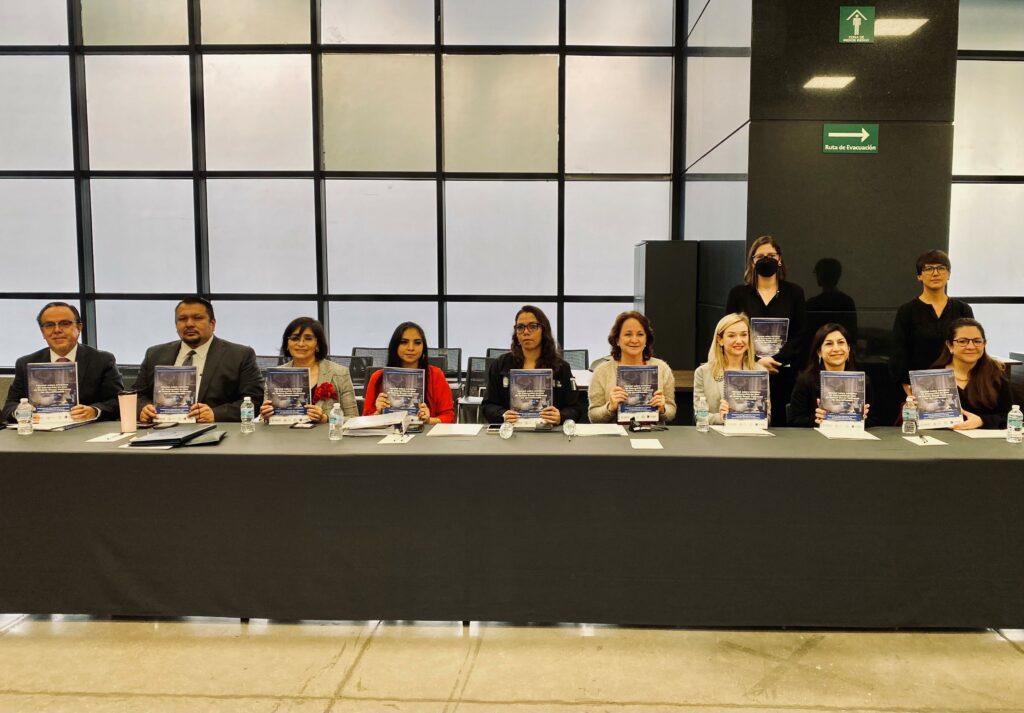
The General Law provides for criminal and administrative frameworks to punish perpetrators of disappearances, and establishes the National System for Missing Persons, composed of a National Search Commission (CNB), a Search Commission in each of the 32 states, and various other agencies, including the Conference of Prosecutors, and a Citizens’ Council. In 2021, also thanks to the mobilization of families of the missing, the government of Mexico in collaboration with the United Nations established an Extraordinary Mechanism for Forensic Identification composed of seven Mexican and international experts in forensic, legal, psychosocial and international cooperation, to contribute to the development of strategies to address the large numbers of mass graves that must be excavated and the more than 52,000 unidentified remains nationwide.
Under the leadership of the CNB, formally established in 2019, efforts to account for missing persons have been more visible and intensive. Moreover, through the establishment of the Regional Center for Human Identification (CRIH) in Coahuila and more recently the National Center for Human Identification (CNIH) in Morelos, the CNB is promoting the collection of family reference samples and a program of massive exhumation from cemeteries and common graves to address the examination and identification of unidentified human remains held by the state.
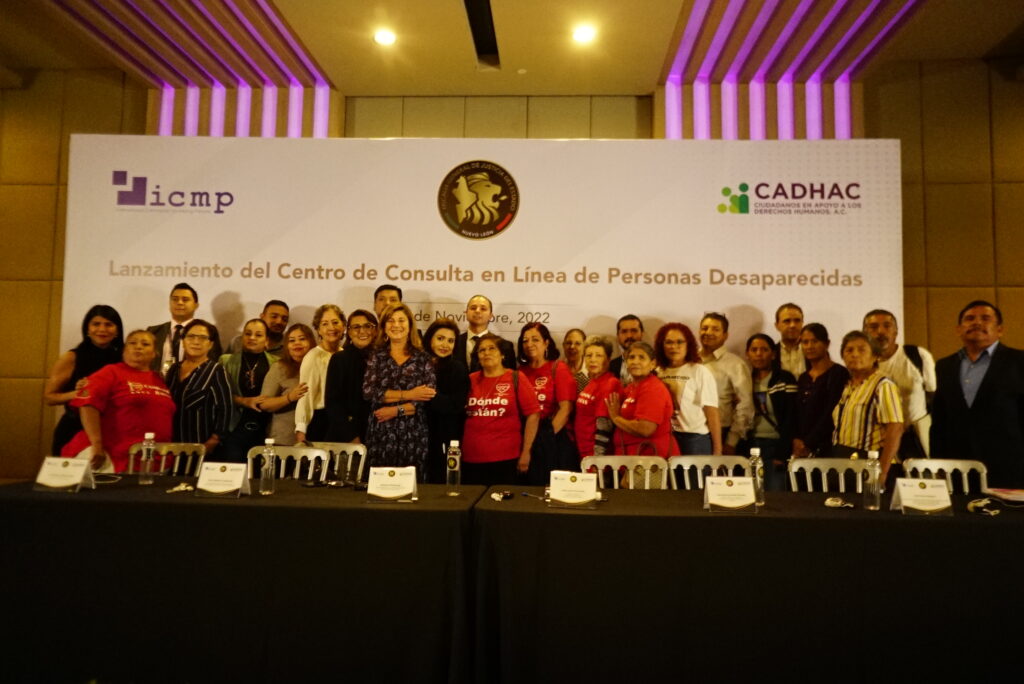
From December 2018 to July 2022, ICMP participated in a four-year program to assist the authorities in Nuevo León through the “Justice for the Disappeared in Nuevo León” project designed in collaboration with CADHAC, with funding from USAID.
The CADHAC-ICMP project enhanced the institutional capacity of Nuevo León to comply with the General Law on Missing Persons, improved the data-processing infrastructure, strengthened the forensic processes for missing persons, including DNA-led identification, and enhanced victims’ organization advocacy. Additionally, ICMP provided direct assistance to fill critical gaps in forensic anthropology capacity for highly complex cases in 2022 and, with the General Attorney´s Office, launched a customized version of the OIC to improve communication with families and promote transparency.
From July 2021 to August 2022, ICMP expanded its activities in Mexico to include assistance to the Federal Prosecutor’s Office through a 10-month pilot project funded by USAID. Through this project, ICMP supported the adoption of two new DNA extraction methods that were validated and proven to achieve better results in obtaining reportable DNA profiles.


