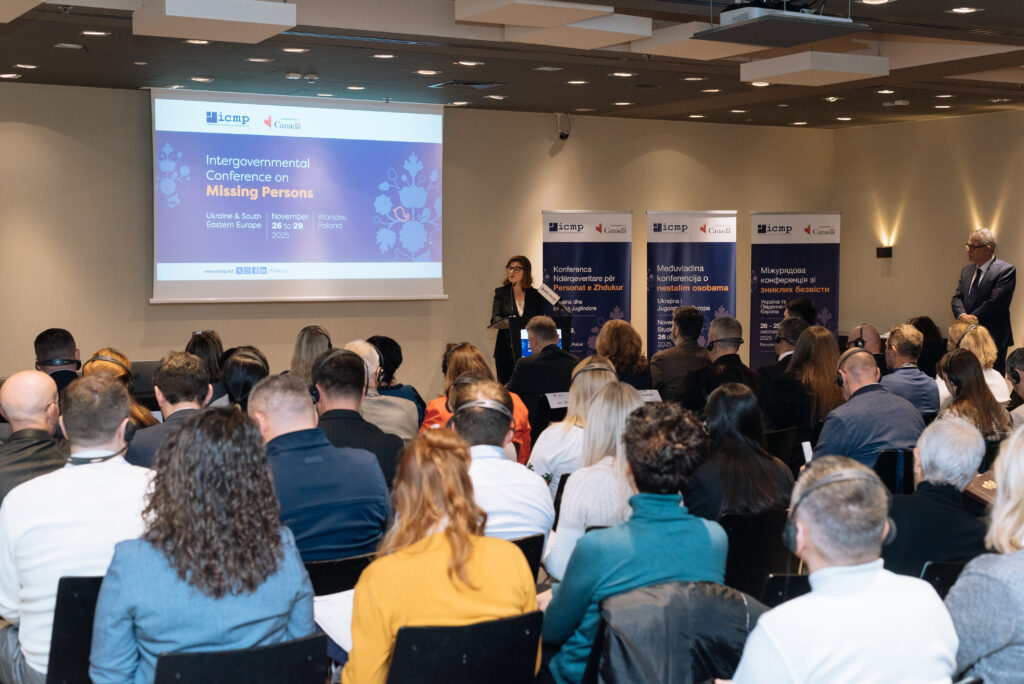
Warsaw, 28 November 2025: – Ukraine has made remarkable progress in establishing an effective system to account for missing persons from the Russian invasion and can develop this system further by learning from the experience of other countries, participants at a conference organized in Warsaw this week by the International Commission on Missing Persons (ICMP) were told.
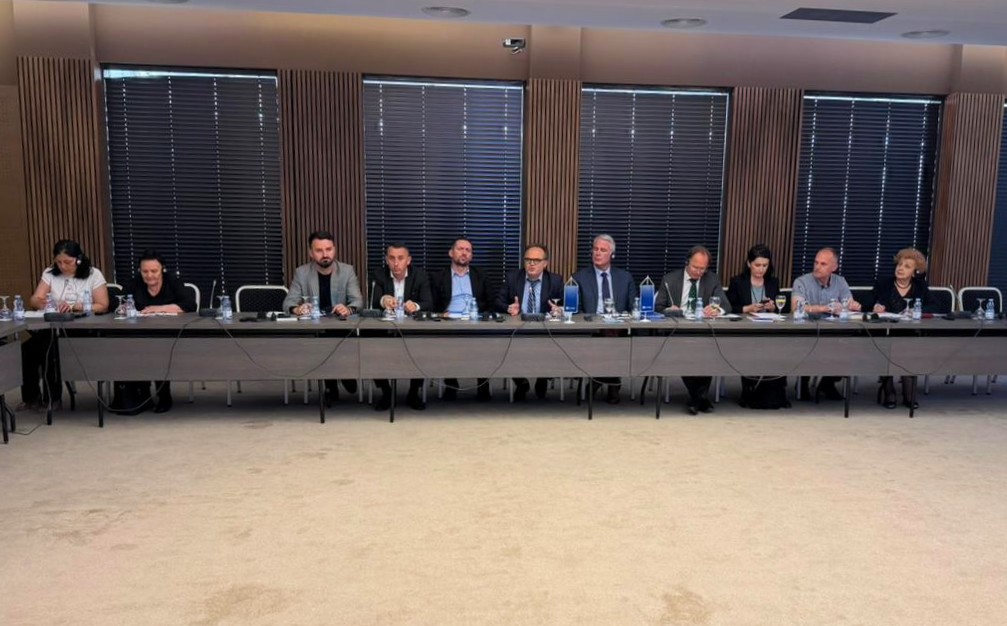
The two-day conference, which ended today, brought together senior government representatives and civil society organizations from Ukraine and representatives of missing persons institutions and associations of families of the missing from countries of the former Yugoslavia. In a series of structured and detailed discussion, participants from Southeast Europe explained the evolution of their own missing persons processes, highlighting strategies that worked and practices that had to be adjusted to become more effective. Representatives from Ukraine were able to ask specific questions in the context of the evolving Ukrainian system.
The conference concluded with a set of agreed principles:
- States should continue to strengthen their institutional and legislative arrangements to ensure that all missing persons are accounted for, regardless of whether they are civilians or members of the armed forces, and regardless of the circumstances of disappearance. This includes improving coordination between police, judiciary, forensic services, civil registries, and all other relevant institutions so that specialized institutions responsible for missing persons can operate effectively and comprehensively.
- States should take steps to enhance and maintain a central, unified database of all missing persons. This should be regularly updated, accessible to all competent institutions and, where appropriate, to families, and it should contain all relevant data, including ante-mortem and post-mortem records, DNA profiles, investigative files, and contextual information. It is essential to develop reliable AM/PM data-matching capabilities and deploy robust DNA comparison software within this system.
- A comprehensive national strategy on missing persons, should be developed, published, and regularly updated with systematic input from families, civil society organizations, and all relevant institutions.
- Such a strategy should support the development of an effective, victim-centered case-management system that ensures transparent communication with families; it should strengthen national capacities in specialized fields such as forensic archaeology and anthropology, including through centers of excellence and training; and establish a sustainable, streamlined DNA laboratory system dedicated to missing persons cases, supported by an ISO accreditation pathway to ensure quality and reliability.
- Through dialogue with institutions, associations of families of the missing can ensure that the voices and rights of families are heard. By monitoring legal frameworks and relevant policies, and cooperating with one another, they can strengthen advocacy and ensure institutional accountability.
- States should ensure that families receive consistent legal and psychological support and that they understand their rights. Families should be fully assured – through a DNA-led process – of the identity of returned remains, and they should be encouraged through a comprehensive outreach program to provide genetic samples and contextual information to support the collective effort to account for their missing relatives.
- Families are the primary bearers of culture and memory: the culture of remembrance is shaped by institutions, communities, and civil society – and successful memorialization occurs when these three spheres cooperate, without diminishing the autonomy of the families. Integrating the testimonies and perspectives of families in educational and cultural institutions ensures the transmission of truth to future generations.
- Families must be direct participants at every stage of the justice process. Thorough, well-documented, and securely preserved evidence is essential for establishing the truth, especially when perpetrators of disappearances attempt to distort facts or manipulate the narrative.
Speaking at the conference, ICMP Director General Kathryne Bomberger noted that, “States need scalable legal technical and operational capacity. This includes high throughput DNA systems, population-scale databases, staff surging, rapid resource mobilization and the legal ability to integrate international assistance and expertise when national capacity is exceeded,” and she commended the authorities in Ukraine for moving forward with this process. She also noted that “Families of the missing must be fully involved with and informed about efforts to account for their loved ones because doing this ensures transparency and therefore trust.”
Canada’s Ambassador to Poland, Catherine Godin, highlighted the fact that “resolving the issue of missing persons is not just a humanitarian obligation but a foundation for justice and lasting peace.” She said Canada is committed to supporting efforts to uphold the rights of families affected by the Russian invasion and will continue its efforts to ensure that the issue of missing persons “remains a priority on the international agenda”. The experience of countries from the former Yugoslavia, she said, “has shown that progress is possible through cooperation, science and a rights-based approach.”
Ukraine’s Commissioner for Missing Persons Under Special Circumstances Artur Dobroserdov said, Ukraine is committed to fulfilling its obligations to families of the missing and, “has established a system that is capable of locating and identifying missing civilians and military personnel. This involves coordinating the work of all the relevant agencies, engaging the families of the missing and applying modern forensic science.” He added that Ukraine is open to learning from the experience of other countries especially those that have had to address large-scale missing persons scenarios as a result of conflict.
Noting that families of the missing from Ukraine and Southeast Europe are “united in pain”, Natalia Yepifanova, the Head of the Association of Families of Missing and Captured Ukrainian Defenders, said the conference was an opportunity “to learn from the experience of families from Southeast Europe, in particular what worked and what didn’t work” in developing an effective missing persons process. She said that the discussion illustrated “what could have been done better twenty or thirty years ago and that is applicable in Ukraine today.” as the more than 50 associations working on the issue of missing persons in Ukraine continue to address serious challenges.
ICMP’s Ukraine Program is supported by Norway, Germany, the Netherlands, the United States and Canada. The conference in Warsaw was made possible through funding from Canada.
About ICMP
The International Commission on Missing Persons (ICMP) is a treaty-based intergovernmental organization with Headquarters in The Hague, the Netherlands. Its mandate is to secure the cooperation of governments and others in locating missing persons from conflict, human rights abuses, disasters, organized crime, migration and other causes and to assist them in doing so.