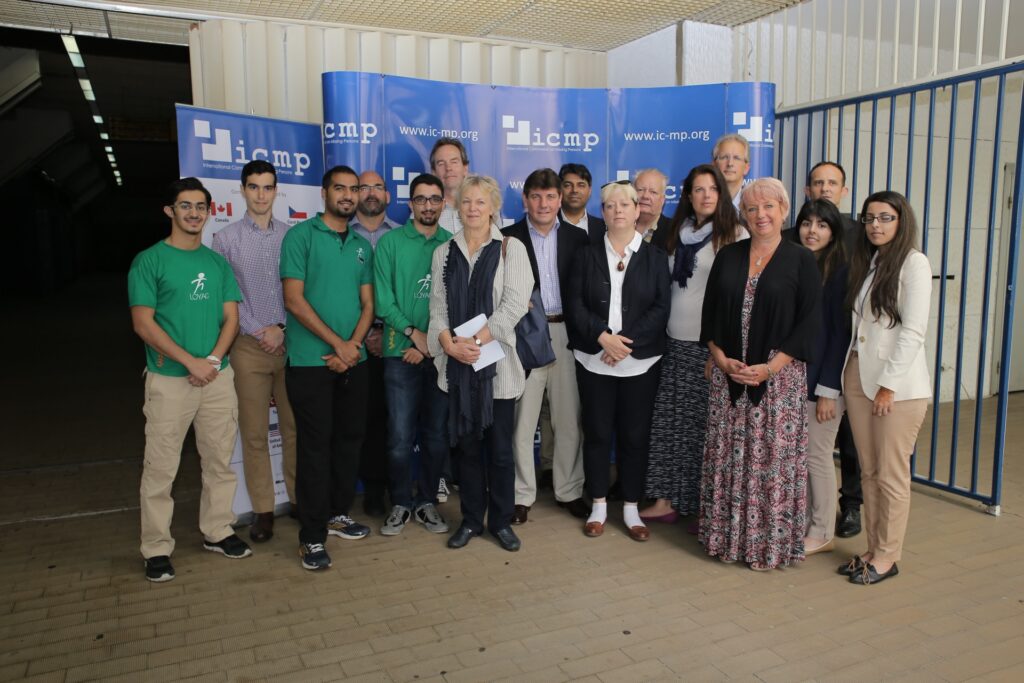
A delegation of British parliamentarians visits ICMP

يشارك

[:en]31 July 2014: A group of British parliamentarians visited the facilities of the International Commission on Missing Persons (ICMP) in Tuzla today. The goal of the visit was for the parliamentarians to learn about ICMP’s efforts towards resolving the issue of missing persons in the Western Balkans and in other parts of the world.

The visit was part of the Conservative Party’s international social action project known as Project Maja, which was founded by Foreign Office Minister, Baroness Sayeeda Warsi. The delegation was led by Eric Ollerenshaw MP and Baroness Fiona Hodgson and included Lord Tariq Ahmad, Jackie Doyle-Price MP, Karen Lumley MP, Caroline Nokes MP, Stephen Metcalfe MP, Andrew Bingham MP and the Earl of Courtown.

On behalf of the delegation Baroness Hodgson said, “The dedication of ICMP’s staff and the extraordinary results that have been achieved strengthens a modern, rule-of-law approach to an issue that affects millions of people around the world”

“It is an honor for ICMP to host this delegation of distinguished Conservative party politicians from both British Houses of Parliament. ICMP has received considerable financial support for its activities from the UK and the British Government is a firm supporter of ICMP’s development into a global resource”, said Adam Boys, ICMP’s Director of International Programs.

The visitors attended a presentation of ICMP’s work, including descriptions of ICMP’s institutional capacity building and DNA-led high-throughput human identification system.

The ICMP is the only specialized international organization of its kind that addresses this issue of missing persons in all of its facets. Since its establishment in 1996 ICMP has been funded through voluntary grants, donations and contributions from participating governments.

Some 40,000 persons were considered missing in the Western Balkans following the armed conflicts in the 1990s. With the help of ICMP and strong efforts of the local authorities today over 70% of missing persons have been accounted for.[:bs]

Grupa britanskih parlamentaraca koja je posjetila prostorije ICMP u Tuzli.

Grupa britanskih parlamentaraca danas je posjetila prostorije Međunarodne komisije za nestale osobe (ICMP) u Tuzli. Cilj posjete je bio da se parlamentarci informišu o ICMP-ovim aktivnostima na rješavanju pitanja nestalih osoba na Zapadnom Balkanu i u ostatku svijeta.

Ova posjeta je dio međunarodne društvene kampanje Konzervativne stranke pod nazivom „Project Maja“, kojeg je pokrenula ministrica u Ministarstvu vanjskih poslova Velike Britanije, baronesa Sayeeda Warsi. Delegaciju su predvodili član Parlamenta Ujedinjenog Kraljevstva Eric Ollerenshaw i baronesa Fiona Hodgson, a osim njih u delegaciji su bili i lord Tariq Ahmad, članovi Parlamenta Jackie Doyle-Price, Karen Lumley, Caroline Nokes, Stephen Metcalfe i Andrew Bingham, grof od Courtowna.

Baronesa Hodgson je u ime delegacije izjavila: „Predanost osoblja ICMP-a i izvanredni rezultati koje se postigli jačaju moderan pristup problemu nestalih, zasnovan na vladavini prava. Problem nestalih pogađa milione ljudi širom svijeta“.
„ICMP ima čast da ugosti delegaciju istaknutih političara Konzervativne stranke iz oba doma Parlamenta Velike Britanije. ICMP od Velike Britanije prima značajnu finansijsku podršku, a britanska vlada se svesrdno zalaže da ICMP postane resurs za cijeli svijet“, izjavio je Adam Boys, ICMP-ov direktor međunarodnih programa.

Posjetioci su prisustvovali prezentaciji ICMP-ovog rada, uključujući rad na stvaranju novih institucija i ICMP-ov sistem za masovnu identifikaciju ljudi putem analize DNK.

ICMP je jedina specijalizirana međunarodna organizacija svoje vrste čiji rad obuhvata sve aspekte problema nestalih. Od svojeg osnivanja 1996. godine ICMP se finansira kroz dobrovoljne grantove, donacije i doprinose vlada.

Smatra se da je oko 40.000 ljudi nestalo tokom oružanih sukoba na Zapadnom Balkanu 1990-ih godina. Uz pomoć ICMP-a i uz izuzetne napore lokalnih vlasti danas je više od 70% njih pronađeno i identifikovano.[:ar][:es][:]

Scroll to Top