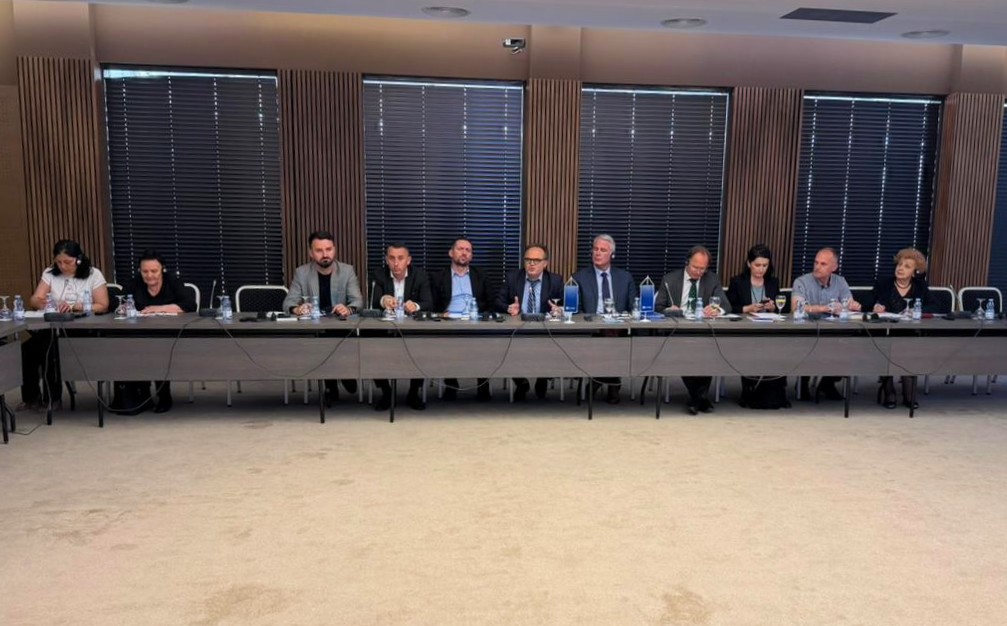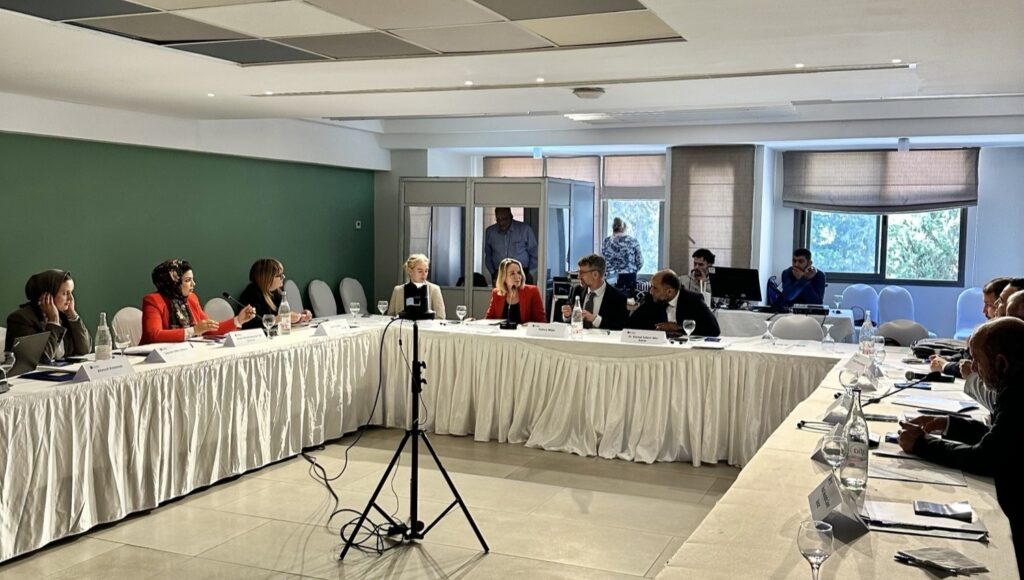
Kyiv, 10 December 2024: The International Commission on Missing Persons (ICMP), in partnership with the NGO Media Initiative for Human Rights (MIHR), held a conference today – International Human Rights Day – in Kyiv. Participants reviewed progress on addressing the issue of missing persons in Ukraine, focusing on the rights of families of missing persons and efforts to foster dialogue among government, civil society, and international partners to ensure that relatives of the missing are recognized as equal partners.
The conference examined three fundamental rights of families of the missing: the right to association, the right to truth, and the right to justice.
ICMP Europe Program Director Matthew Holliday noted that when individuals go missing involuntarily, states have a duty to conduct effective, independent, and impartial investigations; they should seek to clarify the fate of the disappeared, provide information to families, and ensure that perpetrators are held accountable.
“On International Human Rights Day, ICMP reaffirms its support for its partners in Ukraine. ICMP will continue to help families access their right to truth and justice and it will continue to help Ukrainian institutions to investigate in the most effective way possible the circumstances in which people have gone missing, including those who have been illegally deported.”
The Head of MIHR, Olha Reshetylova, said that working on the issue of missing persons, the MIHR team always keeps two things in mind – not to lose empathy and compassion for families, and how to help relatives transform their pain into constructive activity.
“That is why, since 2022, we have been helping families unite in organizations and initiatives. Such associations are about mutual support and also about strengthening the voice of victims and establishing interaction with the state and other partners,” Reshetylova said. “Today, MIIHR is working with almost 30 family organizations, and they are becoming a visible and important part of Ukrainian civil society.”
Reshetylova described ICMP as “a reliable partner we can turn to for consultations, advice or joint actions,” and she added that bringing the topic of missing persons before donors and international partners is crucial. “It gives us hope that Ukraine will cope with this extremely difficult task – to find, identify and return each and every one we have lost due to the war.”
The conference served as a platform for families, informal family associations and civil society organizations (CSOs) to present their work, to network and to exchange experience. More than 80 representatives of families and CSOs took part.
Families had an opportunity to learn more about the process of registration for war damages and reparation, through a presentation by the Register Damages for Ukraine (RD4U) organization, and received information on how to register claims for missing, detained and abducted persons.
As part of its Ukraine Program, ICMP is helping families and CSOs to access the right to truth and justice and it is supporting the active involvement of families in the search for the missing.
ICMP has signed agreements with responsible ministries and state institutions and with CSOs in Ukraine, and has developed a five-year strategy to help the authorities develop an effective, long-term missing persons process.
ICMP’s Ukraine Program is supported by the governments of Canada, Germany, Norway, the Netherlands and the United States. Today’s conference was funded by Canada.
About ICMP
ICMP is a treaty-based intergovernmental organization with Headquarters in The Hague, the Netherlands. Its mandate is to secure the cooperation of governments and others in locating and identifying missing persons from conflict, human rights abuses, disasters, organized crime, irregular migration and other causes and to assist them in doing so. The ICMP also supports the work of other organizations in their efforts, encourages public participation in its activities, and promotes the development of appropriate forms of commemoration and commemoration of the missing.