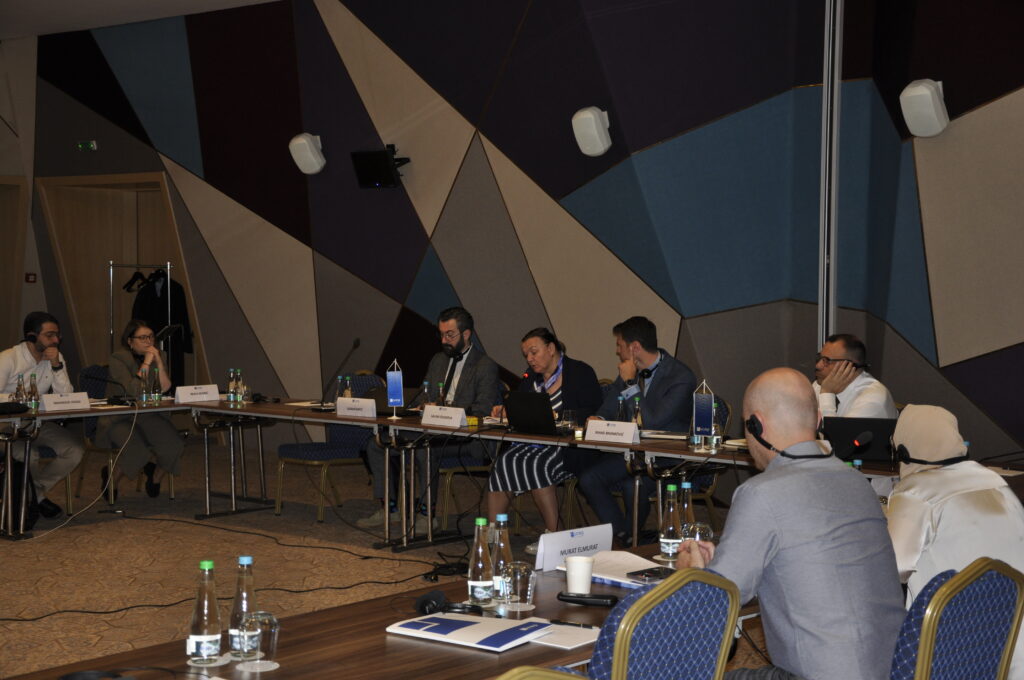
Sarajevo, 12 June: A group of family representatives and civil society activists from Syria completed a weeklong visit to Bosnia and Herzegovina (BIH) hosted by the International Commission on Missing Persons (ICMP). The visit is part of a program to support the development of an effective strategy to account for the more than 130,000 persons who are missing in the Syrian context, including ongoing cases of disappearances since 2011.
The study visit brought together representatives from different organizations, who had the opportunity to meet with representatives of the BIH Missing Persons Institute, the Ministry for Human Rights and Refugees, and the War Crimes Prosecutor’s Office.
“ICMP is committed to helping Syrian civil society to build a sustainable process to locate all missing persons and to investigate their disappearance and secure the rights of all families to truth, justice, and reparations,” ICMP Director-General Kathryne Bomberger said, noting that strategies that had succeeded in BIH can serve as a potential model.
The Syrian visitors had an opportunity to learn at first-hand about the process implemented in BIH. In the last 25 years, with ICMP assistance and through the pioneering use of DNA, the authorities in BIH have been able to account for 75 percent of the 30,000 people who went missing during the conflict of the 1990s, a ratio that has not been equaled in any other post-conflict country.
The brutality of the Syrian conflict includes the disappearance of men, women, and children who have been abducted, killed, and forcibly disappeared, or have gone missing along migratory routes while fleeing from the fighting.
Semer Aluni, from Families for Freedom said, “This visit was very useful. We heard about important experiences – especially of women – in Bosnia and Herzegovina, and I hope we will learn from their example. In Syria, we have many victims, dead, detained and missing, and at this moment many of our people are being tortured and killed. What we have seen here gives us additional strength in the pursuit for truth and justice.”
Afef Alrasheed, from Syria Bright Future said, “I am very happy that I had the opportunity to visit Bosnia and Herzegovina and meet the families of the missing, especially the strong women of Srebrenica. I saw how steel-willed these people are. Although I am a lawyer, and I have been working on the issue of missing persons for years, in front of these people, in front of these women, I felt like a student. This was a really moving experience.”
ICMP is working with Syrian organizations to advance the development of a comprehensive Central Data Repository on Missing and Disappeared Persons. A secure, centralized and impartial database trusted by all stakeholders is critical if large numbers of missing persons are to be accounted for. To date, more than 70,000 Syrian relatives of the missing have submitted data related to 25,000 missing persons to the Repository.
ICMP has also engaged with more than 4,000 relatives of missing persons to discuss the core elements of a law-based approach to accounting for their loved ones; and it has supported numerous civil society efforts to raise awareness about Syria’s missing and disappeared, to document key sites including reported mass graves, and to secure the meaningful engagement of families.
ICMP is also supporting the development of policy frameworks for future processes to locate all missing persons. The Syrian Policy Coordination Group (PCG), launched in 2020, has developed a series of policy proposals that will inform political negotiations, including the current constitutional talks, and any future political settlement and/or legal reform, as well as an Ethical Charter on data collection from victims of the conflict. The PCG proposals articulate and uphold the rights of the missing and disappeared, of detainees and their families, and endeavor to prevent future rights violations that could result in persons going missing.
About ICMP
ICMP is a treaty-based intergovernmental organization that seeks to ensure the cooperation of governments and others in locating missing persons from conflict, human rights abuses, disasters, organized crime, migration, and other causes, and to assist them in doing so. ICMP also supports the work of other organizations in their efforts, encourages public involvement in its activities and contributes to the development of appropriate expressions of commemoration and tribute to the missing.