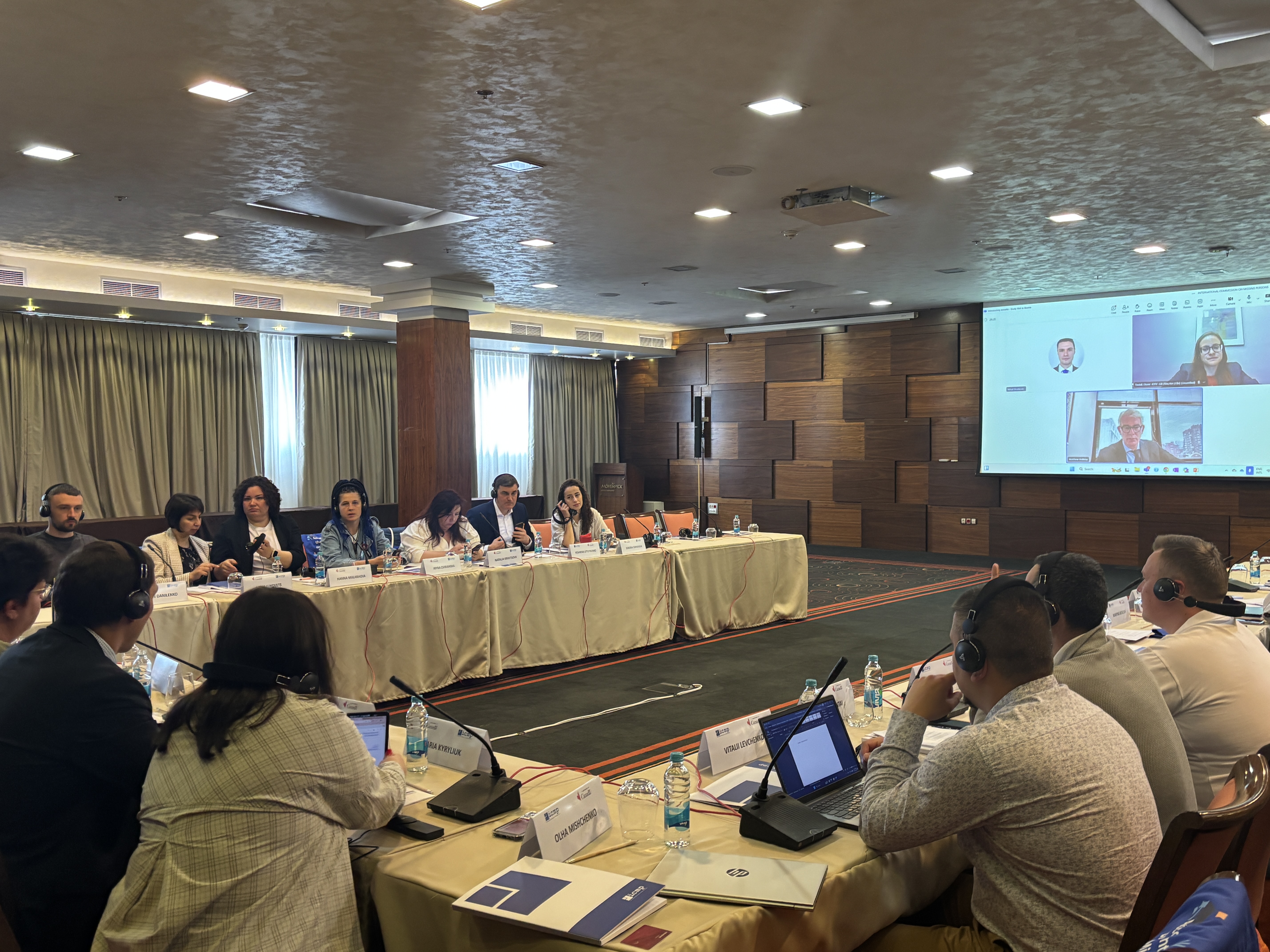
Sarajevo, 30 May 2025: – A delegation of Ukrainian family representatives, civil society activists, and government officials has completed a week-long visit to Bosnia and Herzegovina (BIH), hosted by the International Commission on Missing Persons (ICMP). The visit is part of a program to support the development of a sustainable system to account for tens of thousands of people missing as a result of the Russian invasion of Ukraine.
The Ukrainian delegation met with representatives of families of the missing, the Missing Persons Institute of BIH, and the War Crimes Prosecutor’s Office. The visitors were able to learn at first hand about Bosnia and Herzegovina’s experience in establishing an effective, rule-of-law-based missing persons process, and examine ways in which lessons from BIH can inform Ukraine’s effort to address the issue of missing persons from the conflict.
Yevhen Danylenko from Ukraine’s Office of the Commissioner for Missing Persons in Special Circumstances, said the study tour was an opportunity “to learn from the experience of a country that has gone through the tragic events of war and to adopt best practice in the search and identification of missing persons”. He said the willingness of stakeholders in Bosnia and Herzegovina to share their knowledge and experience supports the work of Ukrainian agencies and families, and will help to “to achieve our common goal of protecting the rights of relatives of missing persons and establishing justice”.
“ICMP is committed to helping Ukrainian authorities and civil society build a coherent, inclusive process to locate missing persons, investigate their disappearance, and uphold the rights of all families to truth, justice, and reparations,” said Matthew Holliday, ICMP’s Europe Program Director. He noted that the model developed in the Western Balkans, which has led to the identification of 75 percent of the 40,000 persons missing from the conflicts of the 1990s, offers practical strategies that can be adapted to Ukraine’s needs.
“Common misfortune has united families from different parts of the country, of different ages and from different directions,” said Iryna Zvirianska, a member of the “Always the first 82nd Airmobile Brigade” family association in Ukraine. She said that families searching for their loved ones support one another and support efforts to repatriate prisoners of war and ensure that soldiers who are killed in action are properly identified. “Families must be one hundred percent sure that they are burying their relatives. We ask for help in increasing the number of laboratories and DNA experts.”
In July 2022, at the invitation of the Government of Ukraine, ICMP launched a five-year program to help the authorities establish a sustainable rule-of-law-based missing persons process. This includes DNA-led identifications, forensic training and support, data systems development, and measures to ensure that evidence – particularly from mass and clandestine graves – is admissible in legal proceedings. The program also supports efforts to strengthen the capacity of Ukrainian institutions and promotes the active participation of families and civil society in the process.
This week’s study visit was organized as part of an ICMP project supported by the Government of Canada.
About ICMP
ICMP is a treaty-based intergovernmental organization with Headquarters in The Hague, the Netherlands. Its mandate is to secure the cooperation of governments and others in locating missing persons from conflict, human rights abuses, disasters, organized crime, migration and other causes and to assist them in doing so.