[:en]22 October 2021 – The International Commission on Missing Persons (ICMP) presented a detailed account of progress in accounting for those who went missing during the conflict in Croatia, together with recommendations on how more progress can be achieved.
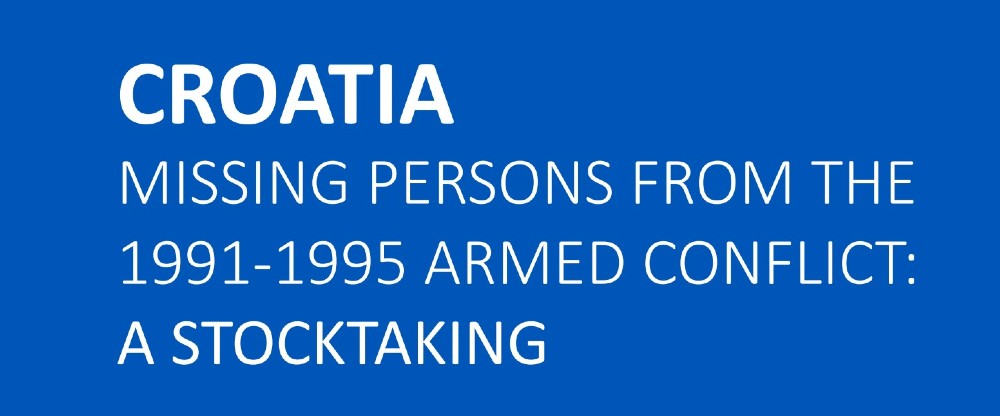
The report Croatia, Missing Persons from the 1991-1995 Armed Conflict: A Stocktaking published today considers the rights of victims and examines the roles of institutions involved in the process. It analyses how the issue of the missing, including in relation to justice, has been addressed to date, and it examines prospects for resolving the remaining cases.
“After the 1990s conflict, Croatia and other countries in the region have managed to account for an unprecedented number of missing persons, with the ICMP assistance. It is important to continue the efforts to locate and identify the remaining missing in line with the rule of law in order to secure the rights of all families to justice, truth, and reparations” the Head of ICMP’s Western Balkans Program, Mathew Holliday, said.
Since 1996, Croatia has cooperated extensively with ICMP to account for missing and disappeared persons. ICMP’s role has been to ensure an impartial, non-discriminatory process so that missing persons are searched for and identified regardless of their ethnicity, nationality, or religion and regardless of the victim’s role. ICMP has moreover encouraged the Croatian authorities to use modern forensic methods, including DNA testing and data systems, as the optimal way of identifying the missing and protecting the rights of surviving families.
ICMP opened an office in Zagreb in 2001 and signed an office agreement in September 2002. Then in 2004, the Ministry of the Family, Veterans’ Affairs and Intergenerational Solidarity and ICMP signed an agreement on a Joint Project on DNA-led identifications.
As a result of this cooperation, which has enabled comparison of the DNA profiles of reference samples with post-mortem DNA profiles, ICMP has DNA-matched 671 missing persons cases related to the 1991-1995 Croatia conflict. In addition, as a result of an exchange of DNA profiles with Croatia, ICMP also DNA matched a further 46 missing persons, whose reported place of disappearance was either BIH or Serbia.
Besides providing technical assistance for the purposes of human identification, ICMP has also sought to facilitate enhanced cooperation between Croatia and other states in the region to address the issue of persons missing as a result of the conflicts in the former Yugoslavia in line with rule of law.
In July 2018 in London, leaders of the countries in the Western Balkans region and EU members states that are participating in the Berlin Process signed a Joint Declaration, which, among other things, reiterates their commitment to supporting efforts to account for those who are still missing from the conflicts in former Yugoslavia. In November 2018 at ICMP’s Headquarters in The Hague, representatives of Bosnia and Herzegovina, Croatia, Kosovo, Montenegro and Serbia signed a Framework Plan formally undertaking to work together as the regional Missing Persons Group.
The report lists set of recommendations including:
- Maintaining commitment to resolving missing persons issues and uphold the principles endorsed in the Missing Persons Declaration signed on 29 August 2014 in Mostar;
- Continued participation as a member of the Missing Persons Group in order to implement the Framework Plan to resolve missing persons cases from conflicts on the territory of the former Yugoslavia;
- Strengthening regional cooperation of the families of the missing through the Regional Coordination of Family Associations of the Missing from former Yugoslavia;
- Exchange of documentation pertinent to the search for and recovery of missing persons between Serbia and Croatia. In particular, documentation relating to burials carried out in sanitation operations in 1991-1992 and secondary graves to which human remains were transferred in Croatia;
- Request all information and satellite and aerial imagery that NATO member countries have in their possession that might assist in pinpointing the location of clandestine gravesites for future excavation.
About ICMP
ICMP is a treaty-based intergovernmental organization with Headquarters in The Hague, the Netherlands. Its mandate is to secure the cooperation of governments and others in locating missing persons from conflict, human rights abuses, disasters, organized crime, irregular migration and other causes and to assist them in doing so. It is the only international organization tasked exclusively to work on the issue of missing persons.
[:bs]22 kolovoz 2021. godine – Međunarodna komisija za nestale osobe (ICMP) predstavila je detaljan prikaz napretka u traženju i identificiranju osoba nestalih tijekom sukoba u Hrvatskoj, zajedno s preporukama o tome kako se proces može unaprijediti.
Izvješće Hrvatska, osobe nestale u oružanom sukobu 1991-1995 godine: Pregled stanja objavljeno danas razmatra prava žrtava i uloge institucija uključenih u proces. Analizira se način na koji se do sada rješavalo pitanje nestalih, uključujući i povezanost sa pravosuđem, te se ispituju izgledi za rješavanje preostalih slučajeva.
“Nakon sukoba 1990-ih, Hrvatska i druge zemlje u regiji uspjele su pronaći i identificirati dosad najveći broj nestalih osoba, uz pomoć ICMP -a. Važno je nastaviti s naporima da se preostali nestali lociraju i identificiraju u skladu s vladavinom prava kako bi se osiguralo pravo svih obitelji na pravdu, istinu i odštetu”, rekao je voditelj ICMP-ovog programa za Zapadni Balkan Mathew Holliday.
ICMP-ova uloga u procesu pronalaženja i identificiranja nestalih u sukobu u Hrvatskoj je nastojati osigurati neovisan proces utemeljen na načelima nediskriminacije i transparentnosti i neovisno o etničkoj, nacionalnoj i religijskoj pripadnosti nestalih osoba, njihovoj ulozi u neprijateljstvima i okolnostima nestanak. ICMP je također potaknuo hrvatske vlasti da koriste suvremene forenzičke metode, uključujući DNK testiranje i sustave podataka, kao optimalan način identifikacije nestalih i zaštite prava obitelji preživjelih.
ICMP je 2001. godine otvorio ured u Zagrebu i potpisao sporazum o uredu u rujnu 2002. godine. Potom su Ministarstvo obitelji, branitelja i međugeneracijske solidarnosti i ICMP 2004. godine potpisali sporazum o Zajedničkom projektu identifikacija utemeljenih na analizi DNK.
Kao rezultat ove suradnje, koja omogućuje usporedbu profila DNK izolirane iz referentnih uzoraka s profilima DNK izoliranim iz postportalnih uzoraka, ICMP je pomoću analize DNK pomogao identifikaciju 671 osobe nestale u oružanom sukobu 1991-1995. godine u Hrvatskoj. Osim toga, kroz razmjenu profila DNK s Hrvatskom ICMP je pronašao podudarnosti za još 46 nestalih osoba, a čije je prijavljeno mjesto nestanka BiH ili Srbija.
Osim pružanja tehničke pomoći u svrhu identifikacije, ICMP je također nastojao pomoći suradnju između Hrvatske i drugih država u regiji na rješavanju pitanja nestalih osoba iz sukoba u bivšoj Jugoslaviji u skladu s vladavinom prava.
U srpnju 2018. godine u Londonu, čelnici zemalja regije Zapadnog Balkana i država članica EU koje sudjeluju u Berlinskom procesu potpisale su Zajedničku deklaraciju, koja, između ostalog, ponavlja njihovu predanost naporima da se pronađu i identificiraju osobe koje se vode kao nestale u sukobima u bivšoj Jugoslaviji. U studenom 2018. u sjedištu ICMP -a u Haagu, predstavnici Bosne i Hercegovine, Hrvatske, Kosova, Crne Gore i Srbije potpisali su Okvirni plan kojim su se formalno obvezali da će zajedno raditi kao regionalna Grupa za nestale osobe.
Izvješće navodi niz preporuka, uključujući:
– Održavanje predanosti rješavanju pitanja nestalih osoba i pridržavanje načela utvrđenih u Deklaraciji o nestalim osobama potpisanoj 29. kolovoza 2014. godine u Mostaru;
– Nastavak sudjelovanja kao člana Skupine za nestale osobe radi provedbe Okvirnog plana za rješavanje slučajeva nestalih osoba iz sukoba na području bivše Jugoslavije;
– Jačanje regionalne suradnje obitelji nestalih kroz Regionalnu koordinaciju obiteljskih udruga nestalih s područja bivše Jugoslavije;
– Razmjenu dokumentacije koja se odnosi na traženje i identifikaciju nestalih osoba između Srbije i Hrvatske. To poglavito uključuje dokumentaciju u vezi s pokapanjima izvršenim u operacijama asanacije terena u periodu 1991-1992. i sekundarnim grobnicama u koje su posmrtni ostaci premješteni u Hrvatskoj.;
– Zatražiti sve informacije, satelitske snimke i snimke iz zraka koje zemlje članice NATO-a imaju u svom posjedu, a koji bi mogli pomoći utvrđivanju lokacija skrivenih grobnica za buduća iskopavanja..
O ICMP -u
ICMP je sporazumom utemeljena međunarodna organizacija sa sjedištem u Hagu u Nizozemskoj. Njegov mandat je osigurati saradnju vlada i drugih organa u pronalaženju osoba nestalih usljed sukoba, kršenja ljudskih prava, nesreća, organiziranog kriminala, ilegalnih migracija i drugih razloga te pružiti im pomoć u tim procesima. Jedina je međunarodna organizacija koja radi isključivo na rješavanju pitanja nestalih osoba[:]