

Western Balkans
Since 1996, ICMP has spearheaded an extraordinary effort to help governments in the Western Balkans to develop dedicated institutions and technical capacities to account for those who went missing during the conflicts in the former Yugoslavia.
As a direct result of this regional effort, it has been possible to account for more than 70 percent of the 40,000 persons who went missing, including 7,000 of the 8,000 persons missing as a result of the Srebrenica Genocide. Institutions that ICMP helped to create have been effective, despite continuous political challenges, and legislation that ICMP helped craft has served as a model for countries around the world.
However, an estimated 11,600 persons are still missing throughout the region. In Bosnia and Herzegovina (BIH), Kosovo and Serbia, the majority of persons identified have been accounted for through ICMP’s DNA-led identification process. Other cases were closed using traditional identification methods prior to ICMP’s system going online in 2001.
ICMP helped the BIH authorities to develop the Law on Missing Persons, adopted in 2004, which created a clear legal framework for addressing the issue and a legal basis for the establishment of a Fund for the Families of the Missing, and for the creation of Central Records on Missing Persons (CEN).
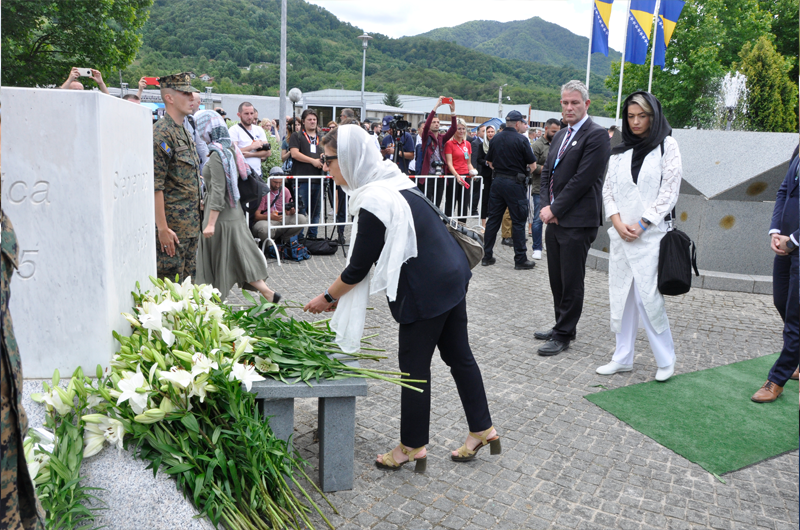
ICMP helped the BIH authorities establish the Missing Persons Institute of BIH (MPI) tasked with locating and identifying the missing regardless of ethnic, religious or any other affiliation, which revolutionized the way in which the search for missing persons was carried out. ICMP assisted the MPI to create a Central Record of all persons missing in/from BiH (the CEN) as well as a centralized database of all non-identified cases in mortuaries (NNDMS).
BIH has assisted prosecutors’ offices tasked with bringing perpetrators of war crimes, including enforced disappearances, to justice, and at the initiative and with the support of ICMP it has taken concrete steps to address the issue of more than 3,000 unidentified (NN) human remains stored in mortuaries across the country.
In Kosovo, ICMP has helped the domestic authorities to develop the Law on Missing Persons and establish domestic institutions, including a Government Commission on Missing Persons, to coordinate the process of accounting for the missing.
In Croatia, ICMP has developed, and is still implementing with the Croatian authorities, a Joint Project of Identifications based on the exchange of DNA samples pertaining to victims whose families provided reference samples outside Croatia. To date, 685 persons have been identified through the project implemented by ICMP and the Office for the Detained and the Missing within the Ministry of Defenders of the Republic of Croatia, who would have remained unidentified if this data sharing mechanism were not in place.
Kosovo
Through its cooperation with Serbia, as well as with the United Nations Mission in Kosovo (UNMIK) and later the European Union Rule-of-law Mission in Kosovo (EULEX), ICMP used DNA testing to assist in identifying 90 percent of the mortal remains that were recovered on the territory of Serbia between 2001 and 2002. In addition, the remains of more than 300 persons missing from the conflicts in Croatia and BIH have been recovered in Serbia and returned to their families in Croatia or BIH. To date, ICMP has helped the Serbian authorities to find more than 1,100 persons on its territory.
Throughout the Western Balkans, ICMP has helped to empower associations of families of missing persons, enabling them to claim their right to truth and justice and to lobby the authorities to fulfill their obligations to account for the missing. In addition, ICMP has collected more than 100,000 reference samples and other data from families of the missing to enable DNA-based identifications. The formal establishment of the Regional Coordination Network of Associations of Families of the Missing from the former Yugoslavia (Regional Coordination) is a unique example of victims’ groups from different sides of a conflict working together to hold the authorities to account and to keep the issue high on the agenda. The Regional Coordination gathers associations of families of the missing from BIH, Croatia, Kosovo, and Serbia.
In order to increase inter-governmental cooperation in a politically challenging environment, ICMP facilitated the establishment of a regional Missing Persons Group (MPG), which consists of domestic institutions for missing persons issues from BIH, Croatia, Kosovo, Montenegro and Serbia. In November 2018 the MPG signed a Framework Plan that lays out steps to boost their cooperation and increase their effectiveness in accounting for missing persons throughout the region. The Framework Plan outlines a common approach in resolving missing persons issues and promoting more effective regional collaboration implemented by domestic institutions responsible for accounting for missing persons in the Western Balkans. ICMP has increased the engagement of families of the missing in the operations of the MPG through the Forum for Families, which affords families of the missing an advisory role in guiding the work of the MPG.
The MPG launched the Database of Active Missing Persons Cases from the conflicts from the territory of the former Yugoslavia, in November 2022 in The Hague.
In the coming period, ICMP will continue to build domestic ownership and the sustainability of the MPG and ensure the MPG’s continued engagement with families of the missing. ICMP will seek to ensure the financial sustainability of the MPG through high-level policy dialogue with governments. It will seek to increase domestic ownership of the MPG by gradually handing over the chairing of MPG sessions to MPG members on a rotating basis. ICMP will ensure that the MPG remains accountable for its work by facilitating its annual reporting to the Western Balkans Berlin Process, and by supporting the Regional Coordination in a monitoring role.
BIH
In BIH, ICMP will continue supporting the MPI and the prosecutors’ offices to ensure that clandestine gravesites are excavated in line with best forensic standards, and that cases exhumed are accurately identified based on DNA analysis. At the same time, it will continue to provide training to the BIH Agency for Forensic Examinations and Expertise (AFEE) to develop its capacities in DNA analysis of PM samples. ICMP will strive to ensure domestic capabilities in forensic archaeology and forensic anthropology are established within the MPI.


