26 March 2010: The International Commission on Missing Persons (ICMP) has made a total of 13,000 DNA-assisted identifications of persons missing from the conflicts in Bosnia-Herzegovina, by analyzing DNA profiles extracted from bone samples of exhumed mortal remains and matching them to the DNA profiles obtained from blood samples donated by relatives of the missing.
“Using DNA to make accurate identifications is vital not only for bringing a sense of closure to relatives of the missing in Bosnia-Herzegovina, but it also allows for an accurate accounting of the number of persons who disappeared as a consequence of armed conflict, crimes against humanity and other violations of human rights. It is hoped that this process will make a vital contribution to truth, reconciliation and peace in Bosnia and Herzegovina,” said ICMP’s Director-General, Ms. Kathryne Bomberger.
“The work done by the ICMP is, without doubt, the single most important achievement within the field of human identification with DNA. The work, speed and quality is impressive,” said Professor Niels Morling, President of The International Society for Forensic Genetics, based in Copenhagen.
ICMP operates and has developed the world’s largest high-throughput DNA identification system. This week the number of DNA matches made by ICMP’s laboratory system of persons missing from the former Yugoslavia alone approaches 15,500. Of these 13,000 are from Bosnia-Herzegovina, and along with the 6-8,000 persons identified prior to the advent of DNA testing, this means that out of the estimated 30,000 persons missing from Bosnia-Herzegovina, the majority have thus far been located, recovered and identified.
In precise numerical terms, ICMP has assisted in making 15,495 identifications of different individuals since November 2001. Of that number 13,000 are relevant to persons missing from the BiH conflicts and 2,281 relevant to Kosovo and 214 persons through a joint project with Croatia. Of the 13,000 persons DNA identified in the context of BiH, 6,414 were DNA identifications of persons missing from the 1995 fall of Srebrenica. To make these DNA-based identifications, ICMP has collected 87,931 blood samples from relatives of the victims, which represent 28,964 missing individuals. ICMP has also received 43,729 bone samples from mortal remains of persons recovered from mass graves in the region.
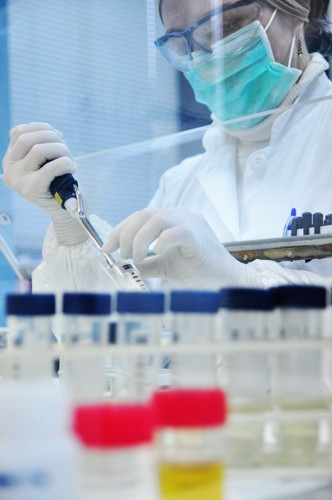
The ICMP laboratory system is rigorously accredited to ISO 17025 by DAkkS GmbH, the national German accreditation body, and ICMP’s Steering Board on Forensic Science gathers together some of the world’s most respected experts in molecular biology, forensic pathology, anthropology and archaeology.
In addition to its technical support, ICMP is the co-founder of the Missing Persons Institute of BiH. ICMP also contributes to transitional justice activities, provides legislative support and helps in the development of networks of civil society organizations which advocate for truth, justice, and for the rights of family members of missing persons.