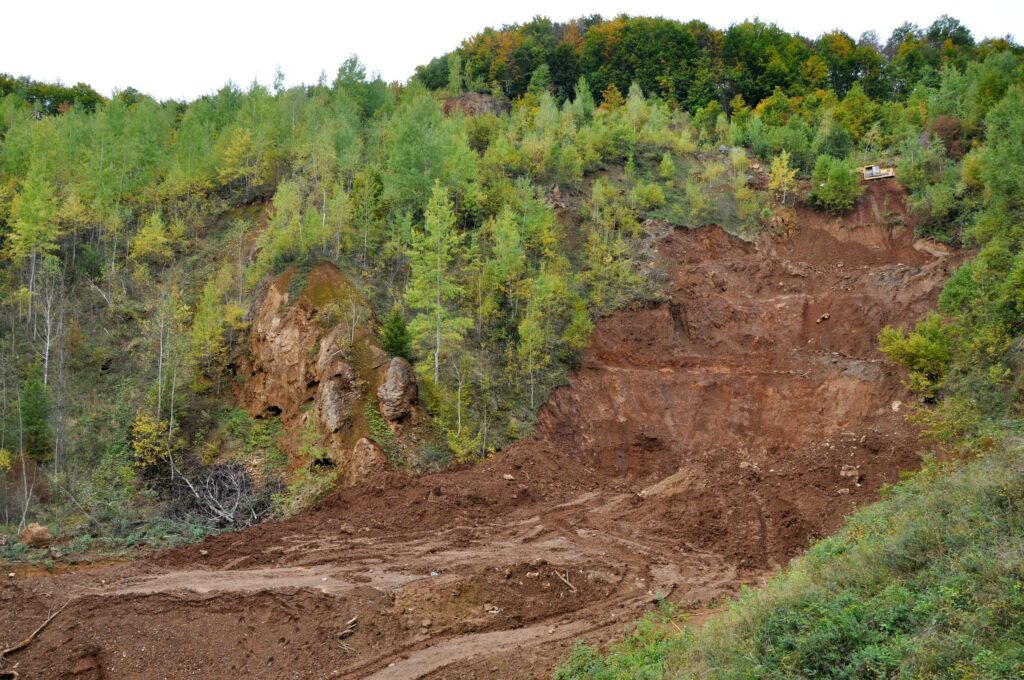
[:en]Raška, Serbia 30 November 2020 – Experts from the International Commission on Missing Persons (ICMP) today began providing technical forensic assistance at the request of Serbia’s Government Commission on Missing Persons at the exhumation of skeletal remains at the disused Kizevak quarry near Raska in southern Serbia.
The site is believed to hold remains of Kosovo Albanians missing from the 1999 conflict. Authorities have used ICMP DNA-matching reports to identify more than 2,500 of the 4,500 people estimated missing from the Kosovo conflict.
In 2015, supporting the Serbian Commission on Missing Persons, ICMP monitored the initial phase of the excavation at the Kizevak site. However, no human remains were found at that time. Efforts to locate the gravesite continued iteratively until earlier this month when the Serbian Commission found skeletal remains at the site with the help of aerial imagery.
ICMP has since 2001 provided technical forensic assistance to exhume four Kosovo conflict-related mass graves in Serbia, located at Batajnica, Petrovo Selo, Bajina Basta and Raska Rudnica. ICMP has facilitated DNA-based identifications of 97 percent of the nearly 900 cases of remains recovered from these sites.
“ICMP continues to assist authorities in Serbia in respecting their obligation under local and international law,” said Matthew Holliday, the Head of ICMP’s Western Balkans Program. “This includes assistance in exhuming and documenting clandestine graves and facilitating DNA-based analysis and data matching so that authorities can accurately identify missing persons cases. This process enables the identity of missing persons to be linked to crime scenes and evidence submitted to courts. In this way, ICMP helps secure the rights of the families of the missing.”
ICMP’s technical forensic assistance at the Kizevak exhumation is funded by the European Union as part of a project that aims to strengthen regional cooperation in the Western Balkans to resolve missing persons cases from the 1990s conflicts.
Since 1996, ICMP has maintained a regional program in the Western Balkans to support governments’ cooperation in finding persons missing from the conflicts of the 1990s. ICMP has helped the regional governments account for over 70 percent of the 40,000 persons reported missing, a ratio that has not been equalled anywhere else in the world.
“ICMP encourages the governments of Serbia and Kosovo to cooperate more closely within the Missing Persons Group, in which they both participate, as this would maximize the effect of their efforts,” said Kathryne Bomberger, ICMP Director General. “Such cooperation is needed to increase the chances that the families who are still missing relatives will learn about their loved ones’ fates.”
The Missing Persons Group is a regional mechanism established in the context of the Western Balkans Berlin Process, which is designed to help the countries of the region prepare for future EU membership.
About ICMP
ICMP is a treaty-based intergovernmental organization with Headquarters in The Hague, the Netherlands. Its mandate is to secure the cooperation of governments and others in locating missing persons from conflict, human rights abuses, disasters, organized crime, irregular migration and other causes and to assist them in doing so. It is tasked exclusively to work on the issue of missing persons.[:bs]Raška, Srbija 30. novembar 2020. godine – Stručnjaci Međunarodne komisije za nestale osobe (ICMP) danas su počeli pružati tehničku forenzičku podršku na zahtjev Komisije za nestala lica Vlade Republike Srbije prilikom ekshumacije skeletnih ostataka u napuštenom kamenolomu Kiževak koji se nalazi u blizini mjesta Raška na jugu Srbije.
Smatra se da se u grobnici nalaze posmrtni ostaci kosovskih Albanaca nestalih tokom sukoba 1999. godine. Nadležne institucije su identifikovale više od 2.500 od oko 4.500 osoba nestalih na Kosovu na temelju ICMP-ovih izvještaja o podudaranju DNK.
ICMP je i 2015. godine pomagao Komisiji za nestala lica Srbije, prateći prvu fazu iskopavanja na lokaciji Kiževak. Tada, međutim, posmrtni ostaci nisu pronađeni. Aktivnosti na pronalaženju grobnice nastavljene su sve do početka ovog mjeseca, kada je Komisija Srbije uz pomoć zračnih snimaka locirala skeletne ostatke na ovoj lokaciji.
ICMP je od 2001. godine pružao tehničku forenzičku podršku prilikom ekshumacije četiri masovne grobnice koje se nalaze u Srbiji, a u vezi su sa sukobom na Kosovu i nalaze se na sljedećim lokacijama: Batajnica, Petrovo Selo, Bajina Basta and Raska Rudnica. Pomogao je prilikom identifikacija na osnovu analize DNK u 97 procenata od skoro 900 slučajeva posmrtnih ostataka pronađenih na tim lokacijama.
“ICMP nastavlja podržavati nadležne institucije iz Srbije u ispunjavanju obaveza predviđenih domaćim i međunarodnim zakonima”, kazao je Matthew Holliday, šef ICMP-ovog Programa za zapadni Balkan. “To podrazumijeva pomoć prilikom ekshumacije i dokumentiranja skrivenih grobnica i podršku u vidu analize DNK i provjere podudarnosti genetičkih podataka, što omogućava tačnu identifikaciju slučajeva nestalih osoba. Radi se o procesu koji povezuje identitet nestalih osoba s mjestima zločina i dokazima koji se izvode u sudskim procesima. Na taj način ICMP pomaže osigurati poštivanje prava porodica nestalih osoba.”
ICMP-ovu tehničku forenzičku podršku tokom ekshumacije na lokaciji Kiževak finansira Evropska unija u okviru projekta koji teži ojačati regionalnu saradnju na zapadnom Balkanu i riješiti slučajeve osoba nestalih u sukobima 1990-ih.
Od 1996. godine ICMP vodi regionalni program za područje zapadnog Balkana kako bi podržao saradnju država u procesu pronalaženja osoba nestalih u sukobima 1990-ih. ICMP je pomogao vladama iz regije pronaći i identifikovati više od 70 procenata od 40.000 prijavljenih nestalih osoba. Tako veliki broj identifikacija nije postignut nigdje u svijetu.
“ICMP ohrabruje vlade Srbije i Kosova na bližu saradnju u okviru Grupe za nestale gdje učestvuju i jedni i drugi, jer će na taj način doći do najboljih rezultata”, kazala je Kathryne Bomberger, generalna direktorica ICMP-a. “Takva saradnja je neophodna kako bi se uvećale izgledi da će porodice koje još uvijek tragaju za svojim nestalim srodnicima saznati istinu o sudbini svojih najbližih.”
Grupa za nestale osobe je regionalni mehanizam osnovan u kontekstu Berlinskog procesa za zapadni Balkan a svrha mu je pomoći zemljama iz regije da se pripreme za buduće članstvo u EU.
O ICMP-u
ICMP je sporazumom utemeljena međuvladina organizacija sa sjedištem u Hagu u Nizozemskoj. Njegov mandat je osigurati saradnju vlada i drugih organa vlasti u pronalaženju osoba nestalih usljed sukoba, kršenja ljudskih prava, nesreća, organiziranog kriminala, ilegalnih migracija i drugih razloga te pružiti im pomoć u tim procesima. ICMP radi isključivo na rješavanju pitanja nestalih osoba.[:]