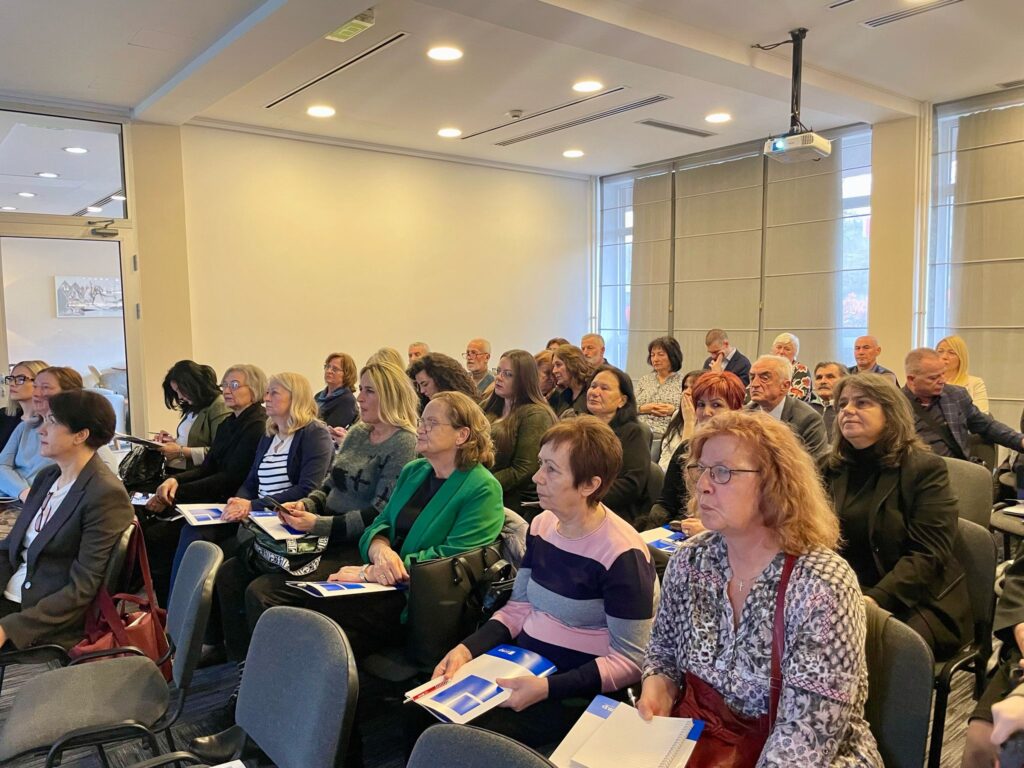
Belgrade, 3. April 2025 – The International Commission on Missing Persons (ICMP), and the Commission on Missing Persons of the Government of the Republic of Serbia, introduced the online version of the Regional Database of Active Missing Persons Cases from the Armed Conflicts in the Former Yugoslavia (the Regional Database) to families of the missing and the general public. The event which provided an overview of the database’s functionalities started with a minute of silence to honor passing of Bajram Qerkini, Chairman of the Association “Voice of Parents” which advocates for the rights of all families of the missing from the Kosovo conflict.
Samira Krehić Head of the Western Balkans Program at ICMP noted that “The Regional Database is a crucial step forward in ensuring transparency and accuracy in accounting for missing persons. By providing real-time access to verified data, it strengthens cooperation among institutions and empowers families to contribute to the search for their loved ones”.
Developed by ICMP in collaboration with the Missing Persons Group (MPG), which includes domestic institutions responsible for missing persons issues from Bosnia and Herzegovina, Croatia, Kosovo, Montenegro, and Serbia, the Regional Database was created within the framework of the Berlin Process. The public version is user-friendly and searchable by name, father’s name, surname, or reported place of disappearance.
The interactive database offers up-to-date records on missing persons cases and is accessible to the public. It allows families of the missing to review existing records and contribute new information that could aid in resolving active cases.
Veljko Odalovic, Head of Commission on Missing Persons of the Government of the Republic of Serbia said: “This database is the result of extensive joint efforts, as the issue of missing persons does not stop at borders or administrative lines. It is not enough for institutions to address this topic solely through bilateral agreements, and this approach could serve as a model for many other open issues in the region”.
William Hopkinson, First Secretary at the Embassy of the United Kingdom to Serbia said: “Work and dedication of the families of the missing in the process represent one of the most important contributions to preserving peace and stability. Ensuring access to reliable information about missing persons is important for both the families and the public—not only for the sake of transparency but also to fulfill the state’s legal obligations to its citizens.”
At the end of the conflicts in the former Yugoslavia, over 40,000 individuals were reported missing. Today, more than 75 percent of these cases have been resolved. With ICMP’s assistance, the MPG established official records of missing persons based on reports from relatives, national institutions, NGOs, and international organizations involved in data collection.
Dragana Đukić, President of the Association of Families “Suza” said: “This database is important above all as a tool against the denial of victims, and families at any time have the opportunity to check all information about their missing relatives in one place”.
The conflicts created significant challenges in maintaining accurate records. Many individuals went missing outside their place of residence, and families were often displaced across borders, leading to reports being filed in multiple countries. To overcome these difficulties and improve investigations, it was necessary to consolidate, harmonize, and verify records across borders. The Regional Database plays a crucial role in facilitating data exchange among relevant domestic institutions, improving accuracy, and ensuring a more comprehensive approach to addressing missing persons cases from the 1990s conflicts.
Carsten Meyer-Wiefhausen, Deputy Head of Mission of the Embassy of the Federal Republic of Germany to Serbia said: “It is our strongest conviction that solving cases of missing persons from armed conflicts is a fundamental necessity for civilization in order to foster the common understanding of the evil of war, and that the suffering and the grievance of the families are the same on all the sides of the conflict”.
The development of the database was financially supported by the United Kingdom Government and the Federal Government of Germany.
Since its inception, ICMP has played a key role in assisting authorities in the region to locate and identify over 75 percent of the individuals reported missing from the conflicts. Through forensic expertise, data consolidation, and continuous engagement with families, ICMP has set international standards for addressing missing persons cases.
To access the Database, please follow the link.
More information about the work of the Missing Persons Group is available in this booklet.