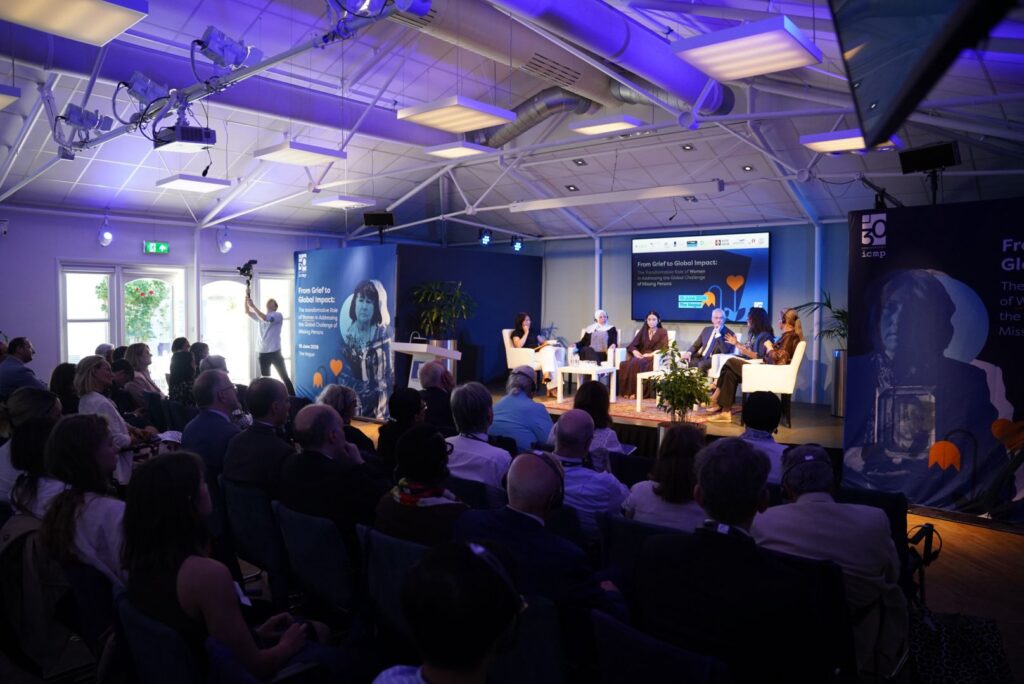
11 May 2011: The International Commission on Missing Persons (ICMP) together with the International Coalition of Sites of Conscience (ICSC) is holding a two-day conference on missing persons, memory and sites of conscience. For this conference the ICMP and ICSC gathered representatives of different victim associations and relevant experts from Bosnia and Herzegovina, Serbia and Croatia, as well as experts from Argentina, Chile, Northern Ireland and South Africa. The participants agreed that properly commemorating atrocities, as an element of transitional justice, is of key importance to the process of healing in post-conflict society.
“Today we have brought together representatives of victims groups, including representatives of families of persons missing as a result of armed conflict and from different national and religious backgrounds to share experiences and discuss in a collective, holistic manner how to commemorate atrocities that took place and that resulted in loss of life and disappearances,” said Kathryne Bomberger, Director General of the International Commission on Missing Persons at the opening of the conference.
“Concepts for memorialization may differ from country to country, but there is no alternative to dialogue, planning and open discussion about the past. Every community should have a place of memory where they can confront the past and contemporary implications of injustice from the past, however difficult this may be. The community should also identify how it can act to prevent injustice from recurring”, said Elizabeth Silkes, Executive Director of the International Coalition of Sites of Conscience.
The first day of the conference consisted of presentations from international experts. Bonita Bennett, Director of South Africa’s District Six Museum told the conference about forced removals and social oppression in South Africa during the apartheid era and the way that the District Six Museum commemorates this painful period on the country’s history. Kate Turner, Director of the organization “Healing through Remembering” spoke about the manner in which Northern Ireland deals with the legacy of its violent past. Margarita Romero, President of the Villa Grimaldi Park for Peace Corporation from Chile, and Gonzalo Conte, Coordinator of the Topography of Memory Program in Argentina, presented their work on remembering victims and crimes committed during the Pinochet regime and as a result of “state” terrorism.

The international conference will continue tomorrow, May 10th, when victims’ groups and family associations from the Western Balkans will present their own initiatives and projects. ICMP will present its report from the “Regional Conference on Promoting Holistic Approach to Memorials and Remembrance” held in December 2010 in cooperation with UNDP.
The International Coalition of Sites of Conscience (ICSC) was founded in 1999, when 9 museums from 4 continents came together with a common commitment: to foster democratic participation by using their powerful places of memory as catalysts for new dialogue on contemporary issues. Today, the International Coalition is led by 17 Accredited Sites of Conscience and includes more than 240 members in 45 countries and a communications network of more than 2000 from nearly 60 countries.