6 June 2011: The Minister of Health and Social Welfare of Republika Srpska Mr. Ranko Škrbić, visited the international headquarters of the International Commission on Missing Persons (ICMP) today in Sarajevo, where he was welcomed by ICMP Director General Kathryne Bomberger. The two discussed areas of mutual interest regarding the issue of missing persons, including scientific advances in the process of locating, recovering and identifying missing persons.
Mr. Škrbić toured ICMP’s DNA laboratory in Sarajevo where he received a briefing on ICMP’s DNA laboratory system, which extends from Sarajevo to Tuzla and to Banja Luka.
“Today I have been on a working visit of ICMP Headquarters where we discussed ICMP’s activities in Bosnia and Herzegovina and the current activities in its laboratories in Tuzla, Banja Luka and Sarajevo. We also discussed the possibility of expanding these activities. I thanked ICMP for investing in local human resources and its accomplishments thus far in search for missing persons in BiH. I expressed my interest for identification efforts of all missing persons in BiH to continue”, Minister of Health of Republika Srpska Mr. Ranko Škrbić said following the visit.
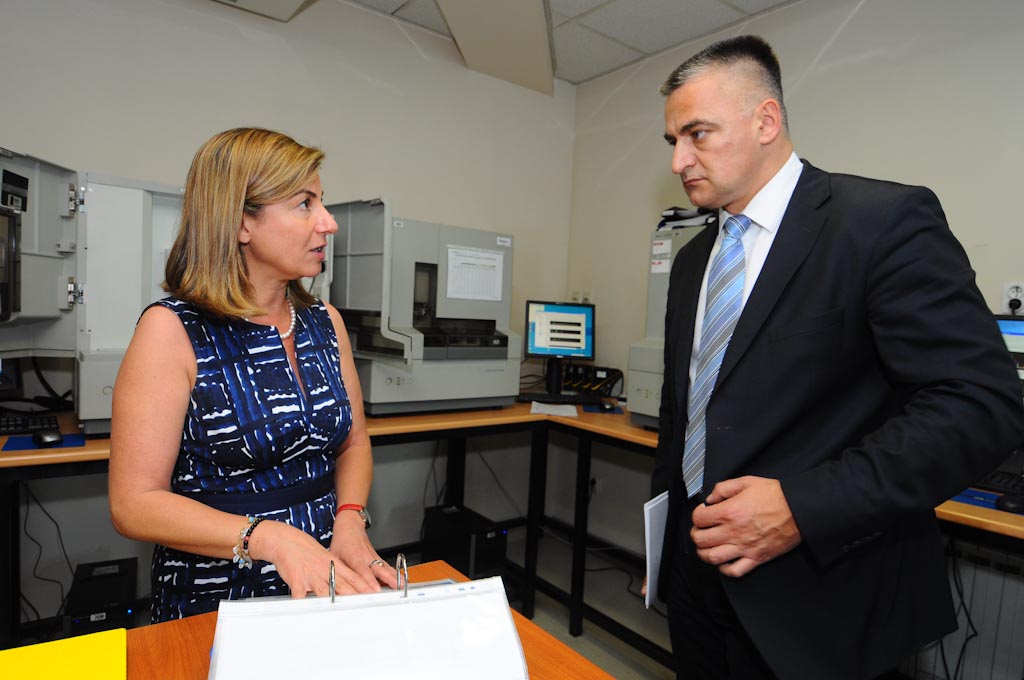 “ICMP maintains the world’s largest high throughput DNA identity testing laboratory system dedicated to assisting governments around the world with cases of missing persons from war, human rights violations and natural disasters. We are proud that ICMP’s laboratory system is currently located across three major cities in this country, where we have trained almost a hundred scientists to work for ICMP. We welcome the RS Health Minister’s visit to ICMP and we are looking forward to our continued good cooperation”, ICMP Director General Kathryne Bomberger said following the visit.
Since ICMP’s DNA identification system went online in November 2001, 16,188 identifications have been made of persons missing from armed conflicts in the Western Balkans, 13,541 of whom were missing from Bosnia-Herzegovina. ICMP has provided assistance to governments of Chile, Norway, Thailand, South Africa, Cameroon, the Philippines, Iraq and Colombia. Thanks to its unique experience and transparency policies, ICMP has trained and shared its knowledge with forensic experts from many countries that deal with the issue of missing persons.
In Bosnia and Herzegovina, along with the BiH Council of Ministers, ICMP is the co-founder of the BiH Missing Persons Institute (MPI) and had helped draft Bosnia’s Law on Missing Persons, the first of its kind in the world when passed in 2004.