

Colombia
Almost 70,000 people have been reported missing in more than four decades of conflict. A broad legislative and government effort in conjunction with active civil society organizations is seeking to address the issue as part of the country’s effort to consolidate peace.
According to the Search Unit for Missing Persons (UBPD), the agency established under the Havana Peace Accords to account for those who went missing between 1948 and 2016, 104,602 people had been reported missing and 89,702 were still missing as of March 2023. In its Final Report, published in June 2022, the Commission for Truth, Coexistence, and Non-Recurrence found that at least: 450,666 people were killed in the context of the armed conflict; 121,768 were victims of forced disappearances and 16,238 children and adolescents were recruited into armed groups.
ICMP first became engaged in Colombia in 2007 following a request by the Prosecutor’s Office. Between 2008 and 2010, ICMP contributed to public policy documents and legislation on missing persons.
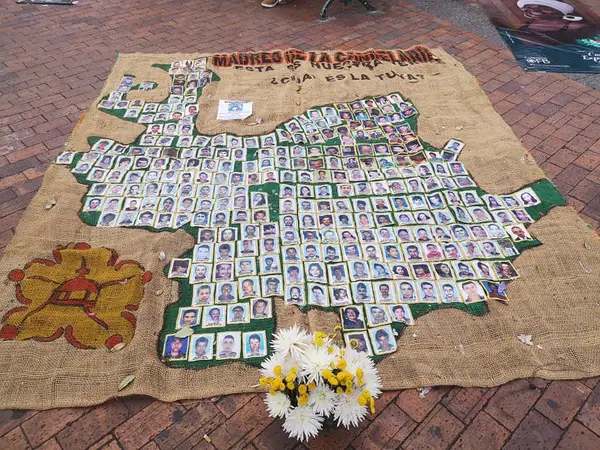
ICMP reported in April 2008 the role of various actors – paramilitary and guerrilla forces as well as the recognized political authorities – in enforced disappearances, and noted that Colombia confronted not only a sizable missing persons issue, but one in which the causes of disappearances were more diverse than in other transitional societies. According to the Center for Autonomy and Rights of Indigenous Peoples in Colombia (Observatorio ADPI), indigenous peoples have suffered from forced displacement and disappearance due to the presence of legal and illegal armed actors linked to drug trafficking and other criminal activities. Colombia’s Constitutional Court has recognized 34 indigenous groups that are in danger of physical and cultural extinction as a result of the internal armed conflict and serious violations of individual and collective rights. Organized crime is another major source of disappearances.
ICMP was invited by the parties to the 2016 Peace Agreement to help establish the Search Unit. In line with this mandate, through the first phase of its Colombia Program, supported by the German Corporation for International Cooperation (GIZ) and the European Union, ICMP helped the authorities and other stakeholders to make rapid and substantive progress, strengthening the Search Unit and facilitating the work of CSOs.
In September 2021, ICMP published a report on the role of civil society in accounting for the missing in Colombia, with recommendations on strengthening the relevant institutions.
International legal instruments
Colombia is a State Party to all general human rights instruments, including the International Covenant on Civil and Political Rights (ICCPR) and the UN Convention against Torture and Other Cruel, Inhuman or Degrading Treatment or Punishment (CAT), and also regional instruments, i.e. ACHR. Faced with the large number of cases of enforced disappearance, Colombia became a State Party to both the Inter-American Convention on Forced Disappearance (2005) and the International Convention for the Protection of All Persons from Enforced Disappearance (ICPPED, 2012). Additionally, Colombia ratified the Rome Statute in 2002.
Constitutional framework
Colombia’s Constitution of 1991 provides for a broad human rights protection framework. It asserts the duty of the state to protect all individuals, in their life, honor, property, beliefs, and other rights and freedoms (Art. 2). Protection of life, prohibition of torture, prohibition of discrimination, and right to privacy, dignity and liberty are some of the rights guaranteed by the Constitution, which also provides for the direct applicability of those rights (Art. 83). The Constitution also provides for the prohibition of enforced disappearances as well as for an ex officio investigation of crimes leading to persons going missing, among others, by the prosecuting authority.
In 2004 Colombia adopted a new CPC, (Law 906) which followed the amendment of the Constitution in 2002 that introduced the adversarial criminal system. Under this Law, the Attorney General’s Office is responsible, among other things, for initiating criminal proceedings and conducting investigations into acts that may constitute offences, either of its own motion or pursuant to a complaint, special request, lawsuit or any other action as prescribed by law. Article 11 (e) of Act No. 906 of 2004 states that victims’ rights include the right “to know the truth about the circumstances surrounding the injustice they have suffered.”
With the Constitution already outlawing enforced disappearances, Law 589 was passed in 2000 specifically criminalizing this act to make it easier to prosecute perpetrators. The Law also provides for the establishment of a National Commission for the Search of Disappeared Persons (Search Commission), a consolidated National Registry of Disappeared People and an urgent search mechanism to locate missing persons (USM). All aspects of this Law were incorporated into Colombian Criminal Law 599 of 2000. The importance of this Law is that it allows for acts committed by non-state actors to qualify as acts of enforced disappearance.
Law 975 of 2005 known as the “Justice and Peace Law” was adopted to assist the demobilization process of armed groups outside the law. The aim is to provide truth, reparations, and a measure of justice to victims. It is an ad hoc transitional justice mechanism designed to provide alternative punishment for perpetrators (reduction or avoidance of sentence in return for confession to crimes), limited reparations and potential justice for victims. It also provides for a temporary institutional structure to include the National Commission for Reparation and Reconciliation (CNRR), the Fund for Reparation for Victims, and the National Unit for Justice and Peace of the State Prosecutor’s Office.
In 2010, the government passed Law 1408, which establishes a mechanism for paying tribute to victims of forced disappearance and provides for measures to locate and identify them.
Law 1448 of 2011, or the Victims and Land Restitution Act, sets forth measures to provide comprehensive care, assistance and reparation for victims of the internal armed conflict and provides for the definition of a victim of enforced disappearance. Under article 3 a victim is “[a] person who has been subjected to enforced disappearance as defined in article 165 of Act No. 599 of 2000. The term also applies to relatives of the direct victim, including the spouse or life partner, relative to the first-degree of consanguinity or civil status and any other relatives who have been directly harmed by the enforced disappearance.”
In 2012, Law 1531 was passed providing for the procedure for declaring a person missing as a result of enforced disappearance or other forms of involuntary disappearance and covers the consequences thereof under civil law.
Other regulations and measures
The adoption of Law 589 of 2000 was followed by the issuance of certain implementing regulations. These include Decree 4218 of 2005 further regulating the National Register of Missing Persons and provide for a more detailed definition of a disappeared person then the one contained in the Criminal Law but only for the purposes of National Registry; Decree 929 of 2007 defined the structure and scope of work of the Search Commission.
In order to enhance cooperation and coordination between the State Prosecutor’s Office and other agencies and provide technical and scientific support in the process of exhumations and identifications, in 2007 the State Prosecutor signed an agreement with the National Police, the Administrative Department for Security, and the National Institute for Legal Medicine and Forensic Sciences to create a “Virtual Identification Center.”
The Center for Historical Memory was established by Decree No. 4803 of 2011 under the Victims and Land Restitution Act to fulfil the right to truth of victims of the armed conflict.


