[:en]Sinjar, Iraq 28 October 2020 — After pausing activities due to the COVID-19 pandemic, Iraqi authorities have resumed the exhumations of mass graves, with support from the United Nations Investigative Team to Promote Accountability for Crimes Committed by Da’esh/ISIL (UNITAD) and the International Commission on Missing Persons (ICMP), and in cooperation with the International Organization for Migration (IOM) and the Yazda Organization.
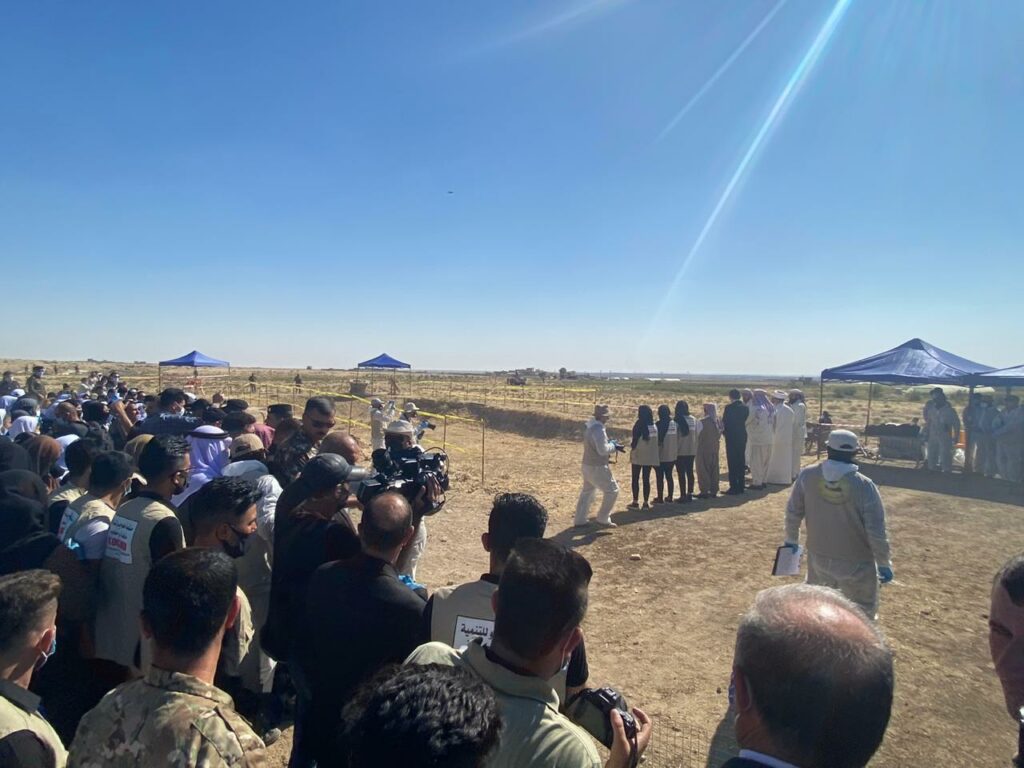
On Saturday (24/10) Iraqi experts from the Mass Graves Directorate (MGD), under the leadership of Mr. Dia’ Karim Sa’idi, and the Medico-Legal Directorate (MLD), under the leadership of Dr. Zeid Ali Abbas, started exhumations in the mass graves left by ISIL in Solagh and Kojo, Ninewa Governorate.
Representatives of the Government of Iraq, the National Coordination Committee (NCC), the Yazidi community, UNITAD, ICMP, and IOM were in attendance. Also attending were around 300 people, including many relatives of missing persons. The ceremony and operations were held under appropriate protection by the security forces.
During his speech at the exhumations ceremony Mr. Saad Abdali, Member of the Advisory Committee at the Prime Minister Office and Head of Coordination in the NCC, affirmed the Government of Iraq’s dedication to honoring the victims and attending to this tragedy with the due respect and reverence it deserves. He announced that the Government of Iraq has made future plans to open all mass graves and honor all the martyrs. He added: “as we stand today upon these pure bodies, and in front of the families of the victims, we bow in respect and honor of your gracious sacrifices, full of hope that this cruel experience becomes a starting point for us to come together to build our homeland.”
In his speech, Special Adviser and Head of UNITAD Karim A. A. Khan QC indicated that: “the exhumations attest to the close cooperation between the Government of Iraq and all partners, including the United Nations organizations.” He stressed the international community’s commitment to achieve justice for the victims of ISIL and their families. He also highlighted the important work that MGD and MLD are doing for the families and the accountability they call for, reaffirming that UNITAD — with international grants from the United States, the United Kingdom, Germany, Netherlands, the European Union and others — will continue to support the capacity building of national Iraqi forensic teams including the investigations and exhumation operations they conduct.
ICMP Iraq Program Deputy Head Fawaz Abdulabbas said:
“All of us here hope that the work that begins today will ease the pain for some of the many Yezidi families with missing relatives by unearthing the remains of their loved ones. ICMP supports Iraq’s efforts to secure the rights of Yazidi victims of Da’esh crimes through proper investigations and DNA -based identifications. These efforts are important, not only to the many families who suffer every day because relatives are missing, but to society as a whole. Accounting for the missing is an investment in peace and stability.”
DNA Sampling
The Iraqi authorities are reaching out to families in the Sinjar area, inviting those with missing relatives to consider offering blood samples. DNA from these blood samples will be compared to DNA extracted from human remains found in the mass graves. Authorities will then use these results to determine kinship between victims found in the graves and surviving families. Blood samples are to be collected this week in the Kojo Primary School hall and later in Sinjar Hospital.
Psychosocial Support
Exhumations are painful processes that are likely to trigger a wide range of difficult emotions such as sadness, anxiety, anger, loneliness or fear. In anticipation of the emotional burden, UNITAD’s psychology team assisted with the coordination of psychosocial support to families and the communities through direct involvement of Yazda and IOM. IOM’s MHPSS team arranged discussion groups with the community members to ascertain their expectations and needs prior to the exhumation day. IOM also conducted a training on psychological first aid to prepare the staff who were deployed to provide support on the day. Individual mental health and psycho-social support was provided by over 20 of Yazda and IOM’s psychologists and psychosocial workers on site, to help alleviate the distress of the bereaved families. The MHPSS teams were deployed to the area throughout the day to provide emotional and practical support to bereaved families.
The Iraqi teams of experts from MDG and MLD will continue to work in Solagh and Kojo mass graves in the coming weeks until the conclusion of the first stages of exhumations. The remains will be transported to specialized labs in Baghdad to be preserved and accurately analyzed before identifying the victims. The remains of the victims will then be returned to their families, giving them the opportunity to lay them to rest appropriately and according to traditions. ICMP and UNITAD work with the MGD and MLD to ensure the process is conducted according to international standards.[:ar]سنجار – بعد توقف الأنشطة بسبب جائحة كورونا (كوفيد-19)، استأنفت السلطات العراقية عمليات إستخراج الجثث من المقابر الجماعية، بدعم من فريق التحقيق التابع للأمم المتحدة لتعزيز المساءلة عن الجرائم المرتكبة من جانب داعش (يونيتاد) واللجنة الدولية للمفقودين، وبالتعاون مع المنظمة الدولية للهجرة ومنظمة يزدا.
ففي يوم السبت الموافق 24 تشرين الأول/أكتوبر، بدأ الخبراء العراقيون من مديرية المقابر الجماعية بقيادة السيد ضياء كريم الساعدي، ومديرية الطب العدلي بقيادة الدكتور زيد علي عباس، بحفر المقابر الجماعية في كل من صولاغ وكوجو بمحافظة نينوى التي خلّفها تنظيم داعش.
وحضر ممثلون عن الحكومة العراقية ولجنة التنسيق الوطنية، والمجتمع الأيزيدي، وفريق التحقيق التابع للأمم المتحدة لتعزيز المساءلة عن الجرائم المرتكبة من جانب داعش (يونيتاد)، واللجنة الدولية للمفقودين والمنظمة الدولية للهجرة، بالإضافة الى حوالي 300 شخص، بمن فيهم العديد من أقارب الأشخاص المفقودين. هذا وتمت المراسم والعمليات تحت حماية كافية من قبل القوات الأمنية.
وأكد السيد سعد العبدلي، عضو هيئة المستشارين في رئاسة الوزراء ومسؤول التنسيق في اللجنة الحكومية (NCC)، في كلمته خلال مراسم بدء التنقيب على تفاني الحكومة العراقية في تكريم الضحايا ومعالجة هذه المأساة بكل ما تستحقه من احترام وتبجيل، معلناً ان الحكومة العراقية وضعت خططاً مستقبلية لفتح جميع المقابر الجماعية وتكريم كل الشهداء، مضيفاً انه «بينما نقف اليوم عند هذه الأجساد النقية، وأمام أسر الضحايا، ننحني إحتراما وتكريما لتلك التضحيات الجليلة، وكلنا أمل في أن تصبح هذه التجربة القاسية نقطة إنطلاق لنا لكي نتكاتف جميعاً ونعمل لبناء وطننا.»
وفي كلمته، أشار المستشار الخاص ورئيس فريق التحقيق للأممي السيد كريم خان إلى أنّ عمليات استخراج الجثث لهي شاهد على التعاون الوثيق بين الحكومة العراقية وكافة الشركاء بما في ذلك منظمات الأمم المتحدة، مؤكداً على التزام المجتمع الدولي بتحقيق العدالة لضحايا تنظيم داعش وعوائلهم. كما سلّط الضوء على أهمية العمل الذي تقوم به كل من مديرية المقابر الجماعية في العراق ومديرية الطب العدلي من أجل الأسر والمساءلة التي ينادون بها، مؤكدا ان فريق التحقيق، وبفضل المساعدات الدولية من الولايات المتحدة والمملكة المتحدة وألمانيا وهولندا والاتحاد الأوروبي وغيرها، سيواصل دعمه لتطوير قدرات الطب الشرعي للفرق الوطنية العراقية ، بما في ذلك عمليات التحقيق واستخراج الجثث التي يقومون بها.
وقال نائب رئيس اللجنة الدولية للمفقودين في العراق، فواز عبد العباس:
«جميعنا نأمل أن يخفف العمل الذي نبدأه اليوم من بعض آلام الأسر الأيزيدية العديدة التي لديها أقارب مفقودين من خلال إستخراج بقايا أحبائهم. إن اللجنة الدولية للمفقودين تؤيد الجهود التي يبذلها العراق لتأمين حقوق الضحايا الأيزيديين الذين سقطوا نتيجة لجرائم داعش، من خلال التحقيقات الصحيحة وتحديد هويات الضحايا بالإعتماد على الحمض النووي. وتكمن أهمية هذه الجهود، ليس فقط بالنسبة للعديد من الأسر التي تعاني كل يوم بسبب فقدان الأقارب، بل للمجتمع ككل. إن المحاسبة على فقدان أولئك ما هو إلا إستثمار من أجل السلام والاستقرار».
عينات الحمض النووي
تقوم السلطات العراقية بالتواصل مع العائلات في منطقة سنجار، حيث قامت بدعوة من لديهم أقارب من المفقودين إلى التفكير مليا في تقديم عينات دم، وذلك حتى تتم مقارنة الحمض النووي من عينات الدم هذه بالحمض النووي المستخرج من بقايا الجثث الموجودة في المقابر الجماعية. وستستخدم السلطات هذه النتائج لتحديد النسب بين الضحايا الذين عثر عليهم في المقابر والأسر الناجية. ومن المقرر جمع عينات الدم هذا الأسبوع في قاعة مدرسة كوجو الابتدائية، ومن ثم في مستشفى سنجار.
الدعم النفسي – الاجتماعي
إن عمليات إستخراج الجثث هي عمليات مؤلمة من المرجح أن تؤدي إلى إثارة مجموعة واسعة من المشاعر المؤلمة مثل الحزن والقلق والغضب والوحدة والخوف. وتحسباً للعبء النفسي، ساعد فريق علم النفس التابع لـ UNITAD في تنسيق الدعم النفسي للعائلات والمجتمعات من خلال المشاركة المباشرة لـيزدا والمنظمة الدولية للهجرة. عمل فريق دعم الصحة النفسية – الاجتماعية التابع للمنظمة الدولية للهجرة على إعداد مجموعات حوار مع اعضاء المجتمع المحلي لتأمين توقعاتهم واحتياجاتهم قبل يوم استخراج الجثث والتأكد من انها قد أخذت بالحسبان. كما نظمت المنظمة الدولية للهجرة تدريبا على الإسعافات الأولية النفسية – الإجتماعية لإعداد الموظفين الذين تم نشرهم لتقديم الدعم المطلوب عند الحاجة. ولقد قدم أكثر من عشرين من الأطباء النفسيين والأخصائيين النفسيين الاجتماعيين التابعين لمنظمة يزدا والمنظمة الدولية للهجرة في الموقع الدعم في مجالي الصحة النفسية والدعم النفسي والاجتماعي، وذلك للمساعدة في التخفيف عن الأسر المفجوعة. وتم نشر فرق دعم الصحة النفسية – الاجتماعية التابعة للمنظمة الدولية للهجرة في المنطقة على مدار اليوم لتقديم الدعم العاطفي والعملي للأسر المفجوعة.
ستواصل الفرق المختصة العراقية التابعة لمديريتي المقابر الجماعية والطب العدلي عملها في مقبرتي صولاغ وكوجو خلال فترة الأسابيع المقبلة لاتمام المراحل الأولى من التنقيب واستخراج رفات الضحايا، على ان يتم نقلها الى المختبرات المختصة في بغداد لكي يتم حفظها وتحليلها بشكل منظم ودقيق قبل ان يتم تحديد هويات الضحايا، على ان يتم بعد ذلك اعادتهم الى أقاربهم ليتم دفنهم بشكل مناسب وفقاً للتقاليد. ويعمل فريق التحقيق الاممي يونيتاد واللجنة الدولية للمفقودين مع دائرتي المقابر الجماعية والطب العدلي لضمان تنفيذ هذه العملية وفقًا للمعايير الدولية.
[:]