For the Families of Srebrenica the Wait Never Ends

Compartir

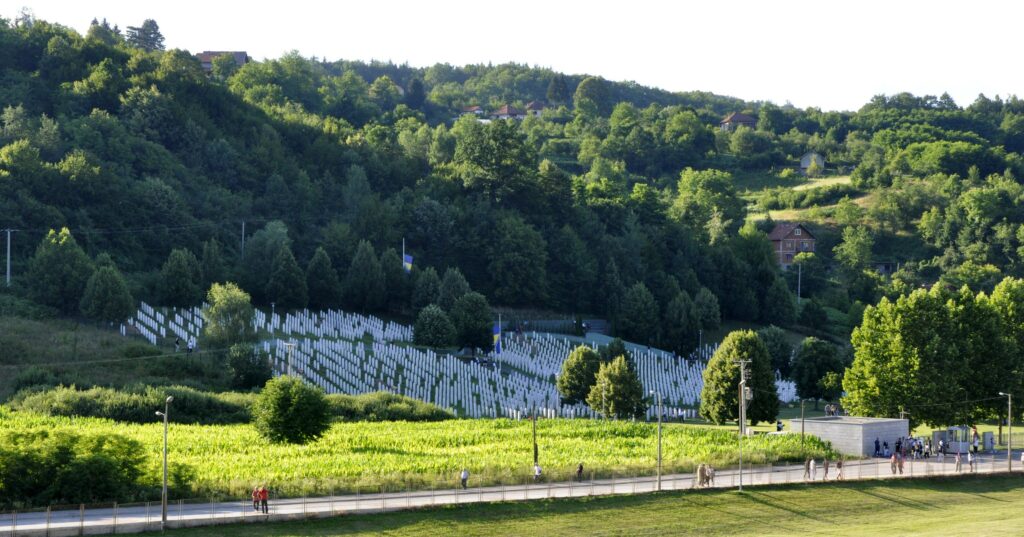
[:en]The Hague, 7 July 2023: In Srebrenica on 11 July, 30 victims of the 1995 Genocide will be buried. Their bodies have been exhumed from clandestine graves and identified. At least six of those to be buried this year were teenagers when they were murdered.

More than 7,000 of the 8,000 victims of the Genocide have been identified, the vast majority through DNA testing. The DNA-led process has been indispensable because the perpetrators of the Srebrenica Genocide tried to hide the evidence of their crime by systematically digging up mass graves in the weeks and months after the murders and distributing the bodies of victims in secondary and tertiary clandestine graves across eastern Bosnia.

On average, seven or eight separate DNA match reports are issued for each identified victim. This is because the bones of individual victims have been found in multiple mass graves.

In many cases, relatives of the victims choose to wait before burying the partial remains of their loved one. They do this in the hope that more bones will be added as a result of excavations in the coming years. It is for the bereaved to decide when they wish burial to take place. Many of the 30 victims who will be buried this year were identified in previous years, but the families chose to wait until more bones were recovered.

Following the burials on 11 July, teams from the Missing Persons Institute of Bosnia and Herzegovina, the Bosnia and Herzegovina Prosecutor’s Office, and the International Commission on Missing persons (ICMP) will carry out 71 “re-associations”. In this process, which will take place from 12 to 19 July, human remains that have already been identified and buried will be exhumed, and bones that have since been recovered will be restored to the skeleton; the bodies will then be reburied. In each case, the families have been contacted and asked to give their consent to the re-association. Even these bodies, in many cases, will still be incomplete.

In years to come, families will wait to be contacted with news that more bones have been found. For survivors of the Genocide, the wait never ends.

About ICMP

ICMP is a treaty-based intergovernmental organization with Headquarters in The Hague, the Netherlands. Its mandate is to secure the cooperation of governments and others in locating missing persons from conflict, human rights abuses, disasters, organized crime, irregular migration and other causes and to assist them in doing so.

 [:bs]Hag, 7. jul 2023: U Srebrenici će 11. jula biti pokopano 30 žrtava genocida iz 1995. godine. Njihova tijela su ekshumirana iz skrivenih grobnica i identificirana. Najmanje šestoro onih koji će biti sahranjeni ove godine bili su tinejdžeri kada su ubijeni.

Identifikovano je više od 7.000 od 8.000 žrtava genocida, velika većina putem DNK testiranja. Proces vođen DNK bio je neophodan jer su počinioci genocida u Srebrenici pokušali sakriti dokaze svog zločina sistematskim otkopavanjem primarnih masovnih grobnica u sedmicama i mjesecima nakon ubistava i prebacivanjem tijela žrtava u sekundarne i tercijarne tajne grobnice širom istočne Bosne.

U prosjeku, za svaku identificiranu žrtvu izdano je sedam ili osam izvještaja o podudaranju DNK. To je zato što su kosti pojedinačnih žrtava pronađene u više masovnih grobnica.

U mnogim slučajevima, srodnici žrtava odlučuju da sačekaju prije nego što pokopaju nekompletne posmrtne ostatke svojin najmilijih. To rade u nadi da će u narednim godinama biti pronađeno još kostiju kao rezultat iskopavanja. Na ožalošćenima je da odluče kada žele da se obavi sahrana. Mnoge od 30 žrtava koje će biti sahranjene ove godine identifikovane su prethodnih godina, ali su porodice odlučile da sačekaju dok se ne pronađe još kostiju.

Nakon ukopa 11. jula, timovi Instituta za nestale osobe Bosne i Hercegovine, Tužilaštva BiH i Međunarodne komisije za nestale osobe (ICMP) izvršit će 71 “reasocijaciju”. U ovom procesu, koji će se odvijati od 12. do 19. jula, biće reekshumirani ljudski ostaci koji su već identifikovani i pokopani, a kosti koje su u međuvremenu pronađene biće reasocirane, a tijela će tada biti ponovo ukopana. U svakom ovom slučaju, porodice su kontaktirane i zamoljene da daju saglasnost za reasocijaciju. Čak će i ova tijela, u većini slučajeva, i dalje biti nekompletna.

U godinama koje dolaze, porodice će čekati da im se javi vijest da je pronađeno još kostiju. Za one koji su preživjeli genocid, čekanju nema kraja.

O ICMP-u

ICMP je sporazumom utemeljena međunarodna organizacija sa sjedištem u Hagu u Nizozemskoj. Mandat joj je da osigura  saradnju vlada i drugih organa vlasti u pronalaženju osoba nestalih uslijed sukoba, povreda ljudskih prava, nesreća, organiziranog kriminala, ilegalnih migracija i drugih razloga te da im pruži pomoć u tim procesima. Jedina je međunarodna organizacija koja radi isključivo na rješavanju pitanja nestalih osoba.

 [:]

Scroll al inicio