HR/EUSR Inzko tours ICMP facilities in Tuzla

Compartir

[:en]Mr. Inzko speaks at a press conference in ICMP Identification Coordination Division (ICD) in Tuzla.

1 February 2010: The High Representative and EU Special Representative (HR/EUSR) for Bosnia and Herzegovina, H.E. Mr. Valentin Inzko, visited the facilities of the International Commission on Missing Persons (ICMP) and Podrinje Identification Project in Tuzla today.

Accompanied by ICMP’s Chief Operating Officer, Adam Boys, Mr. Inzko first visited PIP, which was specifically created to assist in the identification of persons missing from the 1995 fall of Srebrenica, and where mortal remains of these victims are examined and stored until final identification. Mr. Inzko saw first-hand how ICMP forensic experts conduct ante-mortem and post-mortem data comparisons, and assist domestic authorities in making a final determination of identity so that families can bury their loved ones with dignity.

Mr. Inzko also visited the ICMP Identification Coordination Division (ICD), where ICMP receives, submits for processing, archives, and matches all blood samples collected from relatives of missing persons and all bone samples from exhumed mortal remains received from government authorities throughout the former Yugoslavia and from other parts of the world. Having been bar-coded to ensure anonymity the samples are sent to ICMP’s laboratories for DNA analysis. Once extracted, the DNA profiles are entered into ICMP’s database and compared to each other to find possible matches.

“I have come here today to congratulate the ICMP on its work and I am deeply impressed with professionalism of this institution, which is one of a kind in the world. I am shaken with what I have seen and I understand that there are still many families who are searching for their loved ones, but I know that through its work thus far ICMP has ended the anguish and uncertainty of numerous families. ICMP’s mission, like the mission of the BIH Missing Persons Institute, is deeply humanitarian and contributes to establishment of truth in a scientific and unbiased manner, which is the only way to ensuring lasting peace and reconciliation”, said the High Representative and EU Special Representative (HR/EUSR) for Bosnia and Herzegovina H.E. Mr. Valentin Inzko following his visit to ICMP.
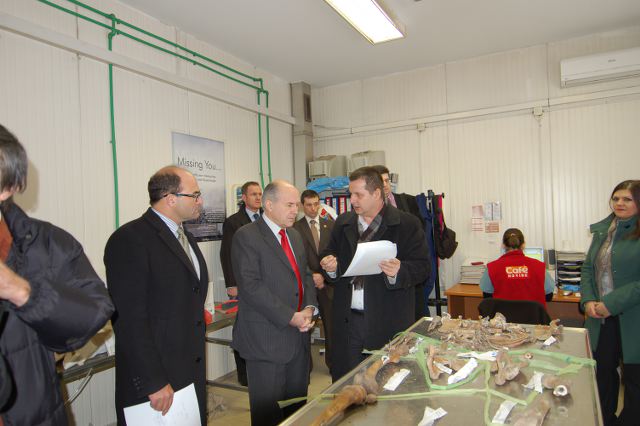
Mr. Inzko first-hand how ICMP forensic experts conduct ante-mortem and post-mortem data comparisons, and assist domestic authorities in making a final determination of identity so that families can bury their loved ones with dignity.

“Mr. Inzko is the head of an institution that laid the foundations for the exhumation process in Bosnia and Herzegovina, and ICMP continued it and improved it. After years of hard work and cooperation with local institutions and BiH experts, this country now has the Missing Persons Institute, a state-level institution that searches for persons missing from armed conflicts, regardless of their national or religious background. MPI is the future of this process and it needs the support from all relevant institutions, because its job is extremely complicated, and is further complicated by the current political situation in the country”, ICMP’s Chief Operating Officer Adam Boys said.

In addition to its technical support in the identification process, ICMP is the co-founder of the Missing Persons Institute of BiH. ICMP also contributes to transitional justice activities, provides legislative support and helps in the development of networks of civil society organizations which advocate for truth, justice, and for the rights of family members of missing persons.

ICMP’s mandate is to secure the co-operation of governments and other authorities in locating and identifying persons missing as a result of armed conflicts, other hostilities or violations of human rights and to assist them in doing so. ICMP pioneered the use of DNA technology to identify large numbers of missing persons. Today ICMP has helped to scientifically identify 18,000 missing persons and its database houses 150,000 genetic samples relative to missing persons in over 20 countries.[:bs]

Mr. Inzko speaks at a press conference in ICMP Identification Coordination Division (ICD) in Tuzla.

Visoki predstavnik i specijalni predstavnik EU u Bosni i Hercegovini, Valentin Inzko, posjetio je danas u Tuzli objekte Međunarodne komisije za nestale osobe (ICMP) i Identifikacijski projekat Podrinje (PIP).

U pratnji ICMP-evog šefa operacija, Adama Boysa, gospodin Inzko je prvo posjetio PIP, objekat koji je oformljen posebno za identifikaciju osoba nestalih u padu Srebrenice 1995. godine i u kojem se posmrtni ostaci žrtava obrađuju i čuvaju do konačne identifikacije. Gospodin Inzko je lično prisustvovao proceduri tokom koje forenzički eksperti vrše komparaciju ante-mortem i post-mortem podataka, čime pomažu domaćim vlastima u konačnom zaključivanju identifikacije kako bi porodice mogle svoje voljene dostojno ukopati.

Gospodin Inzko je obišao i ICD, ICMP-ev Centar za koordinaciju identifikacija, u kojem ICMP prima, procesuira, arhivira i vrši podudaranja između krvnih uzoraka živih srodnika nestalih osoba i koštanih uzoraka ekshumiranih posmrtnih ostataka. ICMP koštane uzorke prima od vlasti država iz bivše Jugoslavije i ostalih dijelova svijeta. Nakon dodjele jedinstvenog bar koda, kojim se garantuje njihova anonimnost, uzorci se prosljeđuju u ICMP-eve laboratorije na DNK analizu. Nakon ekstrakcije, DNK profili se unose u ICMP-evu bazu i porede sa ostalim profilima kako bi se otkrila podudaranja genetskog materijala.

„Došao sam danas ovdje da čestitam ICMP-u na njegovom radu i duboko sam impresioniran profesionalnošću ove institucije, koja je jedina ovakve vrste na svijetu. Potresen sam onim što sam vidio i shvatam da još uvijek postoje porodice koje tragaju za svojim najmilijim, međutim isto tako znam i da je ICMP svojim dosadašnjim radom okončao patnju i neizvjesnost mnogobrojnih porodica. ICMP-eva misija, kao i misija Instituta za nestale osobe BiH, je duboko humanitarna i doprinosi utvrđivanju istine na naučan i nepristrasan način, a jedino tako se može doći do trajnog mira i pomirenja“, izjavio je visoki predstavnik i specijalni predstavnik EU u Bosni i Hercegovini, Valentin Inzko, nakon posjete.

Mr. Inzko first-hand how ICMP forensic experts conduct ante-mortem and post-mortem data comparisons, and assist domestic authorities in making a final determination of identity so that families can bury their loved ones with dignity.

„Gospodin Incko se nalazi na čelu institucije koja je postavila temelj procesu ekshumacije u Bosni i Hercegovini, a ICMP je ovaj proces nastavio i unaprijedio. Nakon godina napornog rada i saradnje sa domaćim institucijama i stručnjacima u BiH, ova zemlja danas ima Institut za nestale osobe, instituciju na državnom nivou koja se na profesionalan način bavi traženjem osoba nestalih u oružanim sukobima, bez obzira na njihovu nacionalnu ili vjersku pripadnost. Institut je budućnost ovog procesa i on treba podršku svih relevantnih institucija, jer posao kojim se bavi je izuzetno komplikovan, a dodatno je otežan trenutnim političkim stanjem u zemlji“, izjavio je ICMP-ev šef operacija, Adam Boys.

Osim pružanja stručne pomoći u procesu identifikacije, ICMP je suosnivač Instituta za nestale osobe BiH. Također, ICMP pomaže uspostavu pravde u periodu tranzicije, obezbjeđuje pravnu podršku i pomaže razvoju mreža organizacija civilnog sektora koje se zalažu za istinu, pravdu i za prava članova porodica nestalih.

ICMP-ev mandat je da obezbijedi saradnju vlada i drugih organa vlasti pri lociranju i identificiranju osoba nestalih tokom oružanih sukoba, drugih oblika neprijateljstva ili kršenja ljudskih prava, te nastoji pružiti pomoć u provođenju ovih aktivnosti. ICMP je predvodnik u korištenju DNK tehnologije za identifikaciju velikog broja nestalih osoba. Do danas je ICMP pomogao da se na naučnoj osnovi identificira 18,000 nestalih osoba, a u njegovoj bazi podataka nalazi se 150,000 genetičkih uzoraka koji se odnose na nestale iz više od 20 zemalja.[:ar][:es][:]

Scroll al inicio