26 November 2009: A delegation of senior officials from Republika Srpska’s Crime Police Directorate visited the forensic facilities of the International Commission on Missing Persons (ICMP) in Tuzla and its international headquarters and DNA laboratory in Sarajevo in order to enhance their cooperation with ICMP.
ICMP has collected almost 90,000 blood samples from families in the region with missing relatives to conduct DNA identity testing of recovered mortal remains from clandestine graves; however, there are still family members in Republika Srpska samples that need to be located, who may want to provide blood. The RS Interior Ministry will enhance its cooperation with ICMP to locate the remaining family members in the hope of obtaining these samples.«I would like to take this opportunity to thank the Republika Srpska Interior Ministry for enhancing its work with ICMP to locate the remaining family members in the RS who would like to provide a blood sample to identify their missing loved ones,» said Kathryne Bomberger, ICMP Director General.
«Resolving the issue of missing persons from armed conflict and crimes against humanity is important to the implementation of the rule of law and to the establishment of peace and justice. In addition, ending the uncertainty regarding the fate of a loved one missing from armed conflict is of critical importance to thousands of family members who live in a state of mental torture,» she added
The visit also enabled the police officials to become familiarized with ICMP’s work in assisting governments in locating, recovering and identifying mortal remains of persons missing from the conflicts of the nineties in the Western Balkans.
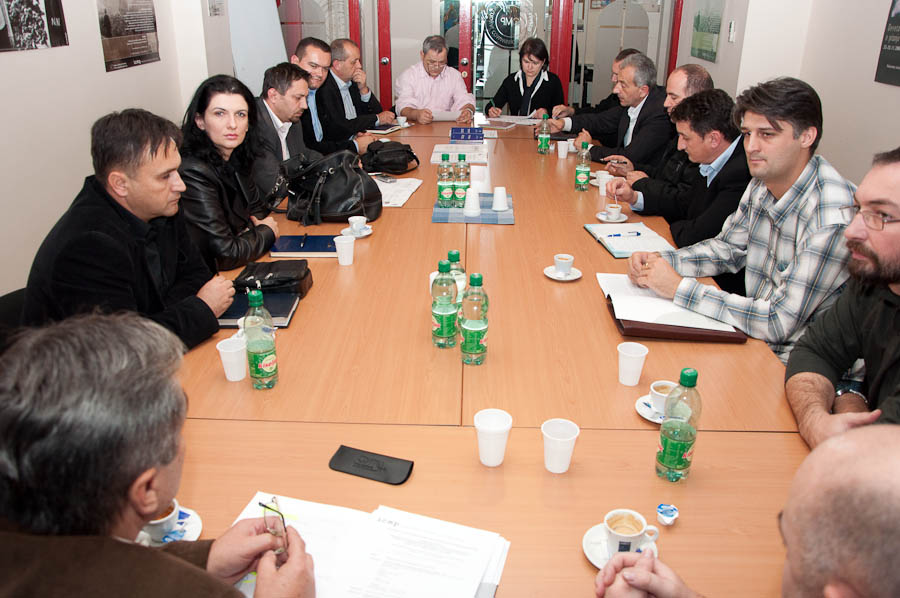
The eleven police officials from Banja Luka, Doboj, Trebinje, Bijelina and East Sarajevo visited ICMP’s three facilities in Tuzla, the Podrinje Identification Project, the Lukavac Reassociation Centre and the Identification Coordination Division (ICD). ICD exists as ICMP’s worldwide centre for the processing of information about missing persons.
The introduction of DNA by the ICMP as the basis for identifying large numbers of missing persons from the 1990’s conflicts in the Western Balkans enabled accurate identifications of persons that would never otherwise have been identified, and has also formed a cornerstone of its forensic science-based support to judicial institutions.
The DNA laboratory system of the International Commission on Missing Persons (ICMP) has made a total of nearly 16,500 DNA matches during its work assisting governments worldwide in dealing with the issue of persons missing from armed conflicts, human rights violations and natural disasters including 15,242 from armed conflicts in the Western Balkans, of whom 12,801 are from Bosnia-Herzegovina.