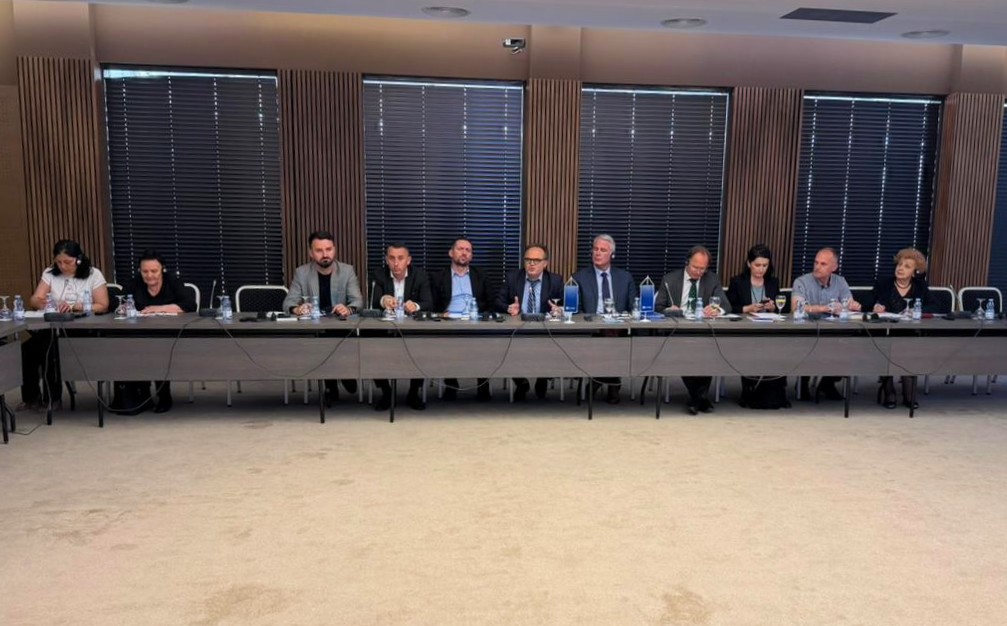
[:en] 19 November 2009: A delegation of officials from Serbia’s war crimes investigative authorities visited the forensic facilities of the International Commission on Missing Persons (ICMP) in Tuzla and its international headquarters in Sarajevo on a fact-finding and familiarization visit.
The officials from the Ministry of the Interior and the War Crimes Chamber of the Belgrade District Court of the Republic of Serbia visited ICMP’s three facilities in Tuzla, the Podrinje Identification Project, the Lukavac Reassociation Centre and the Identification Coordination Division (ICD). ICMP constructed the first two projects specifically to assist in the identification of victims of the 1995 fall of Srebrenica, while ICD exists as ICMP’s worldwide centre for the processing of information about missing persons.
The familiarization visit, which was coordinated, arranged and financially assisted by the Organization for Security and Cooperation in Europe (OSCE) Mission to Serbia enabled the investigative officials to become familiarized with ICMP’s work in tracing, recovering and identifying mortal remains of persons missing from the conflicts of the nineties in the former Yugoslavia.
„We are very pleased to have become better acquainted with the working principles of the ICMP. Following their thorough explanation of the identification process, we gained a better understanding of the complexities of the reassociation process of mortal remains of missing persons, and as a result of this trip we have further established successful cooperation with the ICMP now and for the future,“ said Mr.Aleksandar Kostic, Head of the War Crimes Investigation Service (WCIS), of the Ministry of Interior of the Republic of Serbia.

„Support to war crimes investigations, with particular emphasis on police work as well as inter-agency and regional cooperation is one of the highest priorities of the OSCE Mission to Serbia, and we will continue to provide support to regional efforts in war crimes investigations,“ said Mr.Jan Assink, War Crimes Advisor to the OSCE Mission to Serbia.
The introduction of DNA by the ICMP as the basis for identifying large numbers of missing persons from the 1990’s conflicts in the Western Balkans enabled accurate identifications of persons that would never otherwise have been identified, and has also formed a cornerstone of its forensic science-based support to judicial institutions.
„The ICMP welcomes the involvement and interest of war crimes investigative authorities from Serbia, and this visit marks a positive and progressive step in our mutual cooperation,“ said Ms.Klaudia Kuljuh, ICMP’s Western Balkans Regional Coordinator.
The DNA laboratory system of the International Commission on Missing Persons (ICMP) has made a total of nearly 16,500 DNA matches during its work assisting governments worldwide in dealing with the issue of persons missing from armed conflicts, human rights violations and natural disasters including 15,195 from armed conflicts in the Western Balkans.[:bs] Delegacija zvaničnika srbijanskih institucija koje se bave istraživanjem ratnih zločina posjetila je forenzičke objekte Međunarodne komisije za nestale osobe (ICMP) u Tuzli kao i glavno sjedište u Sarajevu kako bi se upoznala sa ICMP-evim radom.
Zvaničnici Ministarstva unutrašnjih poslova Republike Srbije i Vijeća za ratne zločine Okružnog suda u Beogradu posjetili su tri ICMP-eva objekta: Identifikacijski projekat Podrinje (PIP), Centar za reasocijaciju u Lukavcu (LKRC) i Odjel za koordinaciju identifikacija (ICD). Prva dva projekta ICMP je osnovao isključivo kako bi pomogao u identifikaciranju žrtava pada Srebrenice 1995. godine, a ICD služi kao ICMP-ev centar za obradu podataka o nestalim osobama iz cijelog svijeta.
Informativna posjeta koja je koordinirana, pripremljena i finansijski podržana od strane misije Evropske organizacije za sigurnost (OSCE) u Srbiji omogućila je ovim zvaničnicima da se upoznaju sa radom ICMP-a u traženju, ekshumaciji i identifikaciji posmrtnih ostataka nestalih tokom sukoba devedesetih godina u bivšoj Jugoslaviji.
„Izuzetno nam je drago što smo se pobliže upoznali sa principima rada ICMP-a. Nakon što su nam temeljno objasnili proces identifikacije sada bolje razumijemo složenost procesa sklapanja posmrtnih ostataka nestalih osoba, a rezultat ove posjete je i da smo uspostavili uspješniju saradnju sa ICMP-em sada i za budućnost“, izjavio je Aleksandar Kostić, načelnik Službe za otkrivanje ratnih zločina MUP-a Srbije.
„Podrška istragama ratnih zločina, sa posebnim naglaskom na rad policije kao i saradnju između agencija te regionalnu saradnju, jedan je od najvećih prioriteta misije OSCE-a u Srbiji. Mi ćemo nastaviti pružati podršku istragama ratnih zločina u regionu“, izjavio je Jan Assink, savjetnik za ratne zločine OSCE-ove misije u Srbiji.
ICMP-evo uvođenje DNK analize kao osnove za identifikaciju velikog broja nestalih osoba u sukobima 1990-ih godina na Zapadnom Balkanu omogućilo je tačnu identifikaciju osoba koje nikako drugačije ne bi mogle biti identifikovane. DNK analiza je također temelj ICMP-eve naučno-forenzičke podrške sudskim institucijama.
„ICMP pozdravlja uključenje i zainteresovanost srbijanskih institucija za istraživanje ratnih zločina. Ova posjeta označava pozitivan i progresivan korak u našoj saradnji“, rekla je Klaudia Kuljuh, ICMP-eva koordinatorica za područje Zapadnog Balkana.
Sistem DNK laboratorija Međunarodne komisije za nestale osobe (ICMP) ostvario je više od 16.500 DNK podudaranja pomažući vladama širom svijeta da riješe problem osoba nestalih u oružanim sukobima, kršenju ljudskih prava i prirodnim nepogodama, a od toga 15.195 se odnosi na sukobe na Zapadnom Balkanu.
[:ar][:es][:]