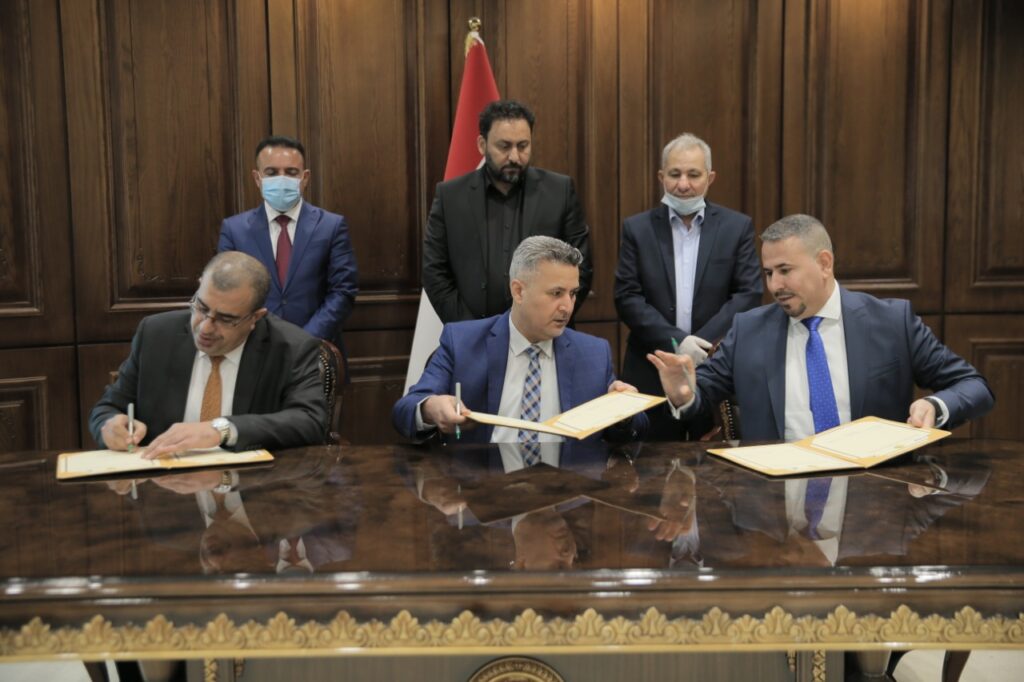
[:en]BAGDHAD 13 August 2020: The International Commission on Missing Persons (ICMP) this week signed cooperation agreements with the Mass Grave Affairs and Protection Directorate of the Martyr’s Foundation and the Medico Legal Directorate of the Ministry of Health and Environment, adding to an agreement signed with the Ministry of Justice in late July.
“The agreements affirm and strengthen our cooperation with ICMP,” said Hassan Al Kabbai, First Deputy Speaker in Iraq’s Parliament, who hosted the 12 August signing ceremony. “We look forward to the results our closer cooperation will bring – I will follow developments closely.”
ICMP Director-General Kathryne Bomberger said:
“The agreements form the basis of ICMP’s continued to support to Iraq in developing and implementing a sustainable strategy to account for all Iraq’s missing and disappeared persons in an impartial and transparent manner.”
Iraqi authorities estimate that 250,000 to 1 million persons are missing in the country. ICMP has worked with the authorities in Iraq since 2005, supporting them in work to account for all missing persons, regardless of their sectarian or national background, or the period of time or circumstances in which they disappeared. Through the new agreements, ICMP and Iraqi authorities have committed to strengthen cooperation through:
- Supporting efforts to obtain and process data on missing persons for the purpose of locating and identifying the missing, using advanced scientific technologies;
- Improving domestic technical capacities in forensic archeology and anthropology, and crime scene management through training provided by ICMP’s Wim Kok Center of Excellence and Learning;
- Assistance in developing effective means for the scientific identification of missing persons, including advanced technologies and effective quality assurance processes; and
- Strengthening cooperation among relatives of the missing and between families and the authorities.
“The signing of the cooperation agreement is an important step towards a more comprehensive approach in finding all missing persons”, said Bianca van Loon, Chargé d’Affaires a.i. of the Embassy of the Netherlands in Iraq. „There are still up to a million people missing in Iraq, whose families await answers about the disappearance of their loved ones.”
The agreements were signed by ICMP Iraq Program Deputy Head Fawaz Abdulabbas; Zaid Ali Abbas, the Director General of Medico Legal Directorate of the Ministry of Health; Diaa Karim, Director General the Mass Grave Affairs and Protection Directorate of the Martyr’s Foundation, and, in July, Shatha Al-Tai, Director-General of Judicial Relations at the Ministry of Justice.

The Minister of Health, Hassan Al-Tamimi; the Head of Martyr’s Foundation, Kadem Awaid, and Jawad Al-Mousawi, Head of the Parliamentary Health Committee, attended the signing on 12 August to underline their support for the cooperation.
ICMP is also facilitating Iraqi efforts to create a central body that would be responsible for accounting for all missing persons as well as a Central Record of Missing Persons. ICMP’s long-standing support to Iraq includes the training of scientists in advanced DNA identification procedures, support at excavations of mass graves and assistance to families of the missing.
ICMP’s work in Iraq is supported by the Government of the Netherlands.
About ICMP
ICMP is a treaty-based international organization that seeks to ensure the cooperation of governments and others in locating missing persons from conflict, human rights abuses, disasters, organized crime, migration, and other causes, and to assist them in doing so. ICMP also supports the work of other organizations in their efforts, encourages public involvement in its activities and contributes to the development of appropriate expressions of commemoration and tribute to the missing.
As the only international organization that is exclusively tasked to address the issue of missing persons, ICMP is actively engaged in working with governments, civil society organizations, justice institutions, international organizations, and others to develop purpose-specific institutions and legislation, to foster the growth and influence of civil society groups and families of the missing, and to provide cutting-edge technical expertise and tools, such as DNA and advanced data systems technologies to locate and identify the missing. ICMP works to secure the rights of all families of the missing to justice, truth and reparations.
[:ar]بغداد، 13 أغسطس/آب 2020 – وقّعت اللجنة الدولية لشؤون المفقودين هذا الأسبوع اتفاقيات تعاون مع دائرة شؤون وحماية المقابر الجماعية التابعة لمؤسسة الشهداء ودائرة الطب العدلي في وزارة الصحة والبيئة، لتُضاف إلى اتفاقية مُبرمة مع وزارة العدل في أواخر يوليو/تموز.
وجرت مراسيم التوقيع في 12 أغسطس/آب برعاية النائب الأول لرئيس مجلس النواب السيد حسن الكعبي الذي علّق بالقول، „تؤكّد الاتفاقيات وتعزّز تعاوننا مع اللجنة الدولية لشؤون المفقودين“. وتابع قائلًا، „نحن نتطلع إلى النتائج التي سيحقّقها توثيق التعاون بيننا – سأتابع التطورات عن كثب“.
من جهتها، قالت المديرة العامة للجنة الدولية لشؤون المفقودين السيدة كاثرين بومبرغر، „تشكّل الاتفاقيات أساس الدعم المتواصل الذي تقدّمه اللجنة الدولية لشؤون الفقودين إلى العراق في وضع وتنفيذ استراتيجية مستدامة للكشف عن مصير جميع المفقودين والمختفين في العراق بطريقة محايدة وشفافة“.
تُقدِّر السلطات العراقية أن عدد المفقودين في البلاد يتراوح بين 250 ألف ومليون شخص. عملت اللجنة الدولية لشؤون المفقودين مع السلطات في العراق منذ عام 2005، مقدمةً الدعم إليها في العمل للكشف عن مصير جميع الأشخاص المفقودين، بغضّ النظر عن خلفيتهم الطائفية أو الوطنية، أو الفترة الزمنية التي اختفوا خلالها أو ظروف الاختفاء. بفضل الاتفاقيات الجديدة، تلتزم اللجنة الدولية لشؤون المفقودين والسلطات العراقية بتعزيز التعاون من خلال:
- دعم الجهود المبذولة لجمع البيانات المتعلقة بالمفقودين ومعالجتها بغرض تحديد مكان المفقودين والتعرف عليهم باستخدام التقنيات العلمية المتقدّمة؛
- تحسين القدرات التقنية المحلية في مجال علم الآثار الشرعي والأنثروبولوجيا وإدارة مسرح الجريمة من خلال التدريب الذي يقدّمه مركز فيم كوك للتميز والتعلم التابع للجنة الدولية لشؤون المفقودين؛
- المساعدة في تطوير وسائل فعالة لتحديد هوية الأشخاص المفقودين بأساليب علمية، مثل التقنيات المتقدّمة والعمليات الفعالة لضمان الجودة؛
- تعزيز التعاون بين ذوي المفقودين وبين العائلات والسلطات.
وعلّقت القائمة بالأعمال بالنيابة في سفارة هولندا في العراق السيدة بيانكا فان لون قائلةً، „إن توقيع اتفاقية التعاون هو خطوة مهمة نحو نهج أكثر شمولًا في العثور على جميع الأشخاص المفقودين. ما زال عدد المفقودين يناهز المليون في العراق، وهم أشخاص تنتظر عائلاتهم الحصول على إجابات حول اختفائهم“.
وقّع الاتفاقيات نائب رئيس برنامج العراق للجنة الدولية لشؤون المفقودين السيد فواز عبد العباس، ومدير عام دائرة الطب العدلي في وزارة الصحة السيد زيد علي عباس، ومدير عام دائرة شؤون وحماية المقابر الجماعية التابعة لمؤسسة الشهداء السيد ضياء كريم، وتمّ توقيع الاتفاقية في يوليو/تموز مع مدير عام دائرة العلاقات العدلية في وزارة العدل السيدة شذى الطائي.
وحضر مراسيم التوقيع في 12 أغسطس/آب وزير الصحة السيد حسن التميمي، ورئيس مؤسسة الشهداء السيد كاظم عويد، ورئيس لجنة الصحة النيابية السيد جواد الموسوي، للتأكيد على تأييدهم للتعاون.
بالإضافة إلى ذلك، تسهّل اللجنة الدولية لشؤون المفقودين الجهود العراقية الرامية إلى إنشاء هيئة مركزية مسؤولة عن الكشف عن مصير جميع المفقودين وكذلك إنشاء سجل مركزي للأشخاص المفقودين. يشمل الدعم طويل الأمد المقدّم من اللجنة الدولية لشؤون المفقودين إلى العراق تدريب العلماء على الإجراءات المتقدّمة لتحديد الهوية استنادًا إلى الحمض النووي ودعم عمليات فتح المقابر الجماعية ومساعدة عائلات المفقودين.
تجدر الإشارة إلى أن حكومة هولندا تدعم عمل اللجنة الدولية لشؤون المفقودين في العراق.
حول اللجنة الدولية لشؤون المفقودين
اللجنة الدولية لشؤون المفقودين هي منظمة دولية قائمة على أساس معاهدة وتسعى إلى ضمان تعاون الحكومات وغيرها من الجهات في تحديد مكان المفقودين نتيجة النزاعات وانتهاكات حقوق الإنسان والكوارث والجريمة المنظمة والهجرة غير النظامية وغيرها من الأسباب ومساعدتها في القيام بذلك. كما تدعم اللجنة الدولية لشؤون المفقودين عمل المنظمات الأخرى في جهودها، وتشجّع المشاركة العامة في أنشطتها، وتساهم في تطوير الأشكال المناسبة لإحياء ذكرى المفقودين وتكريمهم.
بصفتها المنظمة الدولية الوحيدة المكلفة حصرًا بمعالجة قضية الأشخاص المفقودين، تشارك اللجنة الدولية لشؤون المفقودين بنشاط في العمل مع الحكومات ومنظمات المجتمع المدني ومؤسسات العدالة والمنظمات الدولية وغيرها من الجهات لتطوير مؤسسات وتشريعات محدّدة الغرض، ولتعزيز نمو وتأثير مجموعات المجتمع المدني وعائلات المفقودين، وتوفير الخبرات والأدوات التقنية الرائدة، مثل تقنيات الحمض النووي وأنظمة البيانات المتقدّمة لتحديد مكان المفقودين والتعرف عليهم. تعمل اللجنة الدولية لشؤون المفقودين على ضمان حقوق جميع عائلات المفقودين في العدالة ومعرفة الحقيقة وجبر الضرر.[:]