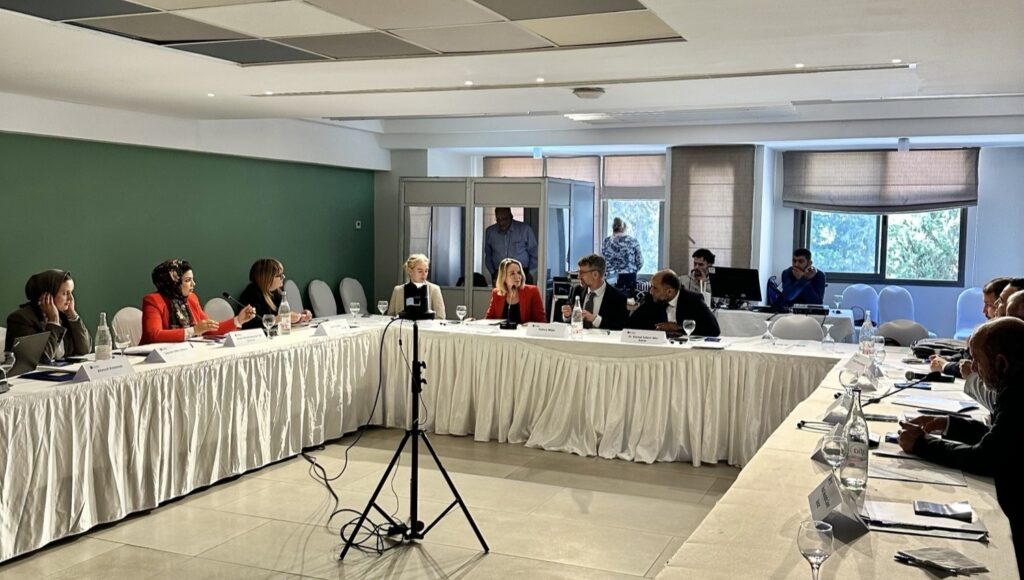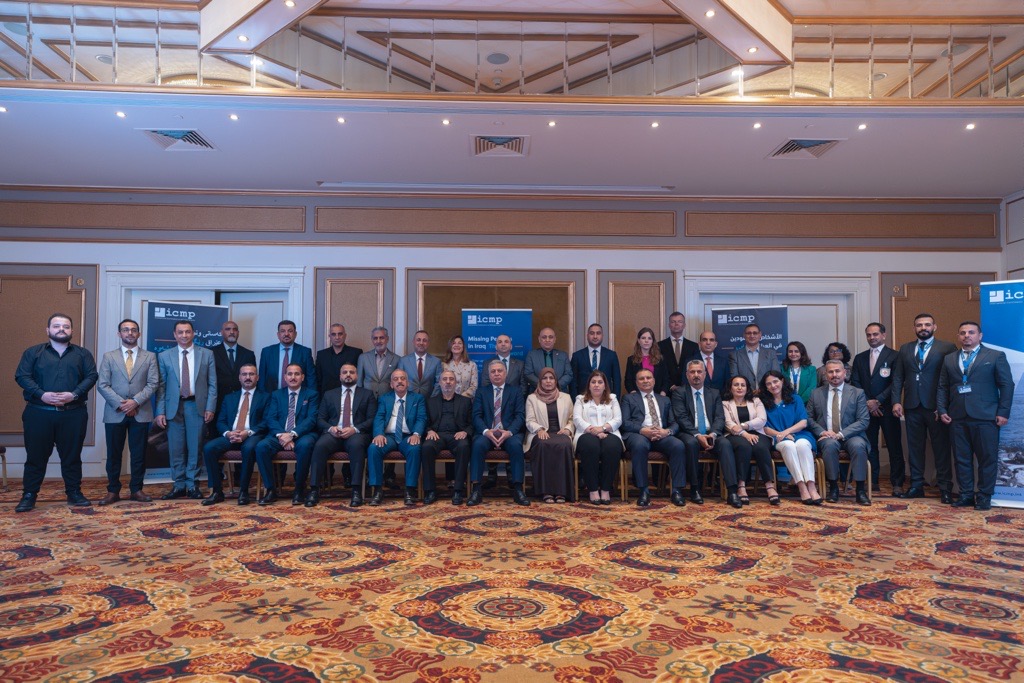
Erbil, Iraq, 23 May 2024 – Senior representatives of the Iraqi government and the Kurdistan Regional Government (KRG), members of the Iraqi parliament, representatives of key Iraqi institutions responsible for accounting for missing persons, and Iraqi NGOs have concluded two days of discussion on implementing an effective, long-term missing persons strategy. The conference held in Erbil was facilitated by the International Commission on Missing Persons (ICMP) and was chaired by Iraq’s Deputy Foreign Minister for Political Planning, Ambassador Dr. Hisham Al-Alawi.
The conference in Erbil was part of a series of meetings aimed at enhancing Iraq’s missing persons strategy. During the first meeting in The Hague in 2021, participants agreed among other items to develop a central record of all missing persons, ensure accountability for perpetrators of crimes linked to missing persons and secure the rights of families of the missing.
During this week’s meeting, consensus was reached on the following:
- The conclusions drawn up in September 2021 continue to be a crucial guideline in establishing an effective and lawful process for addressing the issue of missing persons.
- Encouraging strides have been made by the relevant Iraqi institutions in adopting these recommendations. However, sustained efforts are needed to ensure their comprehensive implementation.
- Noteworthy progress has been achieved since 2021, particularly with the recent establishment of a National Committee for Missing Persons under the auspices of the Ministry for Justice, signaling a significant step forward. Nevertheless, further consultations are warranted on the scope and work of the National Committee, and its convening should be prioritized.
- Enhanced coordination and collaboration among all stakeholders are paramount, especially in areas such as data management, standardization of procedures, harmonization of laws, financial backing, provision of accurate and reliable information to the public and – most critically – the active engagement of families of the missing.
- Comprehensive Medico-Legal services and the use of advanced technologies need to be continuously incorporated by the Iraqi authorities and experts across the country, including postgraduate specialist education and training in related fields, to locate and identify missing persons and clarify the circumstances of their disappearance.
- Important consideration must be given to the development of appropriate expressions of commemoration and tribute to missing
- Continued support from the international community, including robust contributions from ICMP, remain indispensable to this endeavor.
- It is imperative to contemplate a follow-up meeting again before the end of 2024.
ICMP Director-General Kathryne Bomberger said, “the event emphasized the importance of harmonizing domestic laws with international standards, particularly the International Convention for the Protection of All Persons from Enforced Disappearance (ICPPED).” She added that, “ICMP stands ready to work with all stakeholders, including families of the missing and the responsible institutions, and will continue to provide forensic expertise, database resources and other types of assistance. If stakeholders work collaboratively, it will be possible to account for a greater number of the missing in Iraq.”
Participants discussed activities scheduled to take place during the rest of 2024, including a major conference to be held in Baghdad, at which Iraq will bring together experts from across the Middle East and North Africa to share insights on developing a comprehensive missing persons process.
“We appreciate the ICMP’s efforts in bringing together all relevant parties involved with the issue of missing persons. This collaborative approach fosters the exchange of ideas and addresses critical details of the missing persons file, positively impacting the families of victims”
Said Dia Karim, Director General, Directorate for Protection and Affairs of Mass Graves
“The International Commission on Missing Persons (ICMP) has been and continues to provide invaluable support and assistance to Iraq on the issue of missing persons. Through productive collaboration with relevant Iraqi authorities, the ICMP has become an indispensable partner. It is imperative that this cooperation is elevated to higher levels.
We extend our heartfelt gratitude to the ICMP for its relentless efforts, particularly to Mr. Fawaz Abdulabbas, Deputy Head of the Iraq Program, for his exceptional dedication and hard work in coordinating with relevant committees and executive institutions in Iraq,” said Hasan Salim, Head of the Parliamentary Committee on Victims, Martyrs, and Political Prisoners”
The Iraqi Government estimates that large numbers of people are missing as a result of conflict, human rights violations and atrocities over the last 60 years, including from the regime of Saddam Hussein, the war with Iran, the first Gulf War and from Da’esh crimes. Tens of thousands of families from all of Iraq’s different ethnic, religious and national communities continue to suffer the anguish of uncertainty regarding the fate of their relatives, with most not yet securing their right to justice, truth and reparations.
ICMP’s Iraq Program is supported by the German Federal Foreign Office, and the Government of the Netherlands.
About ICMP
ICMP is a treaty-based intergovernmental organization with Headquarters in The Hague, the Netherlands. Its mandate is to secure the cooperation of governments and others in locating missing persons from conflict, human rights abuses, disasters, organized crime, migration and other causes and to assist them in doing so.