30 April 2020 – How a future, post-conflict Syria could handle the challenge posed by large number of Syrians who are missing is the focus of a series of online policy discussions on the Syrian situation organized by the International Commission on Missing Persons (ICMP).
The second segment of the weekly series, held 29 April 2020, focused on missing persons institutions and legislation. The online series forms part of a set of Roundtable discussions hosted by ICMP to bring Syrian civil society organizations and associations of families of the missing together to support them in a process of devising common strategies on the issue of detained and missing persons. International experts and others involved in similar processes elsewhere are also part of the discussions.
Three Roundtables have been held: one in May 2019 in The Hague, one in October and November in Istanbul and one in February 2020 in The Hague. A fourth Roundtable meeting was set to be held in Berlin this month, but had to be moved online due to the Covid-19 pandemic. The first online discussion, held 21 April 2020, focused on international experiences; three more installments will focus on reparations and victims’ rights, justice mechanisms, and peace agreements and constitutions dealing with missing persons.
“This is a long-term process, and what we hope to get out of this is for you to find common ground, to unite on common policy themes, so that you can secure a sustainable missing persons process in a future Syria,” ICMP Director-General Kathryne Bomberger told the participants. “We hope you can find consensus on missing persons policies that will define the way ahead. We must move forward. We don’t have time to waste.”
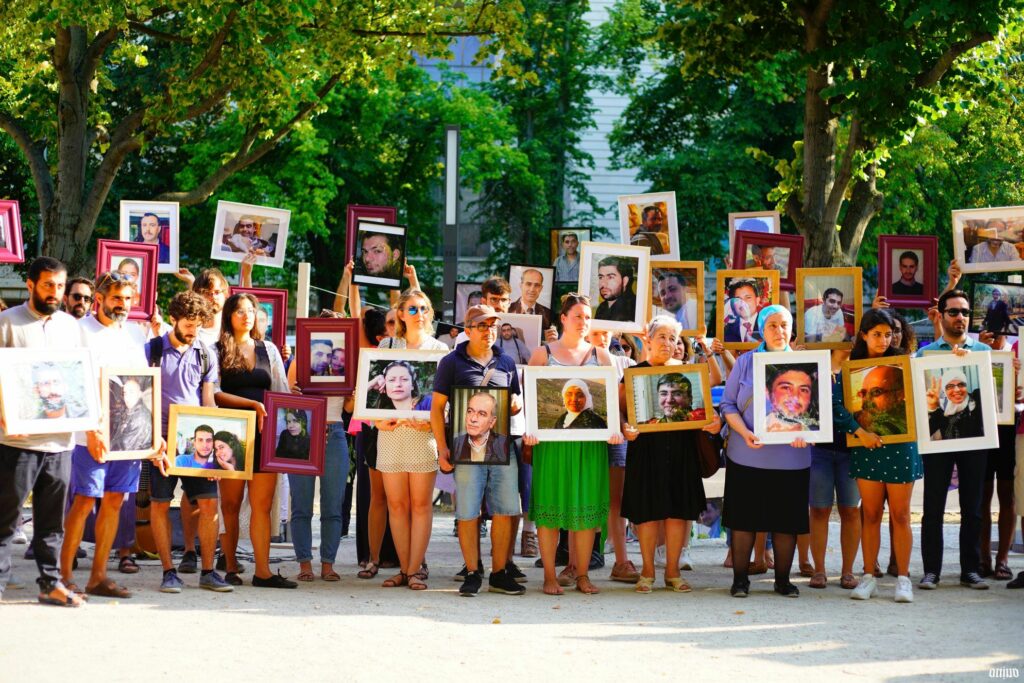
Tens of thousands of Syrians are missing as a result of conflict, human rights abuses, including-summary executions, arbitrary and incommunicado detentions, kidnappings and abductions, enslavement, as well as irregular migration from the region. The families of the missing often do not know where the person missing is located – inside or outside Syria.
Participants in the discussions, held under Chatham House rules, noted that Syrian law is insufficient in addressing missing persons, and that Syrian civil society has an opportunity to advocate for the inclusion of the missing persons process in any peace negotiations and in a constitution.
“The negotiation process that Syrians are involved in will not necessarily deal with the missing persons process in an ideal way. But we can influence the process,” said a participant. “We in civil society could create a lobby to create pressure on the negotiating parties to make the missing person issue a mainstream issue and included in a future peace agreement.”
Participants in the second installment argued that it was currently counterproductive to expect that different family organizations from across conflict lines would want to cooperate closely with each other, but noted that they could be unified in the future by a charter or code that outlines common values.
“It’s not that we can’t cooperate at all. We can work together. There is lots of examples of cooperation that is taking place – slowly it is happening,” a speaker said. “We need to start to build cooperation slowly, build trust slowly.”
Any post-conflict institution handling missing persons must be independent and have executive powers, to avoid that other authorities could delay its work, several speakers argued. Bureaucratic obstacles had led to delays in handling the missing in other countries, a participant said, noting that an institution that has the power to make decisions can act faster, which would encourage families to influence the process.
Ms Bomberger added that families had to have an influential role in creating any legislation and institution to handle the Syrian missing person issue. She and colleagues presented ICMP work in other countries, noting how the organization helped state authorities identify more than 70 percent of the 40,000 who went missing as a result of the 1990s conflict in the former Yugoslavia.
Lena Alhusseini, head of the ICMP’s Syria Program, who moderated the discussion, said she appreciated the active participation of civil society and family representatives.
“The questions and comments by the participants brought the discussion forward and laid a solid platform for future discussions,” she said.
This set of Roundtable discussions, held under the title The Syria Policy Process: Accounting for the Missing Is an Investment in Peace, will conclude with an international meeting in May.
ICMP’s Syria Program is working to establish the foundations for an effective process to address the issue of missing persons. The program places the rights of families of the missing at the center of the effort to account for their relatives, regardless of the circumstances of the missing person, their ethnic, or religious background, or their role in the conflict. The Program, which is financially supported by the European Union, is being implemented among refugees and along migratory routes. For more information and interview requests, please contact the ICMP.