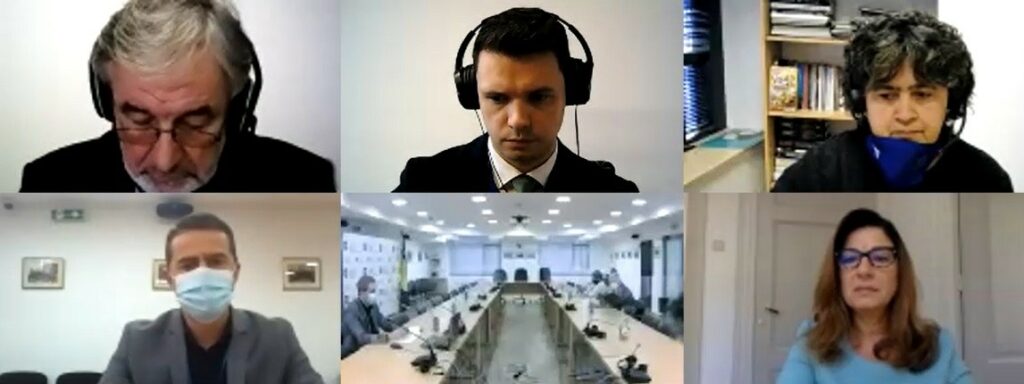
25 years after Dayton: Bosnian experts and families of the missing take stock of achievements, next steps in finding the missing

Delite

[:en]Sarajevo, 14 December 2020 –  In an online event organized by ICMP today, Bosnian families of the missing and representatives of Bosnia and Herzegovina’s institutions discussed the country’s achievement in finding over 75 percent of the 30,000 persons missing from the 1990s conflict and its on-going efforts to secure the rights of families and citizens to justice, truth and reparations.

At the event, organized with UK financial support titled “Profiles of the Missing: Missing Persons – 25 Years after Dayton”, participants reflected on the hopes and expectations in the aftermath of the Dayton Peace Accords, which were signed 14 December 1995 in Paris, and on achievements resulting from Bosnia and Herzegovina’s efforts to develop a legal and institutional framework for impartial and effective investigations of missing persons cases.

“This achievement was a massive undertaking spearheaded by the relentless, courageous work of the surviving families of the missing, many of whom are powerful Bosnian women. I will forever be humbled and awed by their ability to fight for justice with every ounce of their strength,” ICMP Director-General Kathryne Bomberger said. “In addition to families of the missing, this unprecedented work was carried out by hundreds of individuals, including Bosnian prosecutors, judges, forensic experts, law enforcement, crime technicians and representatives of the Missing Persons Institute, as well as persons from state, municipal and cantonal governments.”

She added that the success was underpinned by four factors: the state assuming responsibility, cooperation among governments and families domestically and regionally, a commitment to the rule of law and the use of largescale DNA matching of genetic samples collected from 100,000 families to the mortal remains of wartime victims excavated from thousands of mass and clandestine graves across the region.

Progress recognized by speakers at the event included the near-complete verification of the BIH Central Records, which includes information about all persons missing reported, along with the MPI’s publishing of the database on its website, thereby enabling families to access accurate information. Participants called on BIH authorities to continue efforts to account for those who are still missing and to secure the rights of all the families of the missing, including by fully implementing the country’s Law on Missing Persons.

“The joint work of the Association of Families of the Missing, Bosnia and Herzegovina institutions at all levels the Institute for Missing Persons of BIH, the Prosecutor’s Office of BIH, ICMP and other international organizations, despite challenges, has achieved significant results in Bosnia and Herzegovina and the region. Interstate cooperation between the families of the missing and the institutions for searching for the missing has resulted in the resolution of many missing persons cases. We believe that this practice must continue,” said Marko Grabovac, a Member of the MPI Advisory Board.

Amor Masovic, Chairperson of the Board of Directors of the Missing Persons Institute of Bosnia and Herzegovina, reflected on obstacles that have been overcome: “Adopting the Law on Missing Persons enabled us to work on missing persons cases in a non-discriminatory manner regardless of the missing person’s ethnic, religious or any other affiliation,” he said.

Saliha Djuderija, Assistant Minister for Human Rights and Refugees of Bosnia and Herzegovina, noted that families of the missing play a key part in the process together with local institutions. “We are very aware that local authorities need to take even greater responsibility for the process of accounting for the missing to secure the rights of all families of the missing.”

Gordana Tadic, Chief Prosecutor at Prosecutor’s Office of BIH commended the cooperation of all relevant institutions and underlined the shared commitment to resolve of all war crimes and missing persons cases. She noted that her office and ICMP had jointly reviewed unidentified cases in 12 BIH mortuary facilities. “We all need to implement the recommendations stemming from this review in order to get (…) new identifications”. She added that the Prosecutor’s office remained committed to investigating missing persons cases to assist war crimes proceedings and to provide answers to families of the missing.

ICMP’s assistance to BIH includes technical support in the documentation of mass and clandestine graves, in extracting and analysing DNA and in matching data so that Bosnian authorities can identify missing persons and evidence linked to crime scenes can be submitted to courts.

About ICMP

ICMP is a treaty-based intergovernmental organization with Headquarters in The Hague, the Netherlands. Its mandate is to secure the cooperation of governments and others in locating missing persons from conflict, human rights abuses, disasters, organized crime, irregular migration and other causes and to assist them in doing so. It is tasked exclusively to work on the issue of missing persons.


Contact ICMP[:bs]Sarajevo, 14. decembar 2020. godine – na online događaju koji je danas organizovao ICMP, porodice nestalih i predstavnici institucija Bosne i Hercegovine razgovarali su o rezultatima koje je ova zemlja ostvarila u smislu pronalaženja više od 75 procenata od 30.000 osoba nestalih u sukobima 1990-ih i stalnim naporima da osigura pravo porodicama i svojim građanima na pravdu, istinu i reparacije.

Na događanju organizovanom uz finansijsku podršku Ujedinjenog Kraljevstva nazvanom “Profili nestalih: nestale osobe – 25 godina nakon Dejtona” učesnici su se osvrnuli na nade i očekivanja nakon potpisivanja Dejtonskog mirovnog sporazuma 14. decembra 1995. godine u Parizu i na rezultate ostvarene zahvaljujući nastojanjima Bosne i Hercegovine da razvije pravnu i institucionalnu mrežu za provođenje nepristranih i učinkovitih istraga u slučajevima nestalih osoba.

“Ovaj rezultat je ogromno postignuće koje se temelji na neumornom, hrabrom radu preživjelih porodica nestalih, od kojih su mnoge snažne bosanske žene. Vječno ću osjećati divljenje i strahopoštovanje prema njihovoj sposobnosti da se bore za pravdu svakim dijelom svoga bića,” kazala je generalna direktorica ICMP-a Kathryne Bomberger. „Pored porodica nestalih, ovaj posao bez presedana izvele su stotine pojedinaca, uključujući bosanskohercegovačke tužioce, sudije, forenzičke stručnjake, službe za provođenje zakona, kriminalističke tehničare i predstavnike Instituta za nestale osobe, kao i osobe iz državnih, općinskih i kantonalnih vlasti. “

Dodala je da taj uspjeh počiva na četiri faktora: državi koja je preuzela odgovornost, saradnji vlasti i porodica na domaćoj i međunarodnoj sceni, posvećenosti vladavini zakona i primjeni kapaciteta kao što je analiza DNK i poređenje genetičkih uzoraka prikupljenih od 100,000 članova porodica sa posmrtnim ostacima ekhumiranih iz hiljada masovnih i pojedinačnih grobnica širom regije.

Napredak koji su govornici istakli tokom svojih izlaganja uključujuje verifikaciju Centralne evidencije nestalih BiH koja se primiče kraju i sadrži podatke o svim prijavljenim nestalim osobama, uz objavljivanje baze podataka na internetskoj stranici INO-a, čime se porodicama omogućuje pristup tačnim informacijama. Učesnici su pozvali vlasti BiH da nastave raditi na pronalaženju svih osoba za kojima se još uvijek traga i da osiguraju prava svim porodicama nestalih, uključujući i punu primjenu Zakona o nestalim osobama BiH.

“Zajednički rad udruženja porodica nestalih osoba, institucija Bosne i Hercegovine na svim nivoima i Instituta za nestale osobe BiH, Tužilaštva BiH, ICMP-a i drugih međunarodnih organizacija, uprkos izazovima ostvario je važne rezultate kako u Bosni i Hercegovini, tako i u regiji. Prekogranična saradnja između porodica nestalih i institucija za rješavanje pitanja nestalih rezultirala je rješavanjem brojnih slučajeva nestalih osoba. Smatramo da ta praksa mora biti nastavljena“, rekao je Marko Grabovac, član Savjetodavnog odbora INO-a.

Amor Mašović, predsjedavajući Kolegija direktora Instituta za nestale osobe Bosne i Hercegovine, osvrnuo se na probleme koji su uspješno riješeni: “Usvajanjem Zakona o nestalim osobama došli smo u poziciju da radimo na slučajevima nestalih osoba bez diskriminacije u pogledu etničke pripadnosti i religijskog ili bilo kojeg drugog opredjeljenja nestale osobe”, kazao je on.

Saliha Đuderija, pomoćnica ministra za ljudska prava i izbjeglice Bosne i Hercegovine istakla je da porodice nestalih imaju ključnu ulogu u procesu, zajedno s domaćim institucijama. “Svjesni smo da domaće vlasti moraju preuzeti još veću odgovornost u procesu pronalaženja nestalih kako bi osigurali poštovanje prava svim porodicama nestalih.”

Gordana Tadić, glavna tužiteljica Tužilaštva BiH pohvalila je saradnju svih relevantnih institucija i naglasila zajedničku posvećenost rješavanju svih ratnih zločina i slučajeva nestalih osoba. Istakla je da su njena kancelarija i ICMP zajedno pregledali neidentifikovane slučajeve u 12 mrtvačnica u Bosni i Hercegovini. “Svi moramo provesti preporuke koje proističu iz ovog pregleda kako bi došli do (…) novih identifikacija”. Dodala je da Tužilaštvo BiH ostaje posvećeno istraživanju slučajeva nestalih osoba kako bi pomogli u procesuiranju ratnih zločina i dali odgovore koje porodice nestalih očekuju.

ICMP-ova pomoć BiH uključuje tehničku podršku prilikom dokumentiranja masovnih i skrivenih grobnica, izolovanje i analizu DNK i poređenje podataka kako bi institucije BiH mogle izvršiti identifikaciju nestalih osoba i koristiti dokaze s mjesta zločina u suđenjima.

O ICMP-u

ICMP je sporazumom utemeljena međuvladina organizacija sa sjedištem u Hagu u Nizozemskoj.   Njegov mandat je osigurati saradnju vlada i drugih organa vlasti u pronalaženju osoba nestalih usljed sukoba, kršenja ljudskih prava, nesreća, organiziranog kriminala, ilegalnih migracija i drugih razloga te pružiti im pomoć u tim procesima.  ICMP radi isključivo na rješavanju pitanja nestalih osoba.

Contact ICMP[:]

Scroll to Top