[:en]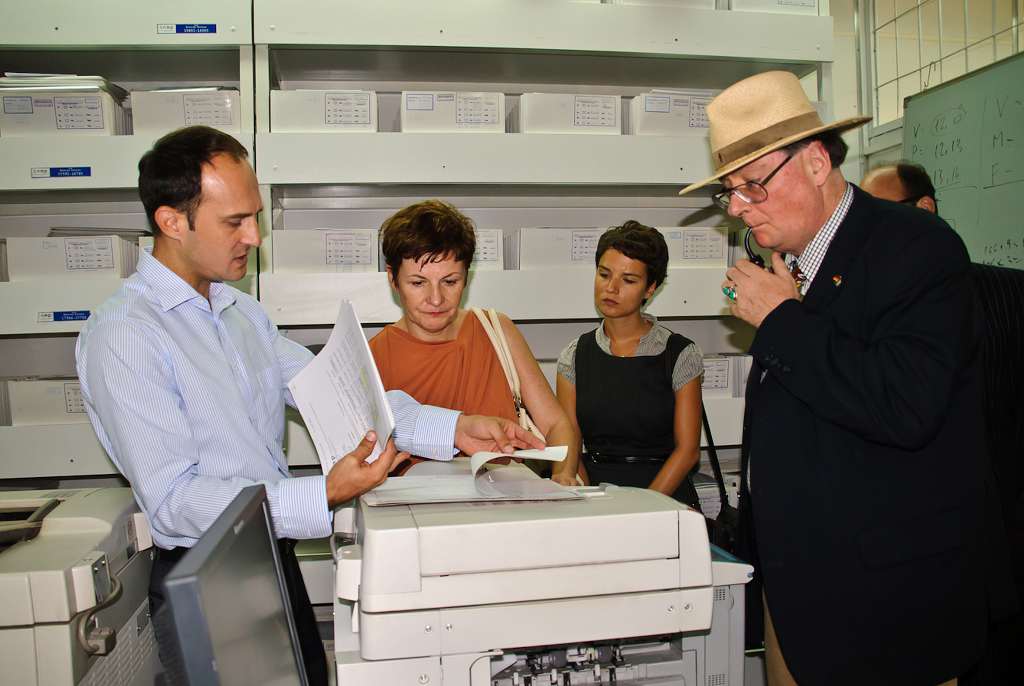
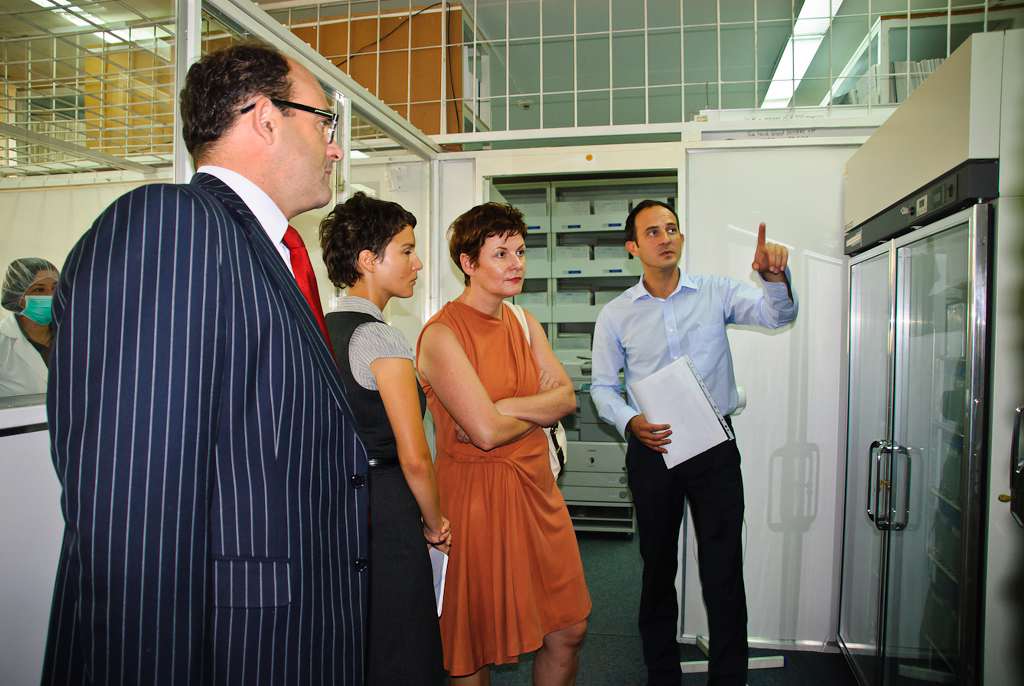
13 September 2011: Ms. Christiana Markert, German Embassy chargée d’affaires, and Mr. Christian Reismuller, First Secretary and Consul of the German Embassy in Bosnia and Herzegovina, visited the facilities of the International Commission on Missing Persons (ICMP) and the Podrinje Identification Project (PIP) in Tuzla today.
Accompanied by Mr. Adam Boys, ICMP’s Chief Operating Officer, Ms. Markert and Mr. Reismuller visited ICMP’s Identification Coordination Division (ICD) where family reference samples collected by ICMP from relatives of the missing and bone samples of victims received from government authorities are processed. After being bar-coded the samples are sent to ICMP laboratories in Sarajevo and Banja Luka for DNA analysis. Once extracted, the DNA profiles from blood and bone are entered into ICMP’s database and compared for possible matches. The delegation also visited the Podrinje Identification Project (PIP), which was specifically created by ICMP to assist in the identification of persons reported missing from the 1995 fall of Srebrenica and which was transferred to national control in 2010.
“The process led by the International Commission on Missing Persons (ICMP) is complex and impressive and I am glad to have had the opportunity to see it firsthand. I commend ICMP’s efforts in assisting countries of the former Yugoslavia to address the issue of missing persons. In addition, ICMP’s role in the scientific identification of thousands of missing persons is a remarkable achievement and the lessons learned here clearly have worldwide application. The Government of Bosnia and Herzegovina also deserves considerable praise for its commitment to an impartial process through its support to the Missing Persons Institute (MPI)”, said Ms. Christiana Markert, German Embassy chargée d’affaires.
“We are very grateful to the German Government for its continuing support to ICMP. We would not have achieved the results we have without the generous support of donor countries. This visit is a great honor for ICMP and send an important message to families of the missing that their plight is still a concern of the international community”, said Mr. Adam Boys, ICMP’s Chief Operating Officer, following the visit.
Germany has supported ICMP’s operations in the Western Balkans, Iraq and Columbia since year 2001 with contributions totaling over 3.5 Million USD as well as contributions made via grants made to ICMP by the European Union. This support has enabled ICMP to maintain the world’s most advanced high throughput DNA laboratory system dedicated to identifying persons missing from armed conflict, violations of human rights and natural disasters.
As part of its mandate, ICMP seeks to secure the co-operation of governments and other authorities in locating and identifying persons missing as a result of armed conflicts, other hostilities or violations of human rights and to assist them in doing so.
ICMP is the co-founder, with the BiH Council of Ministers, of the Missing Persons Institute of BiH, contributes to rule of law activities and supports the development of networks of civil society organizations which advocate for truth, justice, and the rights of family members of missing persons.
Of the 40,000 people estimated missing from the conflicts in the former Yugoslavia, ICMP has helped identify 16,296 since 2001 using DNA-assisted techniques, in Bosnia alone 13,627. Of this number of identifications 6,616 are those reported missing following the 1995 fall of Srebrenica.[:bs]
Christiana Markert, otpravnica poslova Ambasade Njemačke u Bosni i Hercegovini, i Christian Reismuller, prvi sekretar i konzul Ambasade Njemačke, posjetili su danas objekte Međunarodne komisije za nestale osobe (ICMP) i Identifikacijski projekat Podrinje u Tuzli.
U pratnji Adama Boysa, glavnog šefa operacija ICMP-a, Markert i Reismuller obišli su Odjel za koordinaciju identifikacija (ICD) gdje se obrađuju uzorci krvi koje je ICMP prikupio od članova porodica nestalih i uzorci kostiju zaprimljeni od državnih tijela. Nakon što ih se označi bar kodom, šalju se u ICMP-eve laboratorije u Sarajevu i Banja Luci na analizu DNK. Slijedi ekstrakcija, a potom se profili DNK unose u ICMP-ovu bazu podataka i prolaze proces poređenja. Delegacija je posjetila i Identifikacijski projekat Podrinje (PIP), koji je ICMP osnovao sa posebnom namjenom – da pomogne u identifikaciji osoba nestalih padom Srebrenice 1995. godine a koji je 2010. godine prenesen u nadležnost bh. institucija.
„Proces koji vodi Međunarodna komisija za nestale osobe je kompleksan i impresivan. Drago mi je da sam imala priliku neposredno se uvjeriti u to. Pohvaljujem ICMP-eve napore da pomognu zemljama bivše Jugoslavije u rješavanju pitanja nestalih osoba. Osim toga, ICMP-eva uloga u naučnoj identifikaciji hiljada nestalih osoba je izvanredno dostignuće a lekcije naučene ovdje su primjenjive u cijelom svijetu. Vlada Bosne i Hercegovine također zaslužuje veliku pohvalu jer kroz podršku Institutu za nestale osobe (INO BiH) iskazuju svoju predanost nepristrasnom procesu“, izjavila je Christiana Markert, otpravnica poslova Ambasade Njemačke u Bosni i Hercegovini.
„Zahvalni smo Vladi Njemačke na neprekidnoj podršci radu ICMP-a. Ne bismo bili u stanju ostvariti ove rezultate bez nesebične pomoći zemalja-donatora. Ova posjeta je izuzetna čast za ICMP i šalje važnu poruku porodicama nestalih osoba da je međunarodnoj zajednici još uvijek stalo do njihove borbe“, izjavio je Adam Boys, glavni šef operacija ICMP-a, poslije posjete.
Od 2001. godine Njemačka je ICMP-evim operacijama na Zapadnom Balkanu, te u Iraku i Kolumbiji donirala preko 3,5 miliona američkih dolara, pored grantova koje je ICMP dobio kroz Europsku uniju. Ova pomoć omogućila je ICMP-u da održava najnapredniji visokopropusni DNK laboratorijski sistem za identifikaciju osoba nestalih u oružanim sukobima, kršenjima ljudskih prava i prirodnim katastrofama.
U okviru svog mandata ICMP nastoji osigurati saradnju vlada i drugih organa vlasti u procesu pronalaženja i identifikacije osoba nestalih usljed oružanih sukoba, drugih oblika neprijateljstva ili kršenja ljudskih prava, te im pomoći u tom procesu.
ICMP je, sa Vijećem ministara BiH, suosnivač Instituta za nestale osobe BiH, ICMP doprinosi vladavini prava te podržava razvoj mreža organizacija civilnog društva koje zagovaraju istinu, pravdu i prava porodica nestalih osoba.
Od 40.000 osoba, koliko se procjenjuje da je nestalo tokom sukoba na području bivše Jugoslavije, ICMP je uz pomoć tehnika zasnovanih na analizi DNK od 2001. godine do danas identificirao 16.296 osoba, od čega se 13.627 odnosi na BiH. Od ovog broja, 6.616 identifikovanih odnosi se osobe prijavljene kao nestale padom Srebrenice 1995. godine.
[:ar][:es][:]